What Contractors Wish They Knew Before Buying Their First Trencher
You’ve been renting a trencher for every utility run, drainage line, and irrigation job for two years now, and the rental invoices have quietly added up to more than the machine itself would cost. So you finally decide to buy. You find a model that looks capable, the price fits your budget, and you picture it paying for itself within a season. It rolls off the trailer, you fire it up on your first job, and within an hour the reality sets in: the chain bogs down in ground harder than you expected, the dig depth falls short of the spec you needed, and you’re already wondering if you bought the wrong machine.
That gap between expectation and reality trips up a huge number of first-time trencher buyers. A trencher looks simple from the outside, a chain and a motor cutting a slot in the ground, but the details that decide whether it earns its keep are the ones that never show up in a quick listing. Ground conditions, dig dimensions, drive type, and long-term support all shape whether your first trencher becomes a reliable workhorse or an expensive lesson.
Selecting the correct trench dimensions is one of the most important steps in choosing the right trencher. Trench depth and trench width directly affect machine compatibility, digging efficiency, material usage, and overall project performance. Understanding how these requirements relate to your application helps ensure the equipment can complete the job accurately while minimizing unnecessary operating costs.
How Ground Conditions Should Drive Your Choice
Ground conditions establish the foundation for selecting the right trencher. Soil type, rock content, moisture levels, and root density all affect cutting performance, chain selection, and the machine’s overall productivity. Evaluating these conditions helps ensure the equipment is suited to the intended application while reducing unnecessary wear, downtime, and operating expenses. For additional model comparisons and purchasing considerations, explore the resources available at the Trencher Store.
Reading Your Typical Soil
Not all dirt digs the same. Loose, sandy, or loamy soil cuts easily and lets a lighter machine work fast, while dense clay, compacted fill, and rocky ground demand far more force from the chain and teeth. Buying a trencher rated for soft soil and then hitting hardpan every day is a fast route to frustration and premature wear.
Be honest about your worst regular ground, not your easiest. The machine has to handle the toughest conditions you face routinely, so size your expectations around the hard days. A trencher that breezes through clay will always handle sand, but one built for sand will stall the moment the ground turns stubborn.
Rock, Roots, and Obstacles
Beyond soil density, the obstacles hiding underground shape which machine and chain you need. Rocky ground and tree roots chew through standard digging chains quickly, so sites with either call for rock or heavy-duty chain options and a machine with the power to drive them. Ignoring this leads to constant downtime and chain replacement.
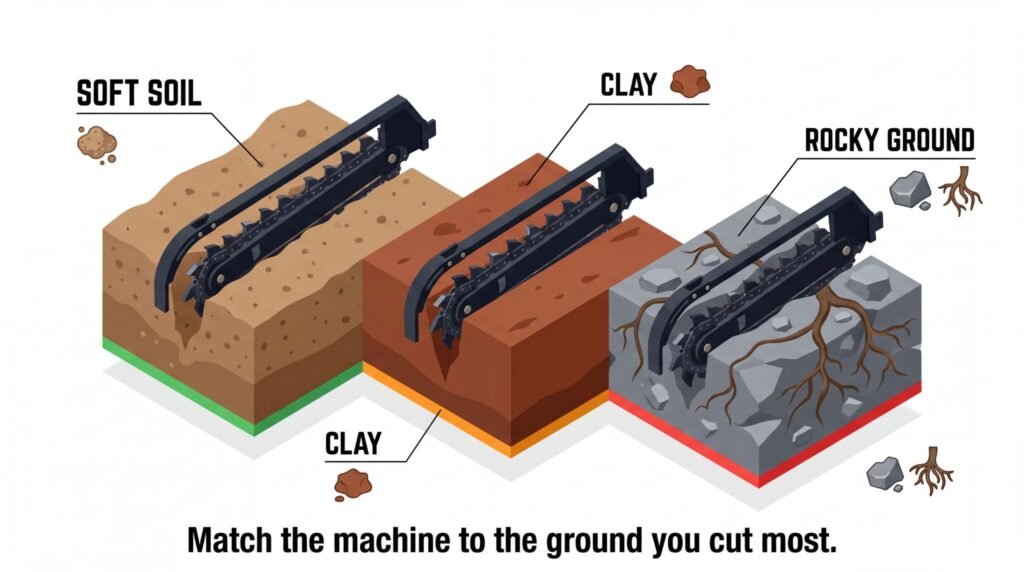
The chain and teeth are as important as the machine itself here. Different tooth configurations and chain types are built for different grounds, so matching them to your conditions keeps you cutting instead of swapping parts. First-time buyers often focus entirely on the machine and overlook that the chain setup can make or break daily productivity.
Takeaway: Your typical ground, its soil density, rock, and roots, should drive the entire purchase, so read your hardest regular conditions honestly and match both the machine and its chain to them rather than buying for the easy days.
How to Size Dig Depth and Width to Your Real Work
Once you know your ground, the next thing contractors wish they’d nailed down is dig dimensions. Depth and width seem straightforward until an undersized machine caps the jobs you can take. Getting these right the first time saves you from outgrowing your trencher within a season.
Matching Dig Depth to Your Jobs
Dig depth is the spec that most often disappoints first-time buyers. A trencher rated for a shallow depth handles irrigation and low-voltage lines fine, but it can’t reach the depth needed for water lines below frost, deeper utilities, or drainage. Confirm the maximum dig depth against your deepest routine job, with a little margin to spare.
The trap is buying for your average job instead of your deepest one. If most of your work is shallow but you occasionally need to go deeper, an undersized machine forces you to rent or subcontract those jobs, eating into the savings that justified the purchase. Size for the demanding work you genuinely want to take on.
Choosing the Right Trench Width
Width matters just as much as depth, and it depends entirely on what goes in the trench. A narrow trench suits single cables and small lines, while wider trenches accommodate larger pipe, multiple conduits, or bedding material. The wrong width means either cramped installs or wasted digging and backfill on every run.
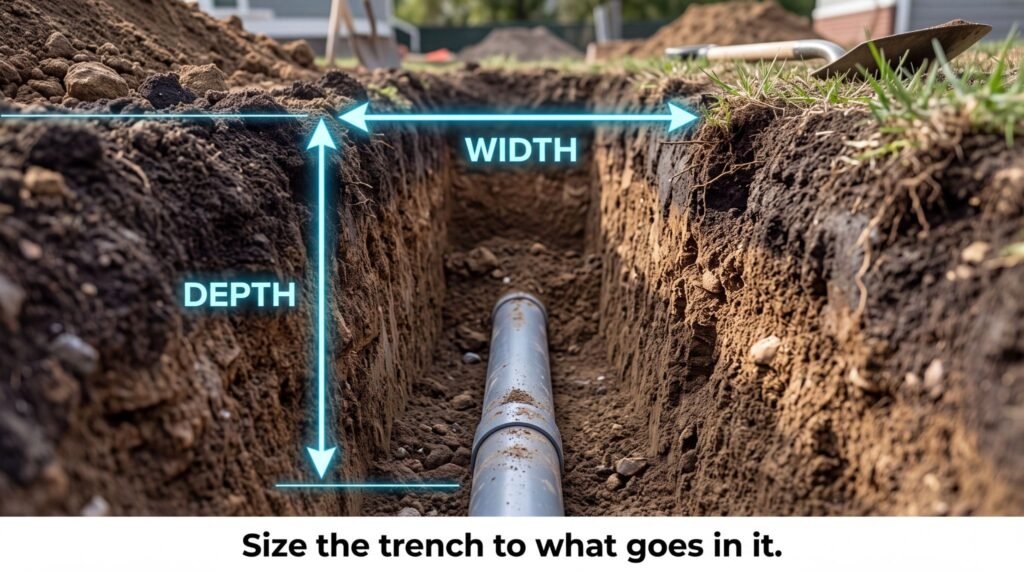
Many trenchers let you change chain and boom setups to adjust width, so ask what configurations a machine supports before buying. A trencher that flexes across a range of widths serves more jobs than one locked into a single dimension, which is exactly the versatility a first machine benefits from most.
Takeaway: Size dig depth to your deepest routine job with margin, and match trench width to what you actually install, favoring a machine that adjusts across widths so your first trencher serves the full range of work rather than capping it.
How Machine Type and Power Affect Productivity
With ground and dimensions settled, the machine’s type and power decide how efficiently it works and where it fits. This is where first-time buyers often either overspend on capability they don’t need or underbuy and struggle. Understanding the categories keeps your money aimed at real productivity.
Walk-Behind, Ride-On, and Attachment Trenchers
Trenchers come in a few broad forms, each suited to different work. Walk-behind models are compact, affordable, and ideal for short residential runs and tight access. Ride-on trenchers cover longer distances and deeper trenches with far less operator fatigue, suiting larger or higher-volume jobs.
Attachment trenchers, which mount to a skid steer or compact loader, are a practical choice if you already own a carrier and want to add trenching capability without investing in a dedicated machine. For a first purchase, evaluate your expected workload to determine whether a dedicated trencher provides better long-term value or if a skid steer attachment offers the versatility needed for multiple jobsite applications.
Power, Drive, and Chain Speed
Engine power determines how confidently the chain cuts, especially in tough ground. An underpowered machine bogs down in clay and rock, dragging out every job, while adequate power keeps the chain moving at productive speed through resistance. Match horsepower to the ground conditions you identified earlier rather than to the lowest price.
Drive type shapes performance too. Hydrostatic drive gives smooth, precise control over ground and chain speed, letting an operator adapt to changing conditions without stalling, and that control translates directly into cleaner, faster trenching. For a closer look at how drive systems and engine power compare across models, the trencher comparison guides at trenchers.net break down what each setup delivers on different ground.
Takeaway: Machine type should match your job volume and access while power and drive should match your ground, so choose the form and capability that keep the chain cutting efficiently instead of buying on price alone.
How to Protect Your Investment for the Long Haul
The final thing contractors wish they’d weighed is what happens after the sale. A trencher only pays off if it keeps working, and that depends on maintenance, parts, and support as much as the machine itself. This is where a smart first purchase separates itself from a regretted one.
Maintenance and Wear Parts
Trenchers are machines by nature, since the chain and teeth grind through abrasive ground every hour. Teeth dull, chains stretch, and both need regular replacement, so factor those ongoing costs into your budget from the start. A machine with cheap, hard-to-find wear parts costs more over its life than a slightly pricier one with affordable, available components.
Simple routine care protects the bigger investment. Keep the chain properly tensioned, replace worn teeth before they strain the machine, and follow the service intervals for the engine and drive system. Build these habits in:
- Check and adjust chain tension regularly, since a loose or overtight chain wears fast and cuts poorly.
- Replace digging teeth before they are dull enough to overload the engine.
- Follow engine and hydraulic service intervals to keep power and drive dependable.
- Clean the chain and boom after abrasive or muddy jobs to slow wear.
Support, Parts, and Buying Smart
Where you buy matters as much as what you buy. A trencher backed by reliable parts availability and responsive service keeps working through the season, while a bargain machine from a seller who vanishes after the sale becomes a liability the first time it needs a part. Confirm parts access and support before you commit.
When you’re ready to compare machines, weigh build quality, warranty, and the strength of the support behind each option, not just the sticker price. You can browse dependable options in the trencher store at typhonmachinery.com and match the machine, chain setup, and support to the work you actually do. A first trencher backed by solid support is an asset that earns its keep season after season.
Takeaway: Protect your first trencher by budgeting for wear parts, keeping up simple routine maintenance, and buying from a source with dependable parts and service, so the machine stays productive long after the purchase pays for itself.
Conclusion
What contractors wish they’d known before buying their first trencher comes down to looking past the machine itself to the work it has to do. Your ground conditions should drive the choice, your dig depth and width should match your real jobs with margin to grow, and the machine’s type and power should fit both your volume and your soil. Beyond the purchase, wear parts, routine maintenance, and dependable support determine whether the trencher keeps earning long after it pays for itself.
The contractors who buy their first trencher well don’t rush toward the lowest price or the flashiest spec. They read their hardest ground honestly, size the machine to the jobs they genuinely want to win, and back the purchase with reliable parts and service. Before you commit, take a clear look at the soil you cut, the depths and widths you need, and the support behind each option, then buy with purpose. If you’d like help matching the right trencher, chain setup, and support to your work, reach out to a trusted equipment specialist who can pair dependable equipment with the results your projects depend on.
Frequently Asked Questions
What size trencher should I buy for my first machine?
Size it to your hardest regular ground and your deepest routine job, not your average one. Identify the toughest soil and greatest dig depth you’ll face often, then choose a machine that handles those with a little margin. A walk-behind suits short residential runs, while a ride-on fits longer or deeper work. Buying for your demanding jobs keeps you from outgrowing the machine within a season.
How do ground conditions affect which trencher I need?
Ground conditions shape nearly everything. Soft, sandy soil lets a lighter, lower-powered machine work fast, while dense clay, compacted fill, and rocky ground demand more power and heavy-duty or rock chains. Roots and buried rock chew through standard chains quickly. Read your worst regular conditions honestly and match both the machine’s power and its chain and tooth setup to them, since a mismatch means constant stalling and wear.
Is it worth buying a trencher instead of renting?
It depends on how often you trench. If rental invoices are adding up to a meaningful share of a machine’s cost each year, buying usually pays off, and owning gives you the machine whenever a job needs it. If your trenching is occasional or varies widely in depth, renting or an attachment trencher may make more sense. Compare your annual rental spend against ownership and wear-part costs to decide.
What ongoing costs should I plan for with a trencher?
Plan for wear parts first, since digging teeth and chains grind through abrasive ground and need regular replacement. Budget for routine engine and hydraulic service, fuel, and occasional repairs. Choose a machine with affordable, readily available parts, because cheap components that are hard to source cost far more over the machine’s life. Factoring these ongoing costs in from the start keeps your trencher earning rather than surprising you.
