mini excavator backfilling
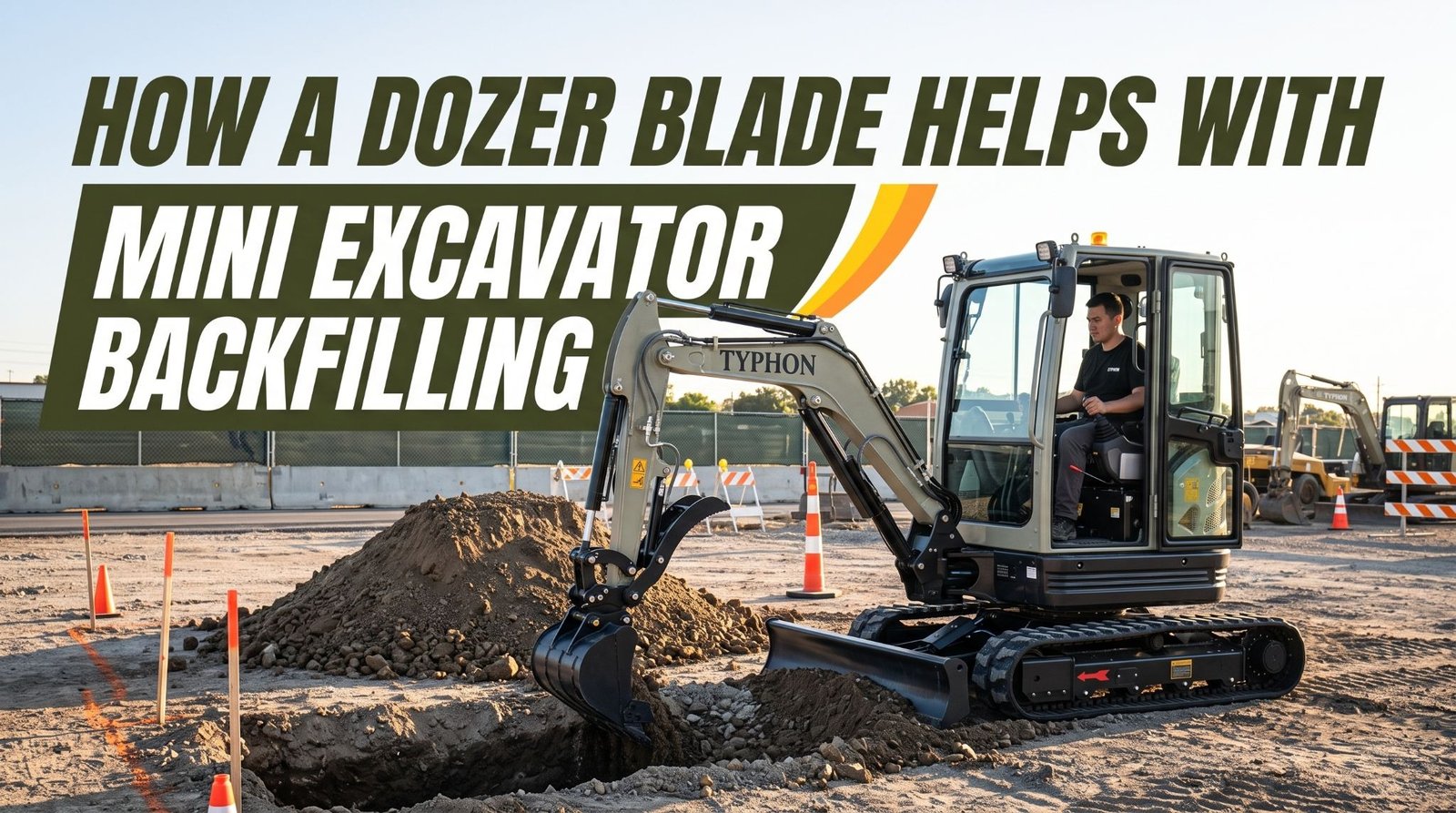
How a Dozer Blade Helps With Mini Excavator Backfilling
Closing a drainage trench can create almost as much cleanup work as opening it. Loose soil is often left in piles along both sides of the excavation, leaving the operator to return that material to the trench and smooth the surrounding ground. Rather than moving every load with the bucket, a mini excavator can use its dozer blade to push loose soil toward the excavation in controlled passes. This makes the blade useful for trench restoration while reducing repetitive bucket work.
Blade positioning affects how effectively the material can be pushed and spread. Lowering the blade close to the ground allows it to collect loose soil, while controlled forward movement helps direct material into the trench or across uneven areas. Once the trench has been filled, the same blade can help level the surrounding surface and prepare the area for the next stage of work.
During cleanup and site preparation, using the blade alongside the bucket gives the mini excavator another way to handle loose material. Pushing and leveling can be more practical than repeatedly swinging bucket loads when the material is already spread across the work area. Matching blade use to the soil condition, trench shape, and available working space helps make backfilling and final grading more efficient.
Moving Loose Soil Toward the Trench
When excavated soil is already spread around the work area, the dozer blade offers a direct way to get it back where it belongs. The blade pushes loose material across a short distance and returns it toward the open trench, gathering up the piles that the dig left behind. It’s a simple, effective motion that suits the loose soil common at the backfilling stage.
The real benefit is in what it saves you. Pushing soil with the blade reduces the need to swing and dump the bucket repeatedly when the material is scattered nearby. Rather than cycling the bucket through load after load, the operator moves a broad sweep of soil in a single pass, which keeps the early stage of backfilling moving at a steadier pace. For material sitting close to the trench, the blade often does the job with less repetition than the bucket alone.
Key takeaway: The dozer blade pushes loose excavated soil across a short distance back toward the trench, reducing the repeated bucket swinging and dumping that scattered material would otherwise require.
Leveling the Backfilled Surface
Once soil has been returned to the excavation, the ground around it rarely sits even. Excess material tends to mound up, leaving high spots and an uneven surface that needs attention before the job is finished. This is where the blade shifts from pushing to grading, helping spread that excess material across the surface.
Controlled passes are what make the difference here. Working the blade steadily across the area smooths out high areas and works the soil toward a more even grade around the completed trench. Rather than leaving an irregular surface, the operator can refine it pass by pass, bringing the ground back toward the level the site calls for. That ability to both spread and level makes the blade a natural fit for the finishing stage of backfilling, tidying the surrounding grade as part of the same operation.
Key takeaway: After soil is placed in the excavation, the blade spreads excess material and, through controlled passes, smooths high areas to create a more even grade around the completed trench.
Supporting Trench Restoration
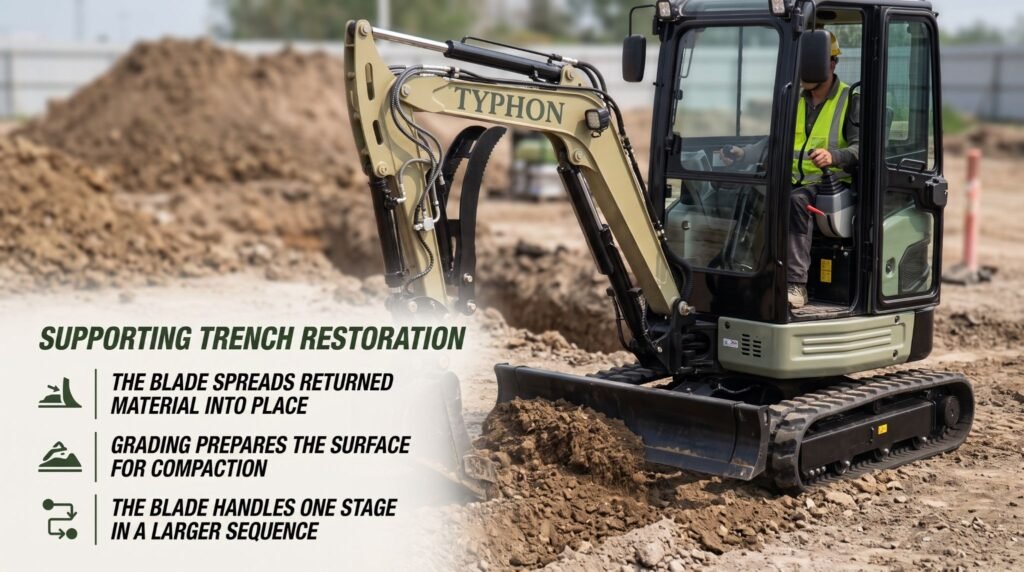
Backfilling is rarely a single action. It usually unfolds across several stages: returning suitable material to the trench, spreading it out, and preparing the surface for the compaction that follows. Seeing backfilling as a sequence rather than one step makes it easier to apply the right tool at each point.
The dozer blade fits naturally into the spreading and grading portions of that sequence. It’s well suited to moving returned material into place and working the surface toward an even grade, which sets up the ground for the stages that come after. What the blade prepares, other steps complete, so its role is to handle the pushing and leveling that gets the site ready rather than to finish every part of the restoration on its own. Understanding where the blade fits within the broader process helps the operator use it where it’s genuinely effective.
Improving Machine Positioning
The dozer blade contributes to backfilling in a way that has nothing to do with moving soil. When the mini excavator is set up to dig or backfill, the blade can provide a stable point of contact with the ground, helping anchor the machine as it works. That added stability supports steadier, more controlled operation.
Proper placement is what makes this work. Positioning the blade correctly helps the operator maintain machine stability while working around trenches and uneven ground, where a solid footing matters most. Near an open excavation, on soil that isn’t perfectly level, that stable contact point helps keep the machine settled through the digging and backfilling cycles. Using the blade thoughtfully for positioning, not just for pushing soil, is part of getting reliable performance out of the machine on this kind of work.
Key takeaway: The dozer blade can serve as a stable point of contact when the excavator is positioned for digging or backfilling, and proper placement helps maintain machine stability around trenches and uneven ground.
Managing Different Soil Conditions
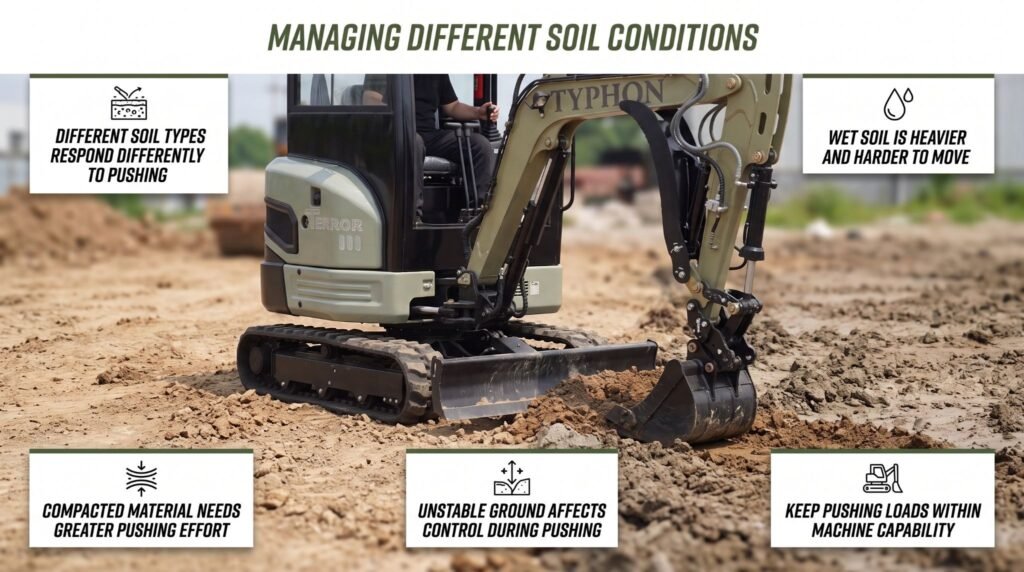
Soil conditions can vary significantly between jobs, with moisture, material type, and compaction affecting how easily the material moves. Loose, dry soil generally requires less effort to push, while wet, heavy, or compacted soil can place greater demands on the machine.
A blade can be effective for moving and backfilling loose material, but the workload should match the machine’s capabilities. Understanding the soil and ground conditions helps operators maintain control while avoiding unnecessary strain on the machine.
- Soil Type: Different materials respond differently to blade pushing and backfilling.
- Moisture Level: Wet or saturated soil can become heavier and more difficult to move.
- Compaction: Dense or compacted material may require greater pushing effort.
- Machine Capability: Load size and pushing demands should remain within the machine’s working limits.
- Ground Stability: Soft or unstable ground can affect machine control and should be considered before pushing material.
Key takeaway: Soil behavior changes with moisture, material type, and compaction, so while the blade suits loose material, operators should avoid pushing loads beyond the machine’s capabilities or working where stability is compromised.
Combining Blade and Bucket Work
The most effective backfilling usually draws on both attachments, because the bucket and blade do different jobs well. Rather than choosing one over the other, the operator can divide the work according to what each tool handles best, letting them complement each other through the process.
The split is straightforward. The bucket places soil into the deeper sections of a trench, reaching down into areas the blade can’t work and handling material that needs to be set rather than pushed. The blade then takes over closer to the surface, pushing, spreading, and leveling material for final site preparation. Used together, the bucket fills and the blade finishes, so the trench gets properly backfilled at depth while the surrounding ground is graded and tidied. Dividing the work this way makes the whole operation more efficient than leaning on either attachment alone.
Key takeaway: The bucket and blade serve different functions, with the bucket placing soil into deeper trench sections and the blade pushing, spreading, and leveling material near the surface for final site preparation.
Conclusion
A mini excavator dozer blade supports backfilling and surface restoration by moving loose soil toward trenches, spreading returned material, and leveling the surrounding grade through controlled passes. Using the blade for shorter pushing and grading tasks can reduce unnecessary bucket swinging, while the bucket remains responsible for placing material into deeper or less accessible trench sections. Blade loading depends on soil type, moisture, material volume, ground condition, and machine stability, so pushing should remain within the excavator’s rated capabilities and operating limits. The blade can also provide a stable contact point when positioning the machine, but it should not be treated as a substitute for proper excavation support or mechanical compaction where project requirements specify additional compaction. After the required fill has been placed, overlapping blade passes can distribute material and remove high spots to establish the target surface grade. Coordinating bucket placement, blade spreading, machine positioning, soil conditions, and required compaction methods allows the dozer blade to support efficient trench restoration and site preparation.
Frequently Asked Questions
Can a mini excavator blade be used for backfilling?
Yes. A mini excavator’s dozer blade can push loose soil back toward a trench, spread material, and level the surface after filling. It reduces the need to repeatedly swing and dump the bucket when soil is already nearby. However, the blade is best for loose material and shorter pushing distances. The bucket remains more suitable for placing soil into deeper sections of the trench, while the blade handles surface spreading and grading.
Is the bucket still needed during backfilling?
Yes. The bucket and blade perform different parts of the backfilling process. The bucket can place material into deeper or harder-to-reach sections of the trench, while the blade pushes, spreads, and levels loose soil closer to the surface. Using both attachments allows the bucket to handle deeper placement and the blade to finish the surrounding grade more efficiently.
Can a dozer blade compact backfill?
No. A dozer blade can spread and level soil but is not a substitute for dedicated compaction equipment. Proper compaction requires mechanical equipment designed to achieve the required soil density, especially when project specifications or density testing apply. The blade should handle spreading and grading, while a suitable compactor performs the separate compaction stage.
What affects blade performance?
Blade performance depends on machine size, blade dimensions, soil type, ground conditions, hydraulic capability, and operating technique. Loose soil is generally easier to move, while wet, heavy, or compacted material requires more machine force. Blade size affects how much material can be moved per pass, while controlled and overlapping passes help produce a consistent grade. Matching the machine and blade to the material and working conditions helps maintain effective performance.
