Mini excavator daily maintenance
Mini Excavator Maintenance Access, Hydraulic Service, and Daily Inspection
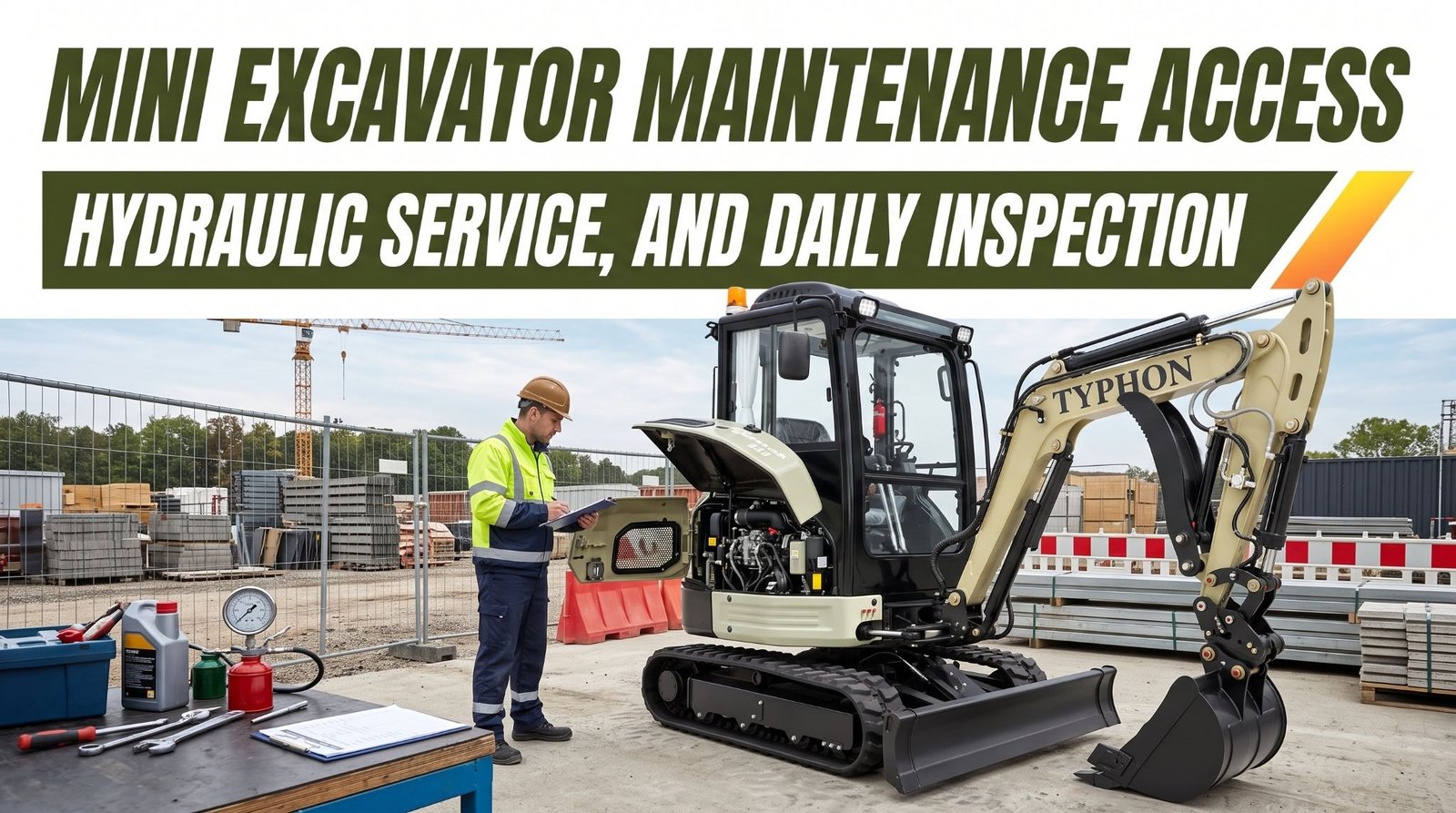
Before a construction crew starts trenching or excavation, the machine needs a quick inspection to catch problems before they interrupt the workday. Fluid levels, hydraulic components, tracks, hoses, fittings, and other areas should be checked for leaks, wear, or damage. Reaching those service points easily can make a significant difference because an inspection that takes only a few minutes is more likely to become a consistent part of the daily routine.
Easy access to filters, fluid reservoirs, grease points, hydraulic connections, and other maintenance areas makes routine checks faster and more practical. Covers that open properly and components positioned within reach allow operators to identify small issues before they develop into larger failures. Poor access, on the other hand, can turn simple checks into time-consuming tasks that are easier to postpone.
Throughout a busy work schedule, consistent inspections help keep a mini excavator ready for the next shift. Operators can follow the manufacturer’s inspection requirements while paying attention to leaks, unusual wear, loose components, and changes in fluid condition. Making service access part of the machine’s daily usability helps turn maintenance from an occasional task into a dependable operating habit.
Accessing Routine Service Points
The first thing that determines whether a daily inspection gets done well is how easily the operator can reach what needs checking. Maintenance covers and engine compartments should open to give practical access to the components inspected most often. When access is awkward, checks get rushed or skipped, and small problems slip through until they become big ones.
On a typical machine, routine maintenance means reaching the engine oil, filters, coolant, battery, fuel system, and other service points. Clear, sensible access to each one makes inspections faster and far more thorough. An operator who can see and touch a component in seconds is far more likely to catch a loose fitting or a low fluid level than one wrestling with a stubborn panel.
Key takeaway: Practical access to engine oil, filters, coolant, the battery, and the fuel system makes daily inspections faster and reduces the chance of skipped checks.
Checking the Hydraulic System
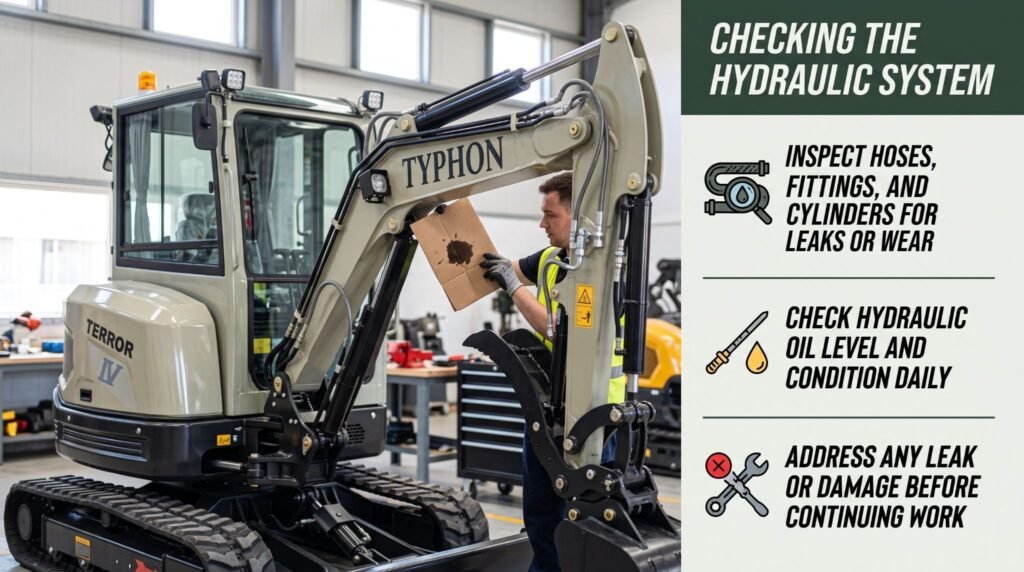
The hydraulic system does the heavy lifting on a mini excavator, so it earns close attention every day. Inspect the hydraulic hoses, fittings, cylinders, pumps, and connections for leaks, damage, or unusual wear. A weeping fitting, a chafed hose, or a scored cylinder rod is exactly the kind of early warning that a careful look catches before it fails under load.
Fluid matters as much as the hardware. Check the hydraulic oil level and condition according to the manufacturer’s maintenance requirements, since both a low level and contaminated oil point to trouble. When you find a leak or a damaged component that could affect safe machine function, address it before continuing to work. Deferring a hydraulic problem rarely ends well, and catching it at inspection means fixing it on your terms.
Key takeaway: Inspect hoses, fittings, cylinders, pumps, and connections for leaks and wear, check hydraulic oil level and condition per the manufacturer, and address problems before continued operation.
Inspecting the Undercarriage
The undercarriage takes a beating that the rest of the machine never sees. Tracks, rollers, idlers, sprockets, and their related components stay in constant contact with the ground, grinding through dirt, rock, and debris all day. That continuous wear makes them a priority in any daily check.
Look for excessive wear, visible damage, packed-in material, and abnormal track tension. A track that’s too loose can slip or come off, while one that’s too tight adds strain and wear, so tension in the manufacturer’s range matters. Clearing packed dirt and debris from the undercarriage is part of the job too, since built-up material accelerates wear and can hide developing problems. A few minutes cleaning and checking here protects an expensive, hardworking part of the machine.
Key takeaway: Inspect tracks, rollers, idlers, and sprockets for wear, damage, debris, and correct tension, and clear packed material to keep the undercarriage working properly.
Engine and Fluid Checks
Fluids play a critical role in keeping an excavator’s major systems operating properly, making daily fluid checks an important part of routine maintenance. Engine oil, coolant, fuel, and hydraulic fluid each support different functions, and checking them before work can help identify changes before they develop into larger problems. A fluid level that has dropped unexpectedly may indicate a leak, consumption issue, or another condition that needs attention.
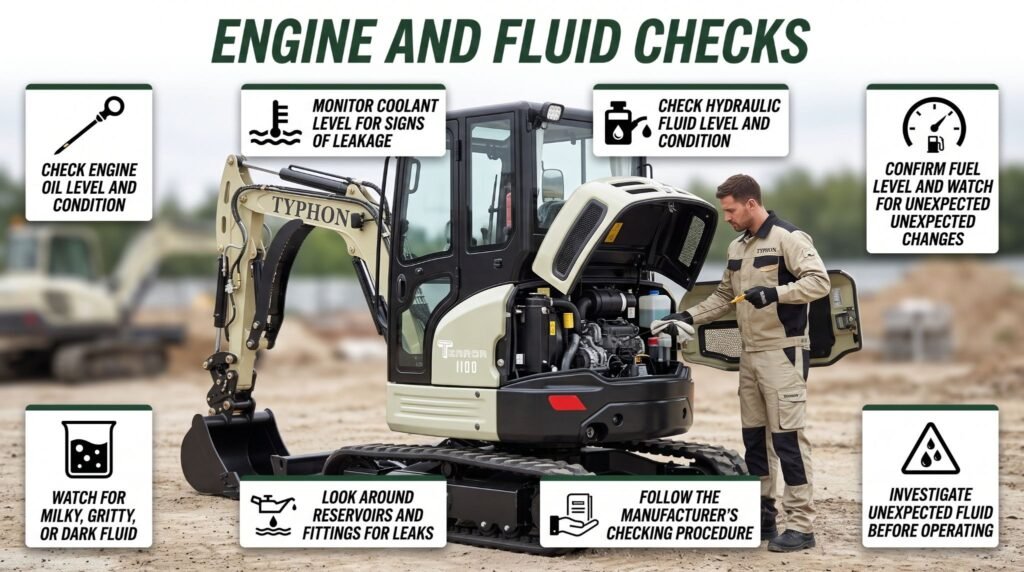
Accurate checking is just as important as checking regularly. Fluid levels should be inspected according to the manufacturer’s recommended procedure, with the machine positioned correctly and the system at the appropriate operating condition. Checking an excavator while it is parked on uneven ground or at the wrong stage of operation can produce misleading readings. Operators should also look beyond the level itself and check the fluid’s appearance and the surrounding components for signs of trouble.
- Engine Oil: Check the level and condition to support proper engine lubrication and operation.
- Coolant: Monitor the level and look for signs of leakage that could affect engine temperature control.
- Hydraulic Fluid: Check the level and condition to help maintain proper hydraulic system performance.
- Fuel Level: Confirm sufficient fuel before operation and watch for unexpected changes that may indicate a leak.
- Fluid Condition: Milky, gritty, unusually dark, or contaminated-looking fluid can indicate a maintenance concern.
- Leak Inspection: Look around reservoirs, hoses, fittings, and connections for visible leaks or damage.
- Correct Checking Procedure: Follow the manufacturer’s recommended position, timing, and inspection method for reliable readings.
- Early Warning Signs: Unexpected fluid loss or visible damage should be investigated before continued operation allows the issue to become more serious.
Key takeaway: Check engine oil, coolant, fuel, and hydraulic fluid using the manufacturer’s procedures with the machine positioned correctly, and treat unusual loss, contamination, or damage as a signal to investigate.
Examining the Attachment
The bucket and any other attachments do the actual digging, so they need a check before work starts. Repeated excavation wears these parts hard, and a worn or loose component here affects both productivity and safety. A quick, deliberate look pays off across the whole shift.
Focus on the parts that take the wear: cutting edges, teeth, pins, bushings, quick couplers, hoses, and connection points. Worn teeth and edges dig poorly, while loose pins and bushings create slop that gets worse fast. Above all, confirm that attachment connections are secure before operating the machine. A quick coupler that isn’t fully engaged is a serious hazard, so this is one check that’s never worth rushing.
Key takeaway: Inspect cutting edges, teeth, pins, bushings, quick couplers, hoses, and connections for wear, and confirm the attachment is securely connected before operating.
Controls and Safety Components
The operator’s station is the final stop before work begins, and it deserves the same care as the rest of the machine. Control levers, switches, gauges, lights, alarms, mirrors, and the other components around the operator should all be checked before operation. These are what keep you in command of the machine and aware of its condition, so a dead gauge or a silent alarm is a real problem.
Extend the check to the area around the machine as well. Scan for loose parts, fresh leaks, or other visible problems on the ground and around the body before starting. And lean on the manufacturer’s daily inspection procedure to guide the whole routine, since a written checklist is the surest way to keep an important component from being overlooked on a busy morning.
Key takeaway: Check control levers, switches, gauges, lights, alarms, and mirrors, scan the surrounding area for problems, and follow the manufacturer’s daily inspection procedure so nothing is overlooked.
Conclusion
Maintenance access directly affects how consistently operators can complete routine inspections and service because accessible service points make it easier to identify wear, leaks, contamination, and developing faults before they interrupt excavation work. Hydraulic hoses, fittings, cylinders, pumps, and fluid condition should be checked regularly, while the undercarriage should be inspected for wear, damage, debris buildup, and correct track tension. Engine oil, coolant, fuel, and hydraulic fluid should be checked using the manufacturer’s procedures and with the machine positioned as specified. Buckets and other attachments also require inspection of couplers, pins, cutting edges, teeth, and connection points to confirm secure installation and acceptable condition. Controls, gauges, lights, alarms, and other required safety components should be tested during the pre-shift inspection, with service covers and access panels checked for proper operation and sufficient access to filters, fluids, and battery components. Combining a consistent daily inspection with scheduled maintenance based on the manufacturer’s service intervals helps identify developing problems early and supports reliable mini excavator operation throughout demanding work cycles.
Frequently Asked Questions
What should be checked on a mini excavator every day?
A daily inspection should cover engine fluids, hydraulic components, tracks, attachments, controls, and the area around the machine. Check engine oil, coolant, fuel, and hydraulic fluid according to the manufacturer’s procedures. Inspect hoses, fittings, cylinders, pumps, and connections for leaks or damage. Check tracks and undercarriage for wear, debris, damage, and proper tension. Inspect bucket teeth, cutting edges, pins, bushings, and couplers, then confirm that controls, gauges, lights, alarms, and mirrors work properly.
Why is hydraulic inspection important?
Hydraulics power most of a mini excavator’s working movements, so leaks, damaged hoses, low fluid, or worn components can reduce performance and create safety risks. Daily checks of hoses, fittings, cylinders, pumps, connections, and hydraulic oil help identify problems early. Addressing leaks or damaged components before operation is safer and can prevent more expensive failures.
How should mini excavator tracks be inspected?
Check the tracks and undercarriage for damage, uneven wear, debris, and correct tension. Inspect rollers, idlers, and sprockets for visible wear or damage as well. Tracks that are too loose can slip or derail, while excessive tension increases wear and strain. Remove packed mud, soil, and debris before inspection so developing problems are easier to identify.
Does maintenance access affect excavator service?
Yes. Easy access to filters, fluid reservoirs, engine components, and hydraulic service points makes inspections and routine maintenance faster and more thorough. Convenient service access also encourages operators to complete daily checks consistently instead of skipping difficult areas. Regular inspections help catch small problems before they develop into breakdowns and keep the excavator reliable.
