How Wheel Loader Canopy Visibility Impacts the Front Work Area
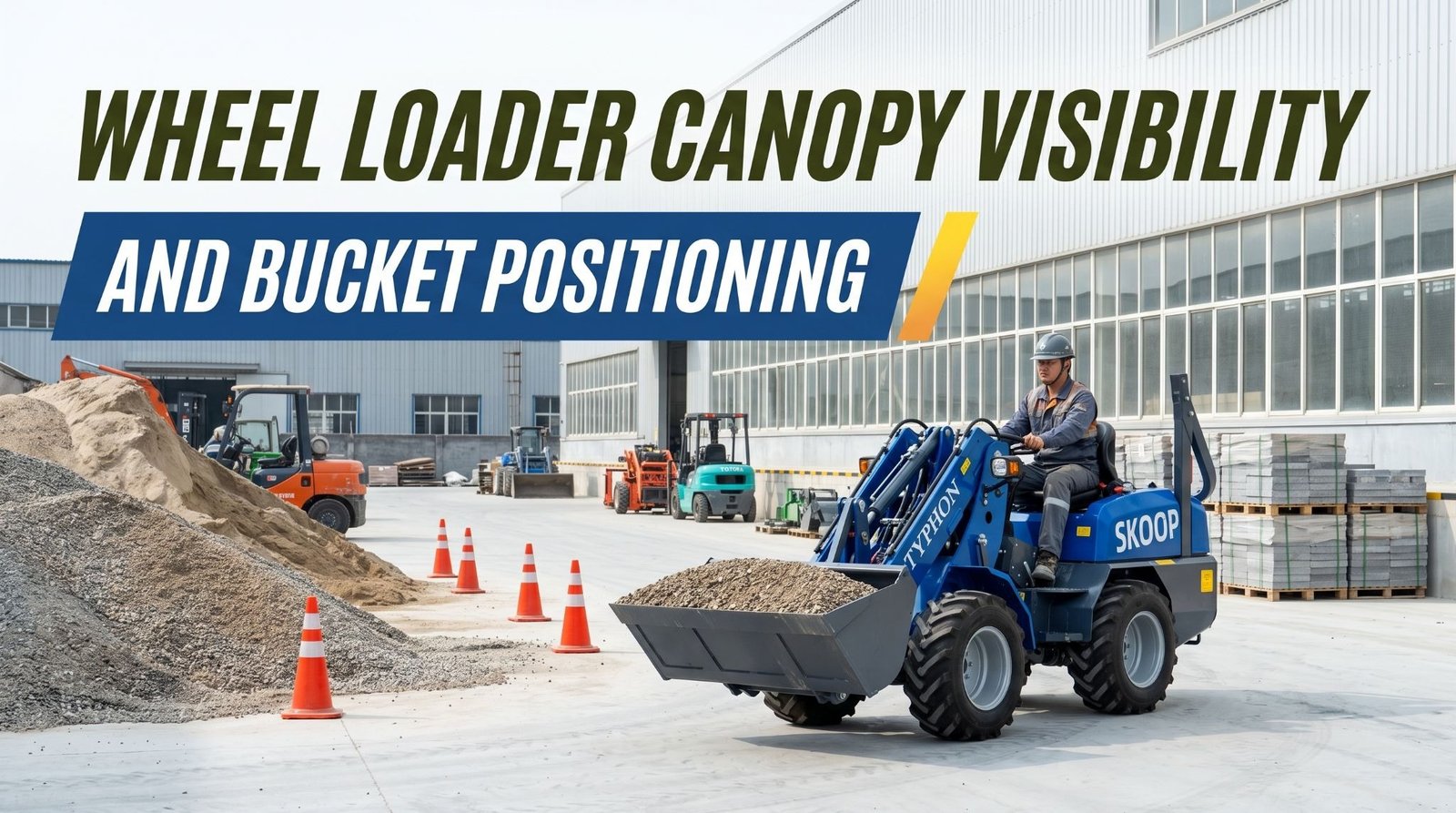
Wheel Loader Canopy Visibility and Bucket Positioning
Approaching a gravel pile, a wheel loader operator lowers the bucket into the stockpile and curls back a full scoop. The next few movements determine how smoothly the cycle continues: raising the load, backing clear, and reversing toward a waiting dump truck. Excessive bucket height can block the ground ahead, while a poorly positioned canopy post may hide part of the truck bed when precise placement matters most. Even a short hesitation can slow the cycle, especially when the same maneuver is repeated hundreds of times during a shift.
From the operator’s seat, visibility depends on much more than the space directly in front of the machine. Cab and canopy design, bucket position, lighting, mirrors, and overall machine condition all influence what remains visible during loading and travel. Good sightlines help the operator monitor the cutting edge, surrounding equipment, travel path, and dumping area without constantly changing position.
During each stage of the work cycle, sightlines change as the bucket moves and the loader changes direction. Keeping the load at a sensible travel height can improve the forward view, while checking the cutting edge helps with accurate material placement. Regular inspection of mirrors, windows, canopy components, and other visibility aids can also reduce avoidable blind areas. These details may seem minor individually, but together they support smoother cycles and more controlled operation around busy jobsites.
Keeping the Front Work Area Visible
The front of a wheel loader is where nearly all the work happens, so a clear view of that zone is the foundation of good operation. The operator needs to see the bucket, the ground directly ahead, the face of the stockpile, and any equipment or workers sharing the space. That forward view guides how deep the bucket bites, how the machine approaches the pile, and how cleanly it lines up on a truck. When the view is open and uncluttered, the operator makes quick, accurate judgments. When it is broken up by poorly placed structure, every one of those judgments takes longer and carries more doubt.
This is where canopy design earns its keep. The operator protection structure has to provide genuine overhead coverage, but it cannot do so at the cost of the forward sightline. Support posts positioned thoughtfully hold the canopy securely while sitting outside the operator’s main line of sight to the bucket and ground. Poorly placed posts do the opposite, planting a blind bar right across the working view so the operator has to shift and lean to see around it. On a busy aggregate yard or construction site, where the loader shares ground with trucks, laborers, and other machines, that lost slice of vision is exactly where a near miss can happen. A well-integrated canopy protects the operator without ever making them work around their own machine.
Key takeaway: A clear forward view of the bucket, ground, and stockpile is the foundation of safe, efficient loading, so canopy supports must protect the operator without blocking the main working sightline.
Positioning Loads During Travel
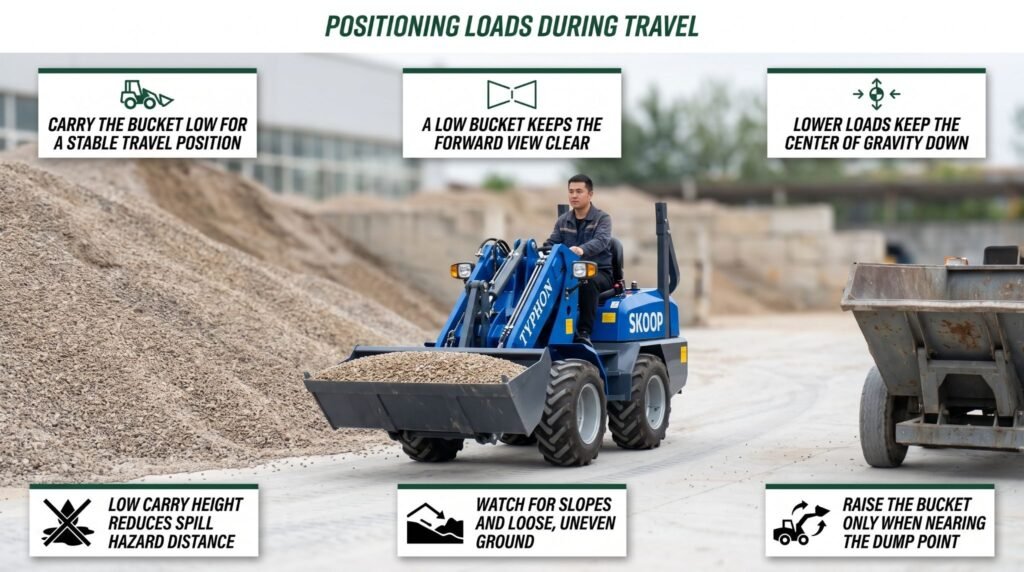
Once the bucket is full, how the operator carries it between the pile and the dump point affects visibility, stability, and safety at the same time. A loaded bucket held too high can block the forward view, raise the machine’s center of gravity, and make spilled material more hazardous. Carrying the bucket at a practical low travel height helps keep the view ahead open, the machine more stable, and the load closer to the ground during travel. This becomes especially important when working on uneven, sloped, or congested jobsites where maintaining control is critical.
- Keep the bucket low: Carrying a loaded bucket at a practical travel height keeps the load closer to the ground and helps maintain a more stable machine.
- Maintain forward visibility: A raised bucket can block the operator’s view ahead. Keeping it low provides a clearer view of the travel path, workers, and obstacles.
- Improve stability: Keeping the load low helps keep the machine’s center of gravity lower, which is especially important when turning or traveling across uneven ground.
- Reduce spill hazards: Material dropped from a raised bucket can fall from greater height and create a larger hazard. A low travel position keeps spilled material closer to the ground.
- Watch changing terrain: Uneven ground, slopes, and loose aggregate can affect machine balance. A low load position gives the operator more control when conditions become less predictable.
- Raise only when dumping: Fill the bucket, lower it to a practical carry height, travel with a clear view, and raise the bucket only when approaching the dump point.
Key takeaway: Carrying a loaded bucket at a low travel height improves forward visibility and machine stability while reducing the danger of a dropped load, making it the safe default for moving material.
Checking Blind Areas Around the Machine
Even with a clear view forward, a wheel loader has areas the operator simply cannot see directly, and knowing where they are is part of running the machine safely. Visibility challenges are not limited to the zone ahead of the bucket. The sides of the machine, the rear corners, and the spaces close to trucks, walls, or other equipment can all fall outside the operator’s direct line of sight. On a busy site where people and machines move constantly, these blind areas are where the most serious incidents tend to occur, precisely because the operator may not know something is there.
Managing them takes a mix of equipment and discipline. Well-adjusted mirrors extend the operator’s view along the sides and toward the rear, while cameras can cover the areas mirrors cannot reach, giving a direct look at what sits behind or beside the machine. On congested or high-traffic sites, a spotter on the ground adds a second set of eyes that no mirror or camera can fully replace, guiding the operator through tight or crowded maneuvers. Beyond the tools, controlled movement is the operator’s own safeguard: reversing slowly, pausing to check surroundings before swinging or backing, and never assuming a blind area is clear. Combining good visibility aids with deliberate, unhurried movement is what keeps the unseen zones from becoming dangerous ones.
Key takeaway: A wheel loader has blind areas along its sides, rear, and near other equipment, so mirrors, cameras, spotters, and controlled movement are essential for monitoring what the operator cannot see directly.
Maintaining Canopy and Visibility Components
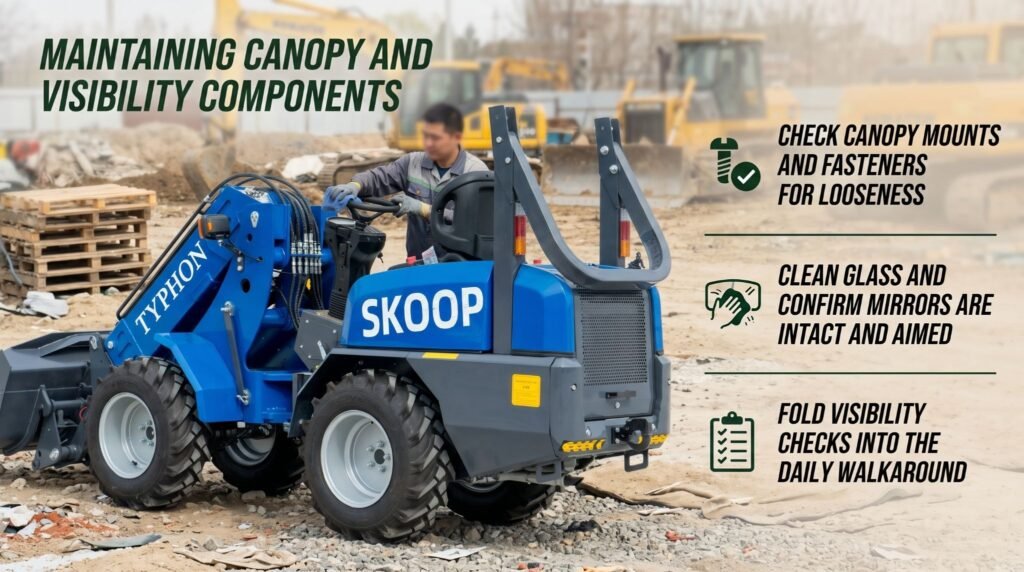
Good visibility depends on equipment that stays in working order, and that condition erodes quietly if no one is watching. The constant vibration of material handling and the jarring of rough ground work on the canopy structure and every visibility component over time. Fasteners loosen, supports take knocks and bend, windows collect dust and grime, and mirrors drift out of adjustment or crack. Any one of these chips away at what the operator can see, often so gradually that it goes unnoticed until the view is meaningfully worse. Keeping visibility sharp means treating these components as something to inspect, not just to fix when they fail.
A thorough routine check covers the whole system that supports the operator’s view. That means looking over the operator protection structure and its mounting hardware for looseness or damage, cleaning glass so grime and dust do not cloud the sightlines, and confirming mirrors are intact and correctly aimed. Cameras should be checked for a clear, working image, lighting confirmed for operation so visibility holds up in dim or low-light conditions, and the attachment area looked over as part of the same pass. Folding these checks into the daily walkaround inspection keeps them from slipping, and it catches small problems, a loose bracket, a dirty lens, a misaimed mirror, while they are still quick to correct. A machine maintained this way gives the operator the full view it was built to provide, shift after shift.
Key takeaway: Vibration and jobsite wear gradually degrade canopy hardware, glass, mirrors, cameras, and lighting, so regular inspection of every visibility component keeps the operator’s sightlines clear and reliable.
Conclusion
Wheel loader visibility depends on operator-station design, bucket position, auxiliary visibility systems, and machine maintenance working together throughout the loading cycle. An unobstructed forward view allows the operator to monitor the bucket, cutting edge, ground, and material pile, while keeping the bucket low during travel helps preserve forward visibility and machine stability. Monitoring the cutting edge during loading improves control of bucket penetration, fill level, and material placement, supporting consistent loading cycles. Mirrors, cameras, lighting, and spotters help address side and rear blind areas that cannot be eliminated through operator position alone, while controlled machine movement reduces the risk associated with limited visibility. Canopy supports, windows, mirrors, cameras, and lighting should also be inspected regularly because damaged, contaminated, or poorly positioned components can reduce available sightlines. Efficient operation therefore requires coordinating bucket height, load position, travel speed, visibility equipment, and site conditions rather than relying on operator awareness alone. Maintaining clear sightlines throughout scooping, traveling, and dumping allows the wheel loader to achieve more consistent bucket control, material placement, and maneuvering performance while supporting safe operation.
Frequently Asked Questions
How does bucket position affect wheel loader visibility?
A raised bucket can block much of the forward view, hiding the ground, obstacles, and nearby workers. Keeping the bucket low during travel improves sightlines and helps the operator judge terrain and hazards. Raise it only when needed for tasks such as reaching dump height, then lower it again before traveling.
Why is cutting-edge visibility important?
Seeing the bucket’s cutting edge helps the operator judge digging depth, pile engagement, and bucket fill. This allows more precise control and helps prevent digging too deep, stalling the machine, or taking partial loads. Clear cutting-edge visibility is especially useful for grading, leveling, and other finish work.
Can canopy supports obstruct a wheel loader operator’s view?
Yes. Poorly positioned or damaged supports can create blind spots around the bucket, ground, or truck bed. A well-designed canopy keeps support posts out of key sightlines while providing overhead protection. Check visibility from the actual seated operating position and inspect supports regularly for damage or movement.
What improves visibility around a wheel loader?
Clean glass, properly adjusted mirrors, working cameras, and adequate lighting all improve visibility. Keeping the bucket low during travel also opens the forward view. Operators should move carefully, check surroundings before reversing or swinging, and use a spotter in congested areas when direct visibility is limited.
