Wheel Loader vs Forklift: The Main Differences
Wheel Loader vs Forklift: Which Is Best for Material Handling?
A supplier’s yard is stacked with pallets of blocks, loose piles of sand, and a delivery truck waiting to be unloaded. The operator on a forklift slides the forks under a pallet, lifts it clean off the truck, and stacks it in the racks with ease. But when he turns to the sand pile, the forks are useless. He needs a bucket. Across the lot, a wheel loader scoops sand in one pass, then struggles to place a pallet with the same precision the forklift showed. Neither machine failed. They were simply built to handle material in two different ways.
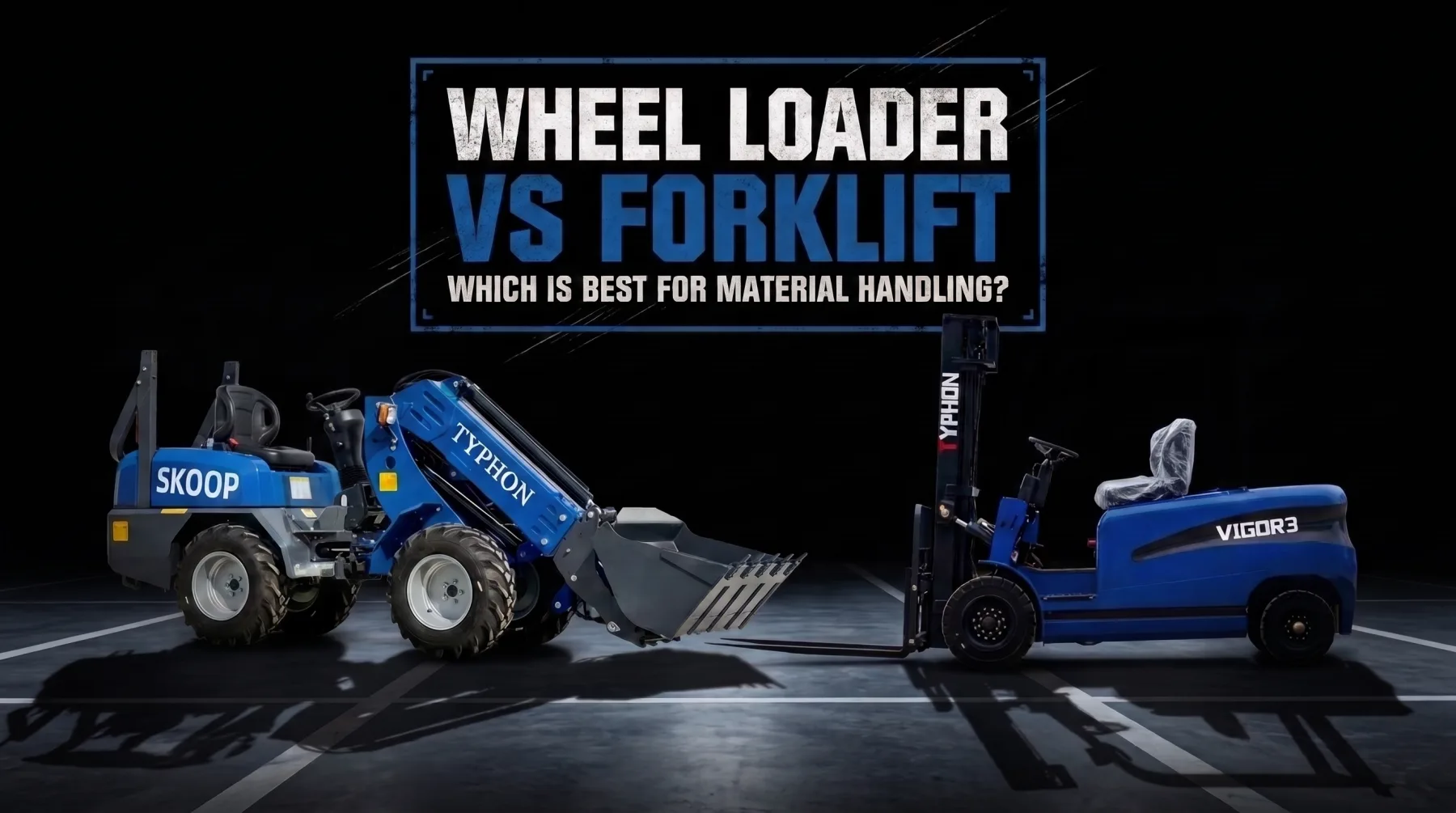
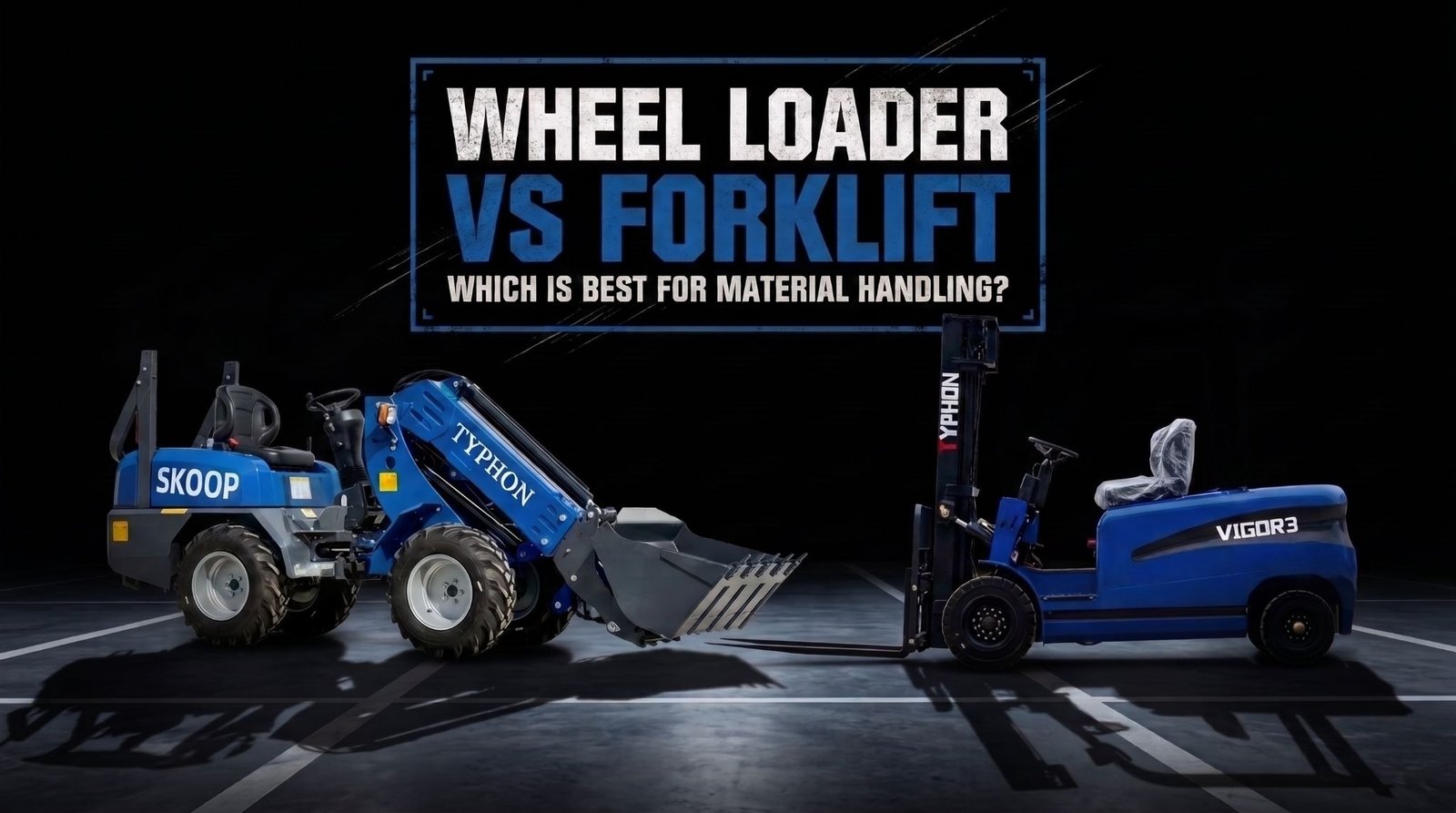
The choice between a wheel loader vs forklift comes down to what kind of material you move and how you move it. A wheel loader scoops loose, bulk material with a large front bucket and carries it across a site. A forklift slides forks under palletized or unitized loads, lifts them, and stacks them with precision. Both are core material handling equipment, and both show up on job sites, yards, and warehouses every day. But they solve different problems, and picking the wrong one costs you time, fuel, and a stalled crew. Here is how they stack up and when each machine earns its place.
The smartest choice is not about which machine is more powerful, but which one matches the way your operation handles materials every day. A forklift can save hours when accuracy, lifting height, and controlled placement are the priority, while a wheel loader becomes the clear winner when the job involves moving large volumes of loose material quickly. Understanding the difference between handling individual loads and handling bulk material helps prevent wasted time, unnecessary fuel use, and using a machine outside its strengths. The right equipment turns routine material movement into a faster, safer, and more efficient part of the workflow.
Wheel Loader vs Forklift: Maneuverability
Wheel Loader vs Forklift Differences That Matter on the Jobsite
Look past the specifications and the difference becomes much clearer. A wheel loader is built for bulk material handling. It drives a large front bucket into piles of sand, gravel, soil, or aggregate, lifts heavy loads, and carries them across a site for dumping or truck loading. It is designed for speed and volume, making it the better choice when the job involves moving large amounts of loose material that cannot be handled efficiently with forks.
A forklift is designed for controlled load handling. Its forks slide underneath pallets, crates, containers, or bundled materials, allowing operators to lift, transport, and place individual loads with accuracy. It excels when materials need to be stacked, organized, loaded, or positioned in specific locations, especially in warehouses, yards, and storage areas where precision matters more than moving high volumes.
The key idea is simple: a wheel loader moves loose material by the bucketful, while a forklift moves packaged loads by the pallet. Once you understand what type of material your operation handles most often, the right machine becomes much easier to choose. If your work involves both bulk materials and palletized goods, focusing on your daily workflow and the tasks you perform most will matter more than comparing a single specification or capacity number.
The Differences That Matter on the Jobsite
Wheel Loader vs Forklift: The Main Differences
The right machine depends on the material you actually move, not the widest range you can picture. Here is how the two stack up across the factors that decide the day.
Wheel Loader vs Forklift: The Core Difference
Load Capacity and Type
The best Wheel Loader vs Forklift choice depends entirely on your daily workload.
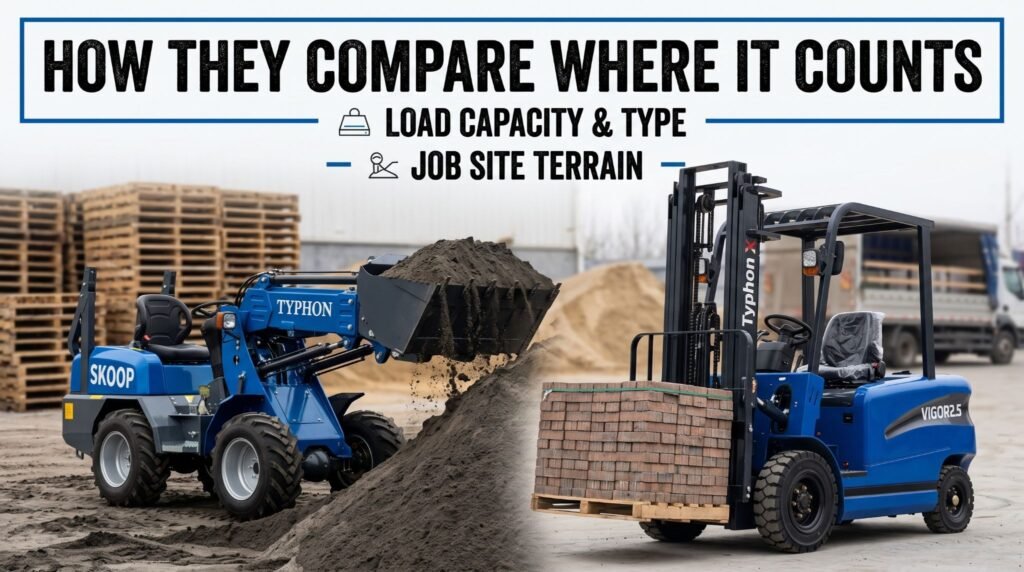
This is where the two split the clearest. A wheel loader carries big, heavy volumes of loose material, scooping a full bucket of gravel or sand in a single pass. Its capacity is measured by bucket size and weight, and larger models move tons per scoop. For bulk work, nothing a forklift does comes close.
A forklift is rated by how much weight it can lift on the forks and how high it can raise it. It handles palletized and unitized loads with ease, but it cannot touch a loose pile. Match the machine to the load, and the choice is usually obvious the moment you look at what’s sitting in the yard. Manufacturers publish rated capacities and load charts for exactly this reason, so comparing them against your typical loads is worth the effort before you rent or buy.
Wheel Loader vs Forklift: The Differences That Matter on the Jobsite
Job Site Terrain
Terrain decides more than many buyers expect. A wheel loader rides on large tires with good ground clearance, so it crosses dirt, gravel, mud, and uneven lots without much trouble. It was built for open sites and rough ground, which is why you see it on quarries, landscape yards, and construction sites.
A standard warehouse forklift wants smooth, firm surfaces and struggles the moment the ground turns soft or uneven. A rough-terrain forklift closes that gap with bigger tires and more clearance, but a general-purpose forklift stays best on pavement and packed lots. If your site is rough, the wheel loader usually holds the edge.
Speed and Cycle Time
Cycle time depends on the task, which is why crews often run both. A wheel loader’s cycle is a scoop-drive-dump loop, and it moves large volumes fast across open ground. The more bulk material you have and the more room to travel, the quicker that loop pays off.
A forklift’s cycle is a lift-carry-place loop, and it’s fast and precise over short distances on firm ground. Where it wins on speed is stacking and staging, setting pallets in racks or lining up deliveries far quicker than a loader ever could. Each machine is quick at the work it was built for and slow at the other.
Indoor vs Outdoor Use
Forklifts do their own indoor work. Electric and propane models run clean enough for enclosed spaces, fit down aisles, and stack loads high in racking systems. For warehouses, distribution, and covered storage, a forklift is the natural pick.
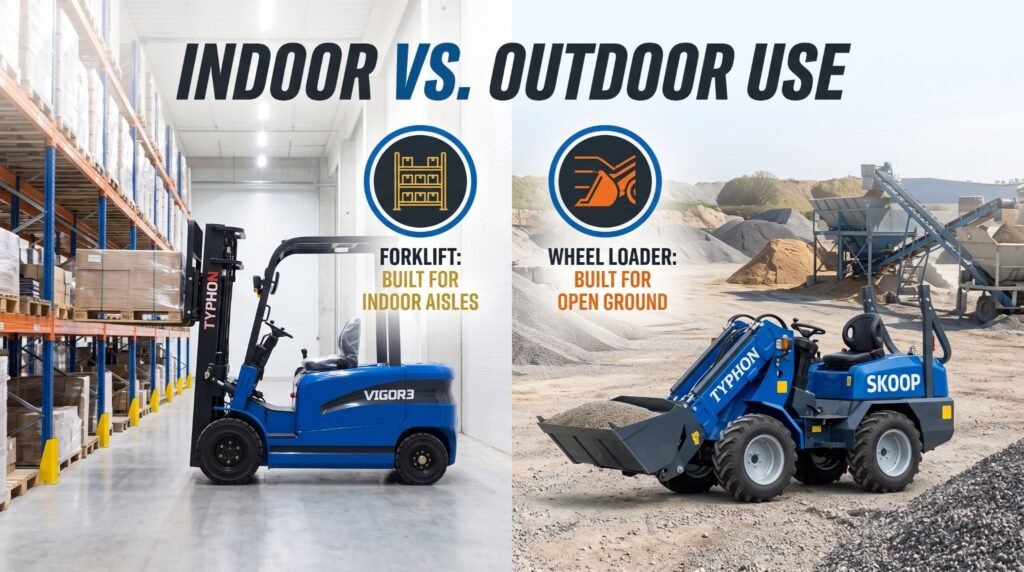
Wheel loaders lean outdoors almost entirely. Their size, tire setup, and bucket work make them a poor fit for indoor aisles and finished floors. They belong in open yards and on job sites where there’s room to maneuver and material to scoop. Matching the machine to the environment is half the decision.
Wheel Loader vs Forklift: Finding Your Ideal Work Machine
Maneuverability
Forklifts turn tight and work well in confined spaces, which is what makes them so useful in packed warehouses and busy loading docks. They tuck into spots a wheel loader would never fit. The trade is that they stay best on firm, level surfaces.
Wheel loaders are larger and need more room to turn and operate, though articulated models steer surprisingly well for their size on open ground. In a cramped yard or indoors, that size becomes a liability. Match the maneuverability to the space your work demands.
Cost and Ownership
Cost tracks capability. Forklifts generally carry a lower entry price for standard warehouse models, and the used market is deep and easy to shop. They’re straightforward to maintain, though tires, forks, and hydraulics still need regular attention.
Wheel loaders typically cost more upfront because of their size and bulk-handling muscle, and fuel and tire costs run higher on larger units. For operations that move serious volume, that cost pays back fast in material moved per hour. Following a steady protects either machine and stretches component life, and safe operating practices around loaders, forklifts, and ground crews protect the whole team on site.
Finding Your Ideal Work Machine
Wheel Loader vs Forklift: Load Capacity and Material Type
The right equipment choice comes from the material you handle most often, not the widest range of tasks you can imagine. Understanding your daily workflow, jobsite conditions, and the type of loads you move will help you choose the option that delivers the best productivity and value.
Choose a wheel loader if your work focuses on moving loose, bulk material such as sand, gravel, soil, mulch, or aggregate, along with loading trucks and clearing large piles across open sites. Its bucket capacity, ground clearance, and ability to travel over rough terrain make it a strong option for high-volume material handling. For construction sites, material yards, and operations where moving large amounts of loose material is the main priority, a wheel loader is often the better fit.
Choose a forklift if your work involves palletized and packaged loads, stacking materials in racks, unloading deliveries, and organizing inventory on firm surfaces or indoors. Its lifting height, precise control, and compact maneuverability make it ideal when materials need to be placed carefully rather than moved in large quantities. For warehouses, suppliers, and storage yards, a forklift provides the accuracy needed to keep operations running smoothly.
Still unsure? Many operations benefit from having both available, with a wheel loader handling bulk piles and a forklift managing pallets and organized storage. Matching the right attachment to the task also expands what each unit can handle, allowing tools like forks, buckets, and grapples to improve versatility without changing the core workflow.
Conclusion
Both machines move material, so the choice comes down to what kind of material you move and how. A wheel loader scoops loose, bulk material by the bucketful and carries it fast across open, rough ground, which makes it the pick for sand, gravel, soil, and truck loading in yards and on job sites. A forklift slides forks under palletized loads and stacks them with precision, which makes it the tool for warehouses, racking, and staging packaged deliveries. Load type, terrain, and indoor versus outdoor use decide the winner far more than price alone. For operations that handle both bulk and packaged material, the real answer is often running both, letting each machine do the half of the job it was built for. Match the machine to the material in front of you, weigh the load charts and cost against your typical work, and when you are ready to source dependable material handling equipment, reach out to a trusted equipment specialist who can pair reliable machines with the results your projects depend on.
Frequently Asked Questions
What is the main difference between a wheel loader and a forklift?
A wheel loader scoops and carries loose, bulk material with a large bucket, while a forklift lifts and stacks palletized or packaged loads with its forks.
Can a wheel loader be used for pallets like a forklift?
Yes, with a pallet fork attachment a wheel loader can move pallets, but a forklift still handles stacking, tight spaces, and rack heights with more precision.
Which is better for indoor material handling, a wheel loader or a forklift?
A forklift is far better indoors because it fits down aisles, runs clean on enclosed sites, and stacks loads high, while a wheel loader is built for open outdoor work.