Zero Tail Swing vs Conventional Mini Excavator
Zero Tail Swing vs Conventional Mini Excavator: 7 Essential Differences for Better Performance
A crew pulls up to a residential lot to trench a footing along a fence line. There is a house on one side, a block wall on the other, and about eight feet of working room in between. The operator on a conventional machine has to stop, reposition, and swing wide every time the boom turns, clipping the wall risk with every pass. A zero tail swing machine parked next to it simply rotates in place and keeps digging. That gap in productivity is the whole reason this comparison exists.
Zero Tail Swing vs Conventional Mini Excavator is one of the most important comparisons for contractors working in residential construction, landscaping, utility installation, and other confined jobsites.
A crew pulls up to a residential lot to trench a footing along a fence line. There is a house on one side, a block wall on the other, and about eight feet of working room in between. The operator on a conventional machine has to stop, reposition, and swing wide every time the boom turns, risking contact with the wall. A zero tail swing machine parked next to it simply rotates in place and keeps digging. That difference in productivity is the whole reason this comparison exists.
Choosing a zero tail swing mini excavator or a conventional mini excavator comes down to how much room the tail needs when the machine rotates. A zero tail swing model keeps its rear inside the track width, so it spins without hanging over the edge. A conventional model swings its counterweight past the tracks for better balance and lifting muscle. Both dig, both grade, and both fit into a compact excavator for confined areas, but they behave very differently the moment walls close in. Here is how they stack up and when each one earns its spot on your job.
The decision is not simply about machine size but about matching the excavator to the environment you work in every day. Jobsites with buildings, fences, utilities, or active traffic leave little room for error, making maneuverability just as valuable as digging performance. On more open sites where space is not a limitation, stability and lifting capability often become bigger priorities. Understanding where your machine will spend most of its time is the key to choosing the design that delivers the best balance of productivity, safety, and efficiency.
The Core Difference in Plain Terms
The whole debate turns on one part of the machine: the tail, or the rear counterweight that balances the boom. On a zero tail swing design, that tail stays within the width of the tracks as the cab rotates. Rotate a full circle against a wall and nothing sticks out past the tracks. That is what makes these machines a natural pick for mini excavator tight spaces.
A conventional mini excavator lets the tail swing out beyond the tracks. That overhang gives the machine a longer, heavier counterweight, which improves balance and lifting stability. The trade is clearance. Every time the operator rotates near an obstacle, that tail sweeps a wider arc and demands room the site may not have.
There is also a middle ground worth knowing. Reduced tail swing models let the tail extend just slightly past the tracks, splitting the difference between clearance and stability. If you want to weigh where your work really lands, understanding your typical helps more than any spec sheet number.
How They Compare Where It Counts
The best excavator is not always the one with the biggest lifting numbers or the most compact design. It is the one that matches the conditions you face on a daily basis. A machine that performs brilliantly on open construction sites may lose efficiency in a cramped residential backyard, while an excavator built for confined spaces may offer advantages you rarely use on wide-open projects. Looking beyond the specifications and focusing on your typical jobsites makes it much easier to choose the design that delivers the best combination of productivity, safety, and long-term value. Here is how zero tail swing and conventional mini excavators compare across the factors that have the biggest impact on day-to-day performance.
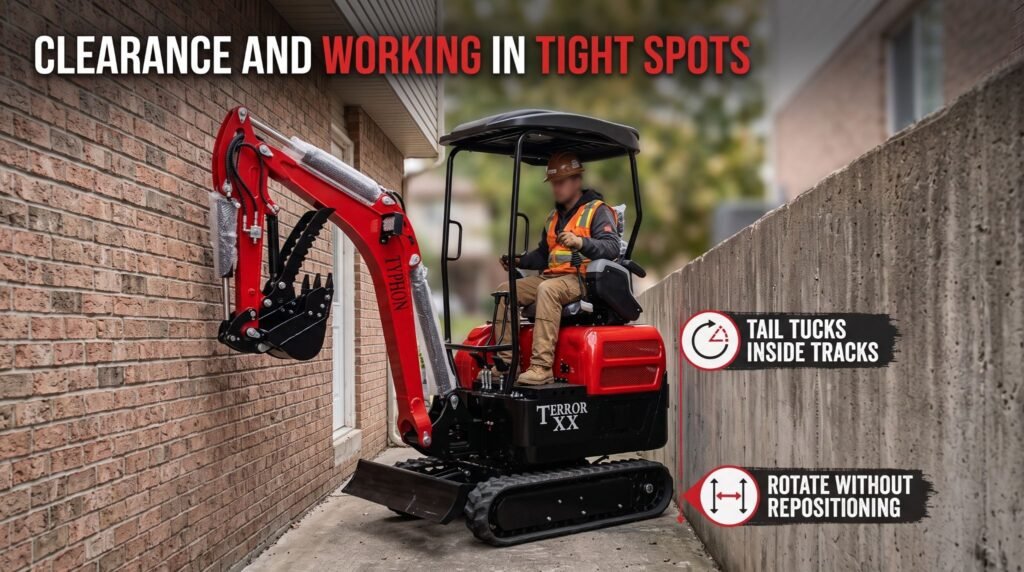
Clearance and Working in Tight Spots
Zero Tail Swing vs Conventional Mini Excavator comparison in a residential construction site
Zero Tail Swing vs Conventional Mini Excavator is an important decision for contractors working in residential construction, landscaping, utilities, and confined job sites. Choosing the right compact excavator can improve productivity, reduce safety risks, and help operators complete projects faster. A zero tail swing mini excavator provides excellent maneuverability in tight spaces, while a conventional mini excavator delivers strong stability and lifting performance. In this guide, we compare zero tail swing and conventional excavators to help you choose the best machine for your construction needs.
Zero tail swing wins on clearance without argument. When you work between buildings, along fences, beside parked vehicles, near active traffic, or inside structures, keeping the counterweight tucked within the track width allows the machine to rotate freely without striking nearby obstacles. That added maneuverability reduces the need for constant repositioning, shortens digging cycles, and gives operators greater confidence in confined spaces. Over the course of a full project, those small time savings can translate into noticeably higher productivity and lower risk of accidental damage.
A conventional mini excavator can still perform well in tight areas, but it demands more attention from the operator. Every swing requires awareness of the counterweight, and in narrow spaces the machine often has to stop, reposition, or take a wider approach before continuing the dig. That extra caution slows the work cycle and increases the chance of contacting walls, fences, equipment, or finished landscaping. While experienced operators can work safely with a conventional design, the process is naturally less forgiving when space is limited.
The difference becomes even more noticeable on projects that require frequent rotation, such as trenching alongside foundations, installing utilities, or landscaping in residential backyards. In these situations, a zero tail swing machine maintains a smoother workflow because the operator can focus on the digging task rather than constantly checking rear clearance. On open jobsites the advantage is less significant, but in confined environments it is often the feature that has the biggest impact on efficiency and safety.
Stability, Lifting, and Digging Power
Conventional machines tend to win on stability and lift. That extra counterweight hanging past the tracks balances the boom under load, so the machine can often lift more and stay planted while reaching out. If your work leans on heavier lifting, deep reach, or handling material at the edge of the machine’s capacity, that stability matters.
Zero tail swing models are stable and capable, but the shorter counterweight can limit lifting margin compared to a similar-size conventional unit. Manufacturers publish lift charts and stability ratings for exactly this reason, and comparing them before you commit is worth the effort. For most trenching, grading, and utility work, either machine handles the load fine.
Key Differences Between Zero Tail Swing and Conventional Models
Cost, Availability, and Resale
Cost is closer than many buyers expect, but conventional machines often carry a slight edge on upfront price and are widely available on nearly any lot. They have been the standard for years, so the used market is deep and parts are easy to source.
Zero tail swing machines can cost a bit more and may take longer to find in the exact size you want, though demand for urban and residential work keeps them popular and holds their resale value well. If your business regularly bids confined jobs, that specialization can pay you back in won work rather than just spec-sheet savings.
Another factor to consider is long-term ownership. Maintenance costs for both designs are generally similar because they share many of the same engines, hydraulic systems, and service intervals. The bigger difference comes from utilization. A machine that matches the type of work you perform every day is more likely to stay busy, generate consistent revenue, and hold its value over time. Choosing the excavator that fits your market often has a greater impact on profitability than the small difference in purchase price alone.
The Right Machine for Every Task
The best choice is rarely determined by a machine’s specifications alone. Instead, it comes down to the type of jobsites you work on every week. A machine that excels in wide-open construction projects may become inefficient in narrow residential spaces, while one built for confined areas might not offer the same advantages on open ground. Choosing based on your typical work environment rather than the occasional oversized project will deliver better productivity, improved safety, and a stronger return on your investment.
Choose a zero tail swing mini excavator if you regularly work in residential yards, between structures, along roadways, indoors, or anywhere a swinging tail becomes a hazard. The freedom to rotate in place protects finished surfaces, keeps crews safer near obstacles, and keeps you productive where a conventional machine has to reposition. For contractors focused on urban construction, landscaping, utility work, and remodeling projects, it is often the more practical investment.
Choose a conventional mini excavator if most of your work takes place on open lots, new construction sites, farms, or rural properties where clearance is rarely an issue. The extended counterweight provides greater lifting stability, often comes with a lower purchase price, and makes the machine well suited for crews that prioritize lifting performance, straightforward operation, and value over maximum maneuverability in confined spaces.
Still unsure? Renting each type for a stretch on your real job sites tells you more than any brochure. You will feel the difference the first time you rotate against a wall, and you will know which machine keeps your crew moving. Pairing the right machine with the right often matters as much as the tail design itself, and following a steady protects your investment on either one. Safe operating practices around confined and occupied sites also protect both the crew and the public.
A crew pulls up to a residential lot to trench a footing along a fence line. There is a house on one side, a block wall on the other, and about eight feet of working room in between. The operator on a conventional machine has to stop, reposition, and swing wide every time the boom turns, risking contact with the wall. A zero tail swing machine parked next to it simply rotates in place and keeps digging. That difference in productivity is the whole reason this comparison exists.
A crew pulls up to a residential lot to trench a footing along a fence line. There is a house on one side, a block wall on the other, and only about eight feet of working room.
The operator on a conventional machine has to stop, reposition, and swing wide every time the boom turns, risking contact with the wall. A zero tail swing machine rotates within its track width and continues digging without extra repositioning.
That improvement in maneuverability and productivity is why so many contractors compare these two machine designs before buying.
Zero Tail Swing vs Conventional Mini Excavator
Conclusion
Both machines dig, grade, and trench well, so the choice really comes down to clearance versus stability. A zero tail swing mini excavator keeps its tail inside the tracks, which makes it the safer, faster pick for tight residential lots, work between structures, and any confined site where a swinging counterweight becomes a liability. A conventional mini excavator swings its tail wider for better lifting stability, a lower price, and easier availability, which suits open sites and heavier work. Match the machine to the ground you work on most, weigh the lift charts and clearance against your real jobs, and when in doubt, rent each type before you buy. When you are ready to match the right compact machine to your job, reach out to a trusted equipment specialist who can pair reliable equipment with the results your projects depend on.
Frequently Asked Questions
Is a zero tail swing mini excavator better for tight spaces?
Yes, because the rear stays inside the track width and rotates without hanging over obstacles, making it safer and faster in confined areas than a conventional model.
What is the downside of a zero tail swing excavator?
The shorter counterweight can slightly reduce lifting stability compared to a similar-size conventional machine, and the purchase price is often a little higher.
Can a conventional mini excavator work in confined areas?
Yes, but the operator must watch the swinging tail and reposition more often, which slows cycles and raises the risk of hitting walls, vehicles, or finished surfaces.
