
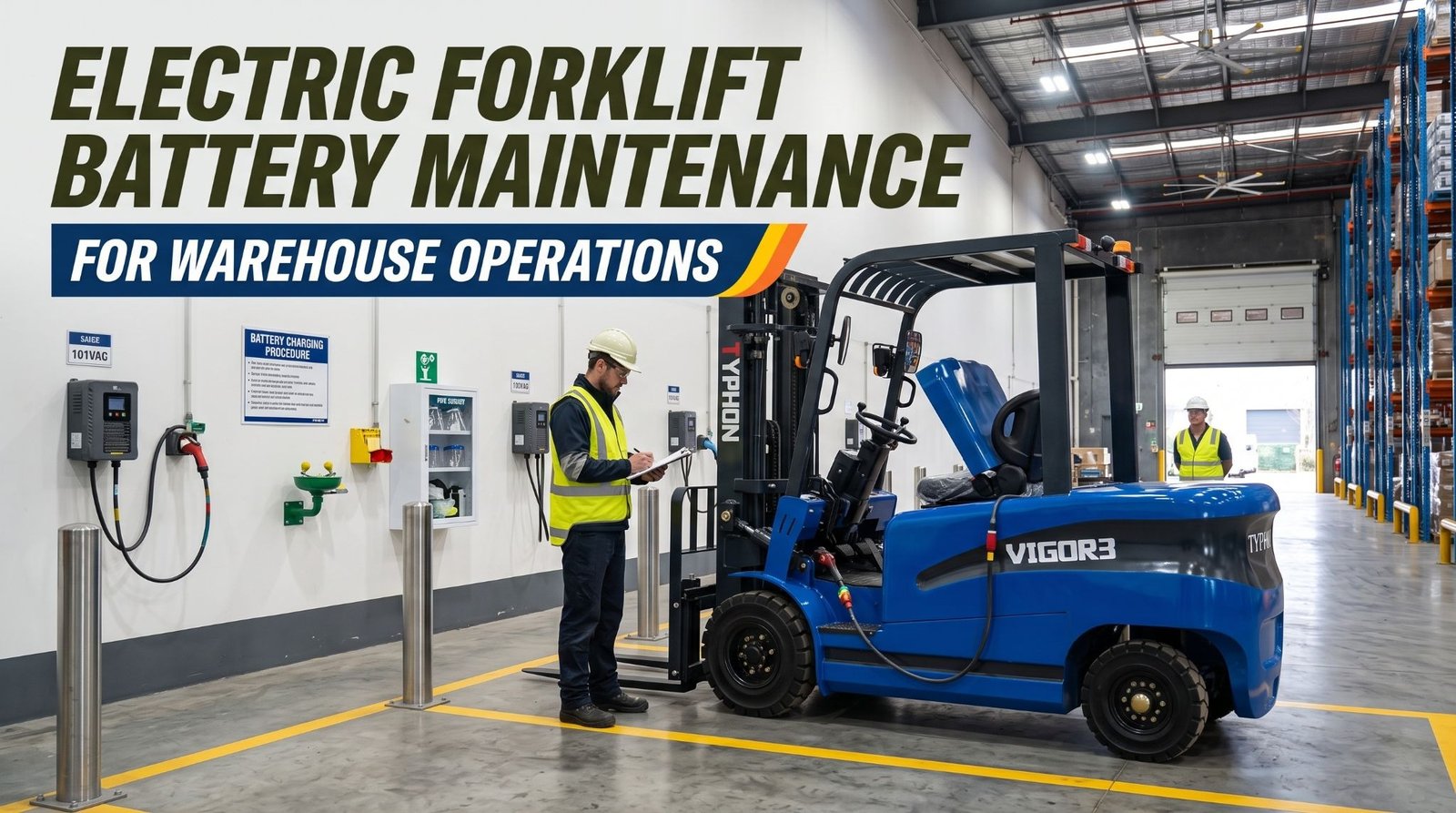
Electric Forklift Battery Maintenance for Warehouse Operations
Electric Forklift Battery Maintenance for Warehouse Operations
Keeping a busy distribution center running depends on having enough forklifts ready for every shift. Orders may be queued, trucks moving into loading docks, and pallets waiting for transport when one machine begins struggling to lift a full load. Another may remain unavailable because its battery was placed in charge too late, leaving the rest of the fleet to handle the additional workload.
Battery condition directly affects how reliably an electric forklift performs throughout the workday. Charging habits, inspection routines, battery connections, water levels where applicable, and overall battery condition can influence equipment availability and performance. Delayed charging or missed maintenance can reduce available operating time and create problems during periods of high demand.
Organized battery care helps keep electric forklifts ready from one shift to the next. Following the correct charging procedure, checking connections and battery condition, keeping charging areas organized, and planning charging around shift schedules can reduce avoidable downtime. Consistent maintenance allows the fleet to support lifting and material transport throughout the working day.
Follow Battery Charging Requirements
Charging has a larger effect on battery life and reliability than any other routine task. Every battery and forklift combination comes with specific charging procedures, and those procedures reflect how the system is designed to perform. Following them keeps the battery healthy and ready for its next operating period.
The first requirement is the correct charger. Chargers are matched to battery voltage, capacity, and technology, so a charger suited to one forklift may not be right for another in the same fleet. The charging method matters too. Lead-acid and lithium-ion batteries, for example, often have different expectations for when to charge, how long to charge, and whether partial charging during breaks is appropriate.
Consistency makes the difference over time. When every operator follows the same approved procedure, you reduce the variation that wears batteries unevenly and causes unpredictable run times. That reliability shows up in fewer mid-shift slowdowns and a fleet you can count on.
Key takeaway: Charge each battery using the procedures specified for that battery and forklift, with the correct charger and charging method, to maintain the battery system and prepare the truck for its next shift.
Inspect Battery Components
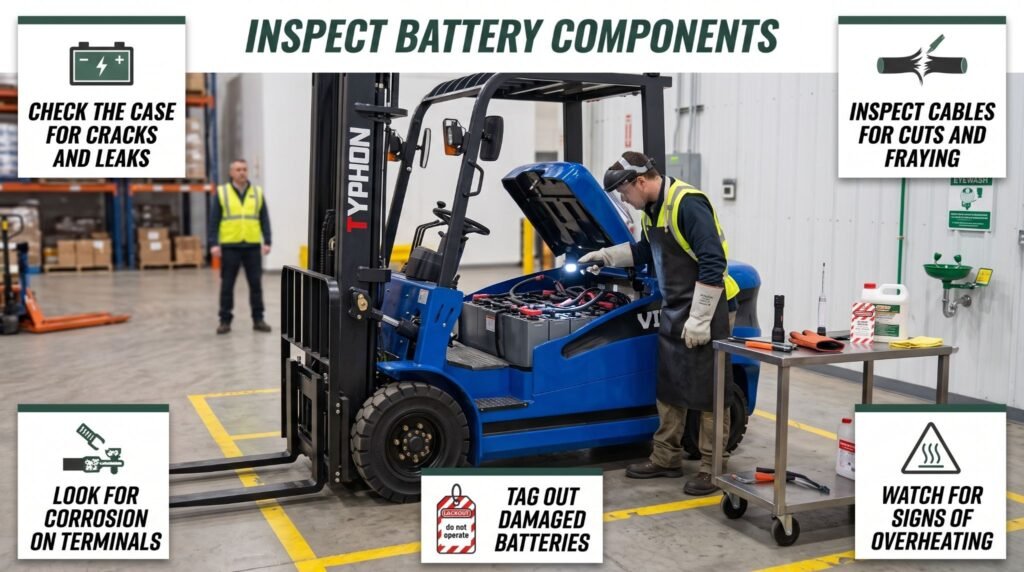
Routine inspection catches problems while they are still small. A regular look at the battery and its related parts can reveal visible damage before it affects performance or safety. It is one of the simplest ways to protect uptime.
Focus on the components that carry and connect power. Check the battery case for cracks, bulging, or leaks. Look over cables for cuts, fraying, or exposed wire. Examine connectors and terminals for damage, looseness, corrosion, or signs of overheating such as discoloration. Any of these can point to a condition that needs attention.
When you find a problem, address it according to the manufacturer’s maintenance procedures before the forklift returns to normal service. Tag the truck out if needed and route repairs to trained personnel. Putting a damaged battery back into rotation risks further damage, unplanned downtime, and potential safety hazards.
Key takeaway: Regularly inspect battery cases, cables, connectors, terminals, and related components for visible damage, and resolve issues per the manufacturer’s procedures before the forklift returns to service.
Keep Battery Connections Clean
Electrical performance depends on good contact. Dirt, dust, and contamination can build up on accessible battery components and interfere with the connections that deliver power to the forklift. In a warehouse environment, that buildup happens steadily over time.
Clean connections support reliable electrical contact, which helps the forklift run consistently throughout the shift. They also make inspection easier. It is much simpler to spot corrosion, cracks, or loose hardware on a clean surface than on one covered in grime.
Cleaning should always follow approved procedures. Use the methods, materials, and personal protective equipment the manufacturer recommends, and make sure the forklift is shut off and the battery properly disconnected when required. Improvised cleaning methods can damage components or create safety risks, so stick to the approved process.
Key takeaway: Keep accessible battery components and connections clean using approved procedures to support reliable electrical contact and make visible problems easier to identify.
Monitor Charging Conditions
Where and how a battery charges can matter as much as the charger itself. Depending on the battery technology, temperature and surrounding conditions can affect charging requirements and overall battery performance. A suitable charging environment helps each charge do its job.
Temperature deserves attention. Batteries that are too hot or too cold may not charge as intended, and excessive heat can shorten battery life. Some battery types also need adequate ventilation during charging, which is why charging areas are often designated and set up for that purpose.
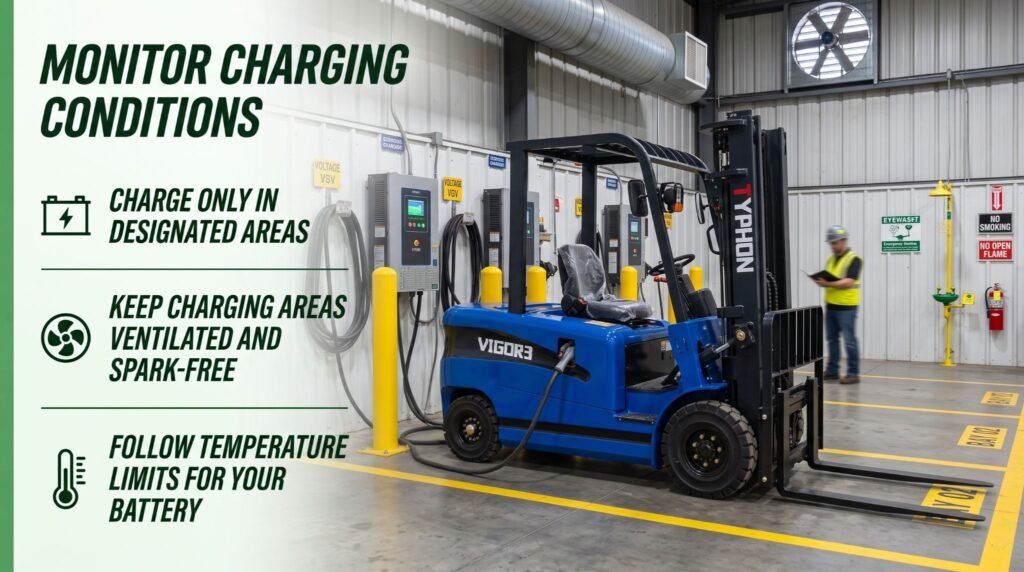
Warehouse personnel should follow the manufacturer’s recommendations for charging location, temperature, and ventilation. Keep charging areas clear, organized, and free of obstructions. Make sure staff know which areas are approved for charging and what conditions to watch for, so every forklift charges in a safe, controlled setting.
Key takeaway: Battery temperature and surrounding conditions can affect charging, so follow the manufacturer’s recommendations for charging location, temperature, and ventilation.
Avoid Improper Charging Practices
Shortcuts in charging tend to cost more than they save. Procedures should remain consistent and appropriate for the battery type, even when the warehouse is busy and a truck is needed quickly. Small deviations repeated over weeks can affect battery condition and performance.
The most common problems come from using unsuitable chargers or charging methods that conflict with manufacturer requirements. That might include borrowing a charger meant for a different battery, interrupting charge cycles in ways the battery type does not support, or skipping maintenance steps that a particular battery technology requires. Each practice can reduce battery performance and shorten service life.
Training is the most effective safeguard. Make sure everyone who handles charging understands the correct process for each battery type in your fleet. Clear signage at charging stations and a simple written procedure help keep practices consistent across shifts and operators.
Key takeaway: Keep charging procedures consistent and appropriate for the battery type, and avoid unsuitable chargers or methods that conflict with manufacturer requirements.
Plan Charging Around Warehouse Shifts
Battery maintenance is also a scheduling task. When charging is treated as an afterthought, forklifts can end up on the charger when they are needed most. Building charging into daily equipment scheduling keeps trucks available during peak periods.
Start by knowing your demand. Identify when forklifts are required for receiving, picking, loading, and other busy windows, and when activity drops enough to allow charging. Aligning charging periods with breaks, shift changes, or slower hours helps each truck return to the floor ready for work.
Good shift planning also accounts for the battery type and charging approach. Some operations rotate batteries between shifts, while others charge forklifts during planned downtime. Whatever approach you use, a clear schedule and consistent handoffs between shifts reduce unexpected interruptions and keep warehouse operations running smoothly.
Key takeaway: Incorporate battery charging into daily equipment scheduling, aligning charging periods with warehouse activity to reduce unexpected interruptions during busy periods.
Conclusion
Electric forklift battery maintenance supports equipment availability and consistent warehouse operations by combining correct charging, routine inspection, clean connections, suitable charging conditions, and effective shift planning. Each forklift should be paired with the approved charger and charging method for its battery, while battery cases, cables, connectors, and terminals should be inspected for visible damage and accessible components kept clean according to approved procedures. Charging areas should meet the manufacturer’s requirements for temperature, ventilation, and location, and forklifts with damaged batteries should be removed from service until properly repaired. Operators should also follow posted charging procedures and avoid chargers or methods that conflict with manufacturer requirements. Coordinating charging schedules with warehouse demand helps keep batteries available during peak operating periods, while consistent inspection and charging practices reduce avoidable downtime and support reliable forklift performance throughout each shift.
Frequently Asked Questions
How often should an electric forklift battery be inspected?
Inspection frequency should follow the forklift and battery manufacturer’s recommendations, since requirements vary by battery type, equipment design, and operating conditions. Many warehouses include a quick battery check in the daily pre-shift inspection, looking for damage to the case, cables, connectors, and terminals. More detailed inspections should follow the manufacturer’s service schedule. Heavy use, multiple shifts, or demanding environments may require closer attention. A consistent, documented inspection routine helps identify problems early and maintain safe, reliable operation.
Can incorrect charging affect battery performance?
Yes. Charging methods that do not match manufacturer requirements can reduce battery performance and shorten service life. Using a charger that does not match the battery’s voltage, capacity, or technology can cause inconsistent charging. Unsuitable charging conditions or incorrect charging patterns can also reduce runtime and reliability. Use the correct charger, follow the recommended charging procedure, and train operators to maintain consistent practices across shifts.
Why should battery connections be kept clean?
Clean battery connections support reliable electrical contact and make it easier to identify corrosion, damage, loose hardware, or signs of overheating. Dirt and contamination can interfere with electrical connections and affect forklift performance. Clean battery components according to the manufacturer’s procedures, using the recommended materials and protective equipment. Shut down the forklift and disconnect the battery when required before performing cleaning or inspection.
Should battery charging be included in shift planning?
Yes. Scheduling charging around warehouse activity can reduce unexpected downtime and keep forklifts available during busy periods. Charging can often be coordinated with breaks, shift changes, or quieter operating periods, depending on the battery type and operation. Some facilities may rotate batteries between shifts, while others charge during planned downtime. A clear schedule and consistent handoff between shifts help maintain forklift availability and support steady warehouse operations.
