Skid Steer Fuel Efficiency and Daily Operation
Skid Steer Fuel Efficiency and Daily Operation
A busy workday can put a skid steer through several different tasks, from grading a driveway base to digging post holes and moving pallets. Between those jobs, the machine may remain running while attachments are changed, plans are reviewed, or deliveries are delayed. Although these periods may seem minor, unnecessary engine idling can gradually increase fuel consumption without adding productive work.
Fuel use also depends on how the skid steer is operated during active work. Aggressive acceleration, unnecessary high engine speeds, excessive travel, and using more hydraulic power than the task requires can all increase fuel demand. Matching engine speed and operating technique to the job can help reduce wasted fuel while keeping the machine productive.
Simple habits can make fuel efficiency easier to maintain throughout the shift. Shut the engine down during longer periods of inactivity, plan attachment changes and travel efficiently, and avoid unnecessary high-speed operation when the task does not require it. Regular maintenance also helps the skid steer operate efficiently by keeping the engine, hydraulic system, and other major components in proper working condition.
Limit Unnecessary Engine Idling
Idle time is one of the most common sources of wasted fuel. A running engine consumes fuel even when the skid steer isn’t doing productive work. A few minutes here and there may seem minor, but across a full day, and across weeks of operation, those minutes add up to real fuel cost.
Much of this idle time can be reduced with better planning. Organize attachment changes so they happen in logical groups rather than scattered throughout the day. Sequence material movements so the machine goes from one task to the next without long waits. When a pause stretches beyond a short break, consider whether the engine needs to keep running. Small adjustments to the daily workflow keep the machine working when it’s on and save fuel when it isn’t.
Key takeaway: A skid steer burns fuel whenever the engine runs, so organize attachment changes, material movements, and work pauses to reduce idle periods.
Match Engine Speed to the Task
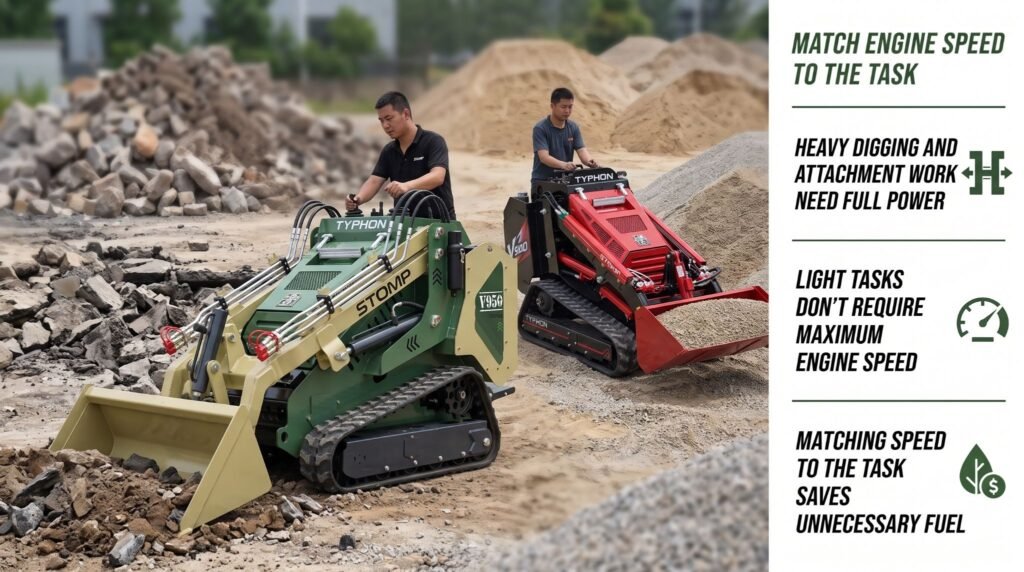
Not every job calls for full power. Different tasks place different demands on the engine, and running at maximum speed when the work doesn’t require it simply burns extra fuel. Matching engine speed to the job is one of the easiest ways to improve efficiency.
Heavy digging and hydraulic attachment work may need greater engine power to perform properly. Lighter tasks, such as moving loose material over short distances or light grading, often don’t require maximum engine speed at all. Using the appropriate operating settings for each task helps you avoid unnecessary fuel consumption while still getting the job done. Just as important, make sure demanding work gets the power it needs, since underpowering a heavy task can slow production and create its own inefficiency.
Key takeaway: Heavy digging and hydraulic attachment work may need more power, while lighter tasks often don’t require maximum engine speed, so use operating settings suited to each job.
Select the Right Attachment
The attachment on the front of the machine shapes how hard the engine and hydraulic system have to work. Attachment choice affects both hydraulic demand and engine workload, which means it has a direct link to fuel use.
A tool that’s too large or too demanding for the machine increases system load and reduces operating efficiency. The engine works harder, the hydraulics strain to keep up, and the work often moves more slowly as a result. Matching the attachment to the skid steer’s rated capabilities keeps the machine operating within its intended range. The result is productive work at a sustainable load, rather than a machine that burns fuel fighting a tool it wasn’t built to run.
Key takeaway: Oversized or overly demanding attachments increase hydraulic and engine load, so match each tool to the skid steer’s rated capabilities for efficient, productive operation.
Maintain Tires and Tracks
A skid steer spends much of its day traveling, so the condition of its ground-contact system matters. Travel resistance increases when tires are damaged, improperly inflated, or excessively worn. Higher resistance means the engine works harder to move the machine, and that extra effort shows up in fuel consumption.
Tracked machines need the same attention in a different form. Regular undercarriage inspection helps catch wear or damage that can affect how smoothly the machine travels. Whether your skid steer runs on tires or tracks, keeping the contact system in good condition helps it move efficiently across the jobsite. A quick daily check is a small investment that protects both fuel efficiency and component life.
Key takeaway: Damaged, underinflated, or worn tires increase travel resistance, and tracked machines need regular undercarriage inspection, so keep the contact system in good condition for efficient travel.
Keep Hydraulic Components Serviced
The hydraulic system powers lifting and attachment operation, so it plays a central role in daily fuel use. When the system is healthy, it delivers power efficiently. When it’s neglected, it strains to do the same work, and the engine carries that extra burden.
Consistent maintenance keeps the system performing as designed. Clean hydraulic fluid, suitable filters, and timely service help maintain hydraulic performance and reduce unnecessary strain on the system. Following the manufacturer’s service intervals and using the recommended fluids and filters protects both efficiency and reliability. A well-maintained hydraulic system supports productive work throughout the day without asking more of the engine than necessary.
Key takeaway: Clean fluid, suitable filters, and timely maintenance keep the hydraulic system performing well and reduce unnecessary strain that affects efficiency.
Use Smooth Operating Habits
Operator technique can have a noticeable effect on fuel consumption. Aggressive acceleration, unnecessary repositioning, and repeated high-load movements can increase engine workload without always improving productivity. How the machine is driven and positioned throughout the shift therefore matters just as much as the work itself.
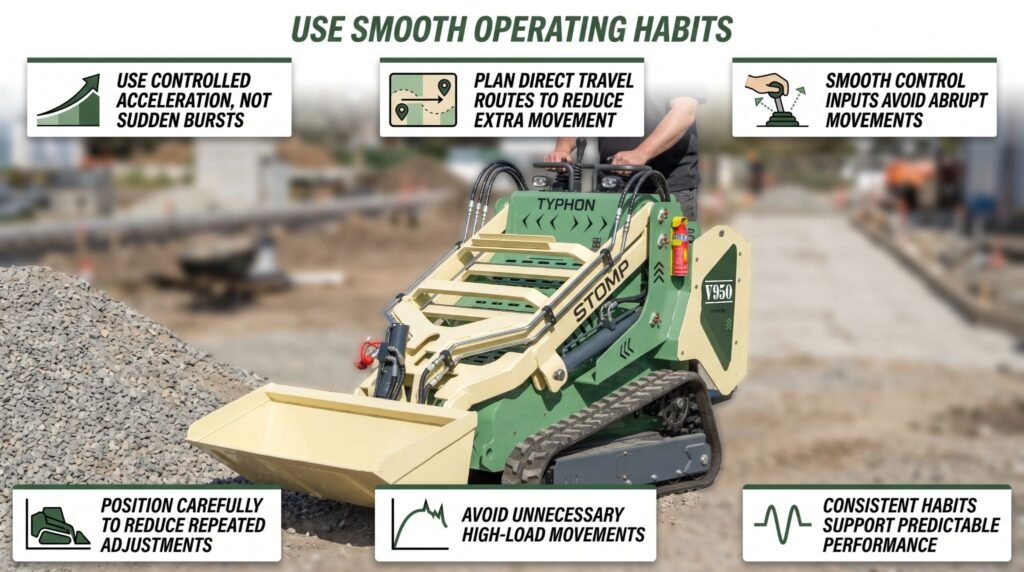
Smooth, planned operation helps reduce unnecessary effort. Operators can plan travel routes in advance, use steady control inputs, and position the machine carefully to avoid repeated adjustments. These habits can support more efficient fuel use, reduce unnecessary machine wear, and help maintain consistent performance throughout the workday.
- Smooth Acceleration: Use controlled acceleration instead of unnecessary bursts of engine power.
- Planned Travel: Choose direct travel routes to reduce extra movement and unnecessary turns.
- Controlled Inputs: Operate controls smoothly to avoid abrupt and inefficient machine movements.
- Smart Positioning: Position the machine carefully to reduce repeated repositioning during tasks.
- Reduced Workload: Avoid unnecessary high-load movements that increase engine and hydraulic demand.
- Consistent Operation: Maintain efficient operating habits throughout the shift for more predictable performance and fuel use.
Key takeaway: Aggressive acceleration, unnecessary repositioning, and repeated high-load movements increase fuel use, so plan travel routes and use smooth control inputs.
Conclusion
Skid steer fuel efficiency depends on machine condition, attachment selection, engine use, and operator habits working together to reduce unnecessary load and fuel consumption. Limiting idle time and matching engine speed to the task helps avoid burning fuel when full engine output is not required, while attachments should remain within the machine’s rated capabilities to prevent excessive hydraulic and engine demand. Properly maintained tires, tracks, undercarriage components, and hydraulic systems can reduce travel resistance and support efficient power transfer, while clean hydraulic fluid, suitable filters, and timely servicing help maintain system performance. Planning attachment changes and travel routes, using appropriate power settings, and applying smooth acceleration and control inputs can further reduce wasted engine effort. Matching maintenance practices, attachment requirements, operating conditions, and operator technique supports consistent fuel efficiency while keeping the skid steer productive and reliable throughout daily work.
Frequently Asked Questions
Does idling increase skid steer fuel use?
Yes. A skid steer continues to consume fuel whenever the engine is running, even when the machine is not actively working. Idling during attachment changes, short breaks, or waiting for materials adds to fuel use without increasing productivity. While a few minutes may seem minor, repeated idle periods can become a noticeable part of daily consumption. Reducing unnecessary idle time by organizing attachment changes, planning material movements, and shutting down during longer pauses can help keep fuel use focused on productive work.
Can attachments affect fuel consumption?
Yes. Attachments affect hydraulic demand and engine workload, which directly influences fuel consumption. Hydraulically demanding tools require more power, increasing the load on both the engine and hydraulic system. An attachment that is too large or demanding for the machine can make the system work harder, reduce efficiency, and slow production. Matching the attachment’s hydraulic and performance requirements to the skid steer’s rated capabilities helps the machine operate within its intended range and avoid unnecessary fuel use.
Does tire or track condition affect efficiency?
Yes. Damaged, underinflated, or heavily worn tires can increase rolling resistance and make the skid steer work harder during travel. Tracked machines can experience similar efficiency losses when the tracks or undercarriage are worn, damaged, or poorly maintained. Because skid steers travel frequently throughout the workday, added resistance can gradually increase fuel consumption. Inspecting tires, tracks, and undercarriage components during the daily check helps maintain efficient travel and extend component life.
How can operators improve daily fuel efficiency?
Operators can improve fuel efficiency by reducing unnecessary idling, matching engine speed to the task, and using attachments suited to the machine’s capabilities. Heavy digging and demanding hydraulic work may require more power, while lighter tasks can use appropriate lower settings. Keeping tires, tracks, hydraulic components, and cooling systems properly maintained also reduces unnecessary resistance and system strain. Smooth acceleration, planned travel routes, fewer unnecessary repositioning movements, and efficient attachment changes can further reduce wasted fuel while keeping the skid steer productive.
