Excavator bucket digging force
How Engine Size and Bucket Breakout Force Work Together
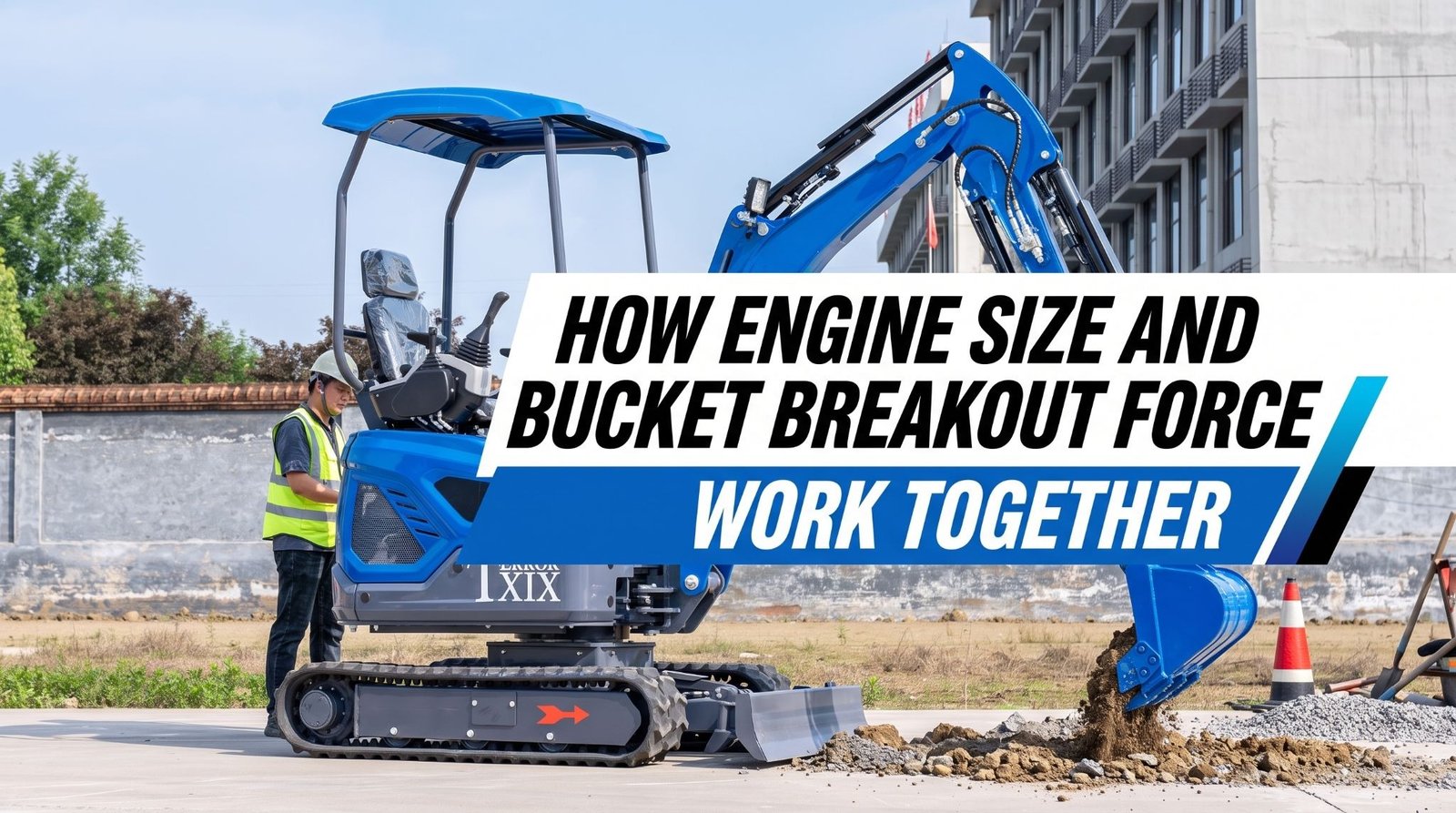
Engine horsepower and breakout force work together to determine how effectively a mini excavator can perform under load. Horsepower provides the energy needed to drive the hydraulic system and keep the machine working consistently, while breakout force determines how effectively the bucket and arm can penetrate, lift, and pull through demanding material. Looking at either number on its own can give an incomplete picture of the machine’s actual capability.
A high-horsepower engine does not automatically make an excavator stronger if the hydraulic system cannot convert that power into useful digging force. Likewise, high breakout force is less valuable if the engine cannot sustain the hydraulic performance needed to use it consistently. The strongest overall configuration is one where engine output, hydraulic capacity, and breakout force are properly matched, allowing the machine to turn available power into practical digging performance.
What Each Spec Is Actually Measuring
Engine size, expressed in horsepower, represents the total energy available to run the machine. That output powers the hydraulic pump, which then drives every moving function: the boom, the arm, the bucket curl, the swing motor, and the travel drive. None of those functions move without the pump, and the pump cannot exceed what the engine feeds it.
Bucket breakout force is a different measurement entirely. It describes the maximum force the bucket can apply at its cutting edge to pry material free from the ground. Expressed in pounds-force, it reflects the machine’s ability to penetrate compacted soil, clay, root-bound earth, or debris. This is the spec operators feel most directly when the bucket tips into tough material and either cuts through cleanly or stalls.
The critical point is that these are not parallel specs that can be evaluated in isolation. Breakout force is generated by the hydraulic system, and the hydraulic system is limited by engine output. They form a single chain of dependence. Strengthen one link beyond the capacity of the others, and the gain disappears.
How Manufacturers Balance These Two Specs
Designing a mini excavator means choosing an engine, then engineering a hydraulic system around its output, then specifying a bucket geometry that the hydraulics can move effectively through dense material. Each step constrains the next. When a manufacturer publishes a breakout force figure, that number assumes the engine is running at full capacity and the hydraulic system is operating within its design range.
This is why breakout force comparisons across brands can be deceptive. A competitor advertising a high figure may be using a peak measurement captured under ideal conditions with a full-throttle engine and no parasitic load from auxiliary functions. On an actual jobsite, running multiple functions at once and managing real terrain, that peak rarely appears. The spec you can trust is the one produced by a machine whose engine comfortably supports its hydraulic demand without strain.
What a Well-Matched Setup Looks Like in the Field
A well-matched engine and breakout force create a machine that feels predictable and controlled from the first movement to the last. The bucket enters the material smoothly, hydraulic pressure builds as resistance increases, and the engine maintains steady RPM without struggling under load. The arm retracts with consistent force, the upper structure swings smoothly, and the machine moves through the digging cycle without unnecessary pauses or adjustments.
The result is not necessarily a dramatic increase in power that the operator notices immediately. Instead, it appears as consistency. The bucket can achieve a productive fill, each cycle follows a predictable pace, and the operator does not have to change technique to compensate for a machine that is working beyond its comfortable range. Over an eight-hour shift, that consistency becomes significant, reducing slowdowns and helping the excavator maintain productive output from the first cycle to the last.
Two Ways a Mismatch Breaks Down
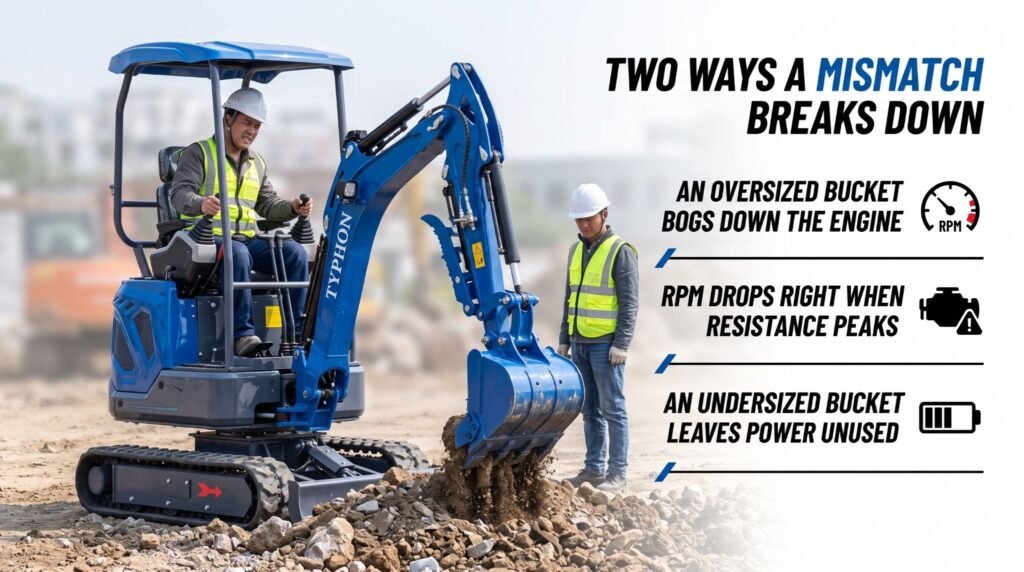
Over-bucketed for the engine: When the hydraulic demand needed to generate the specified breakout force outpaces what the engine can sustain, the powerplant begins to bog. RPM drops at the moment resistance peaks. The dig slows, cycles grow longer, and operators learn to take smaller bites to keep the machine moving. The breakout force on the spec sheet was never truly available, because the engine could not hold the pressure needed to produce it.
Under-bucketed for the engine: A less common problem, but equally wasteful. When the engine generates more capacity than the hydraulic system can translate into digging force, the extra power has nowhere useful to go. The machine feels easy to operate but leaves potential untapped on every pass. More cycles are needed to move the same volume of material, and the crew works longer than the engine spec would suggest is necessary.
How Balance Affects Cycle Time and Daily Output
Cycle time, measured from the start of one dig to the start of the next, is where specification balance either earns its keep or exposes its weakness. A machine where engine output and breakout force align correctly completes each cycle at a consistent pace. The crew enters a rhythm, and that rhythm compounds across hours.
A machine where those specs are mismatched produces variable cycles. Hard ground slows the dig. Engine recovery eats time between passes. Operators hesitate before committing to a full bite. These gaps are individually small, often just seconds, but they accumulate into meaningful lost output by the end of a shift. A machine that completes five cycles per minute outpaces one completing four by twenty percent across the day, with no difference in horsepower or breakout force on the spec sheet.
What Operators Notice Before the Data Confirms It
Machine balance is often easiest to recognize from the operator’s seat. The response of the controls under load, the engine sound during a hard cut, and the consistency of each work cycle can reveal whether the engine, hydraulics, and working equipment are operating as a coordinated system. These practical signals often tell an experienced operator more about real-world performance than any single number on a specification sheet.
When the machine is properly balanced, the operator can work with greater confidence and maintain a consistent rhythm. The bucket can enter the material, fill, lift, and return without requiring constant adjustments to compensate for a lack of power or excessive load. There is less need to ease off during difficult cuts or wait for the engine to recover between movements. That consistency supports better speed and control throughout the shift, while reducing the physical and mental effort required to manage the machine.
Running Costs Over the Long Term
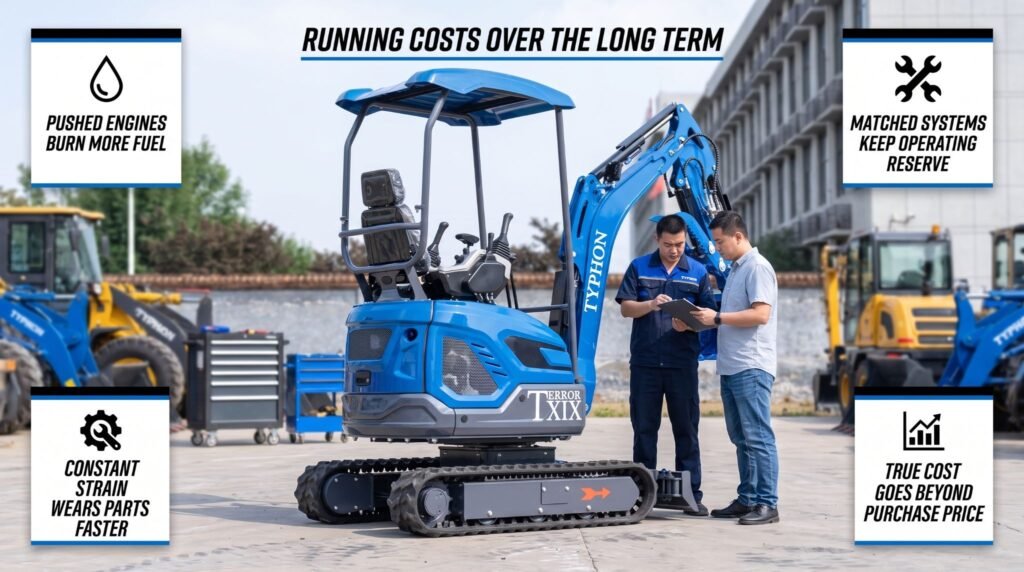
Machine balance has a direct effect on the cost of ownership, even when two excavators appear nearly identical on paper. For buyers researching how much a new mini excavator costs in 2026, the purchase price is only part of the financial picture. Two machines can have similar horsepower, hydraulic pressure, and breakout force ratings yet produce different fuel and maintenance costs in real-world operation. When the engine is regularly pushed near its maximum output to meet hydraulic demand, fuel consumption can increase and the machine has less operating reserve. A properly matched system can deliver the required performance without constantly working at the edge of its available capacity.
The same principle applies to component life. A hydraulic pump, hoses, seals, engine mounts, and other components experience greater stress when a machine is consistently operated beyond its intended working range. Over time, that additional stress can contribute to faster wear, more frequent repairs, and higher maintenance costs. This means the true cost of a new mini excavator in 2026 should be judged not only by its purchase price, but also by how efficiently it uses fuel, how often it requires repairs, and how well its major components hold up over time. A well-balanced excavator keeps its major systems working within their intended operating range, helping improve day-to-day efficiency, reduce unnecessary downtime, and preserve the machine’s long-term value.
Conclusion
Engine size and bucket breakout force are designed to work as a system, so evaluating either one without the other gives you an incomplete picture of what a mini excavator can actually accomplish. The right machine is not necessarily the one with the most impressive individual specification, but the one where engine output, hydraulic power, and breakout force are properly matched to support efficient digging through complete cycles, long shifts, and years of operation. When comparing models, look for evidence that these specifications are genuinely balanced. Consider how the engine performs under sustained load and whether the published breakout force is based on full engine output or a specific hydraulic pressure that the engine can consistently maintain. If possible, operate the machine in the hardest material available and observe how well it maintains engine RPM, hydraulic response, and digging force from the first cycle to the last. A real-world test under heavy load can reveal far more about consistent productivity, power delivery, and machine balance than a single number printed in a brochure.
Frequently Asked Questions
Is higher bucket breakout force always better on a mini excavator?
Only if the engine can sustain the hydraulic pressure required to produce it. A high breakout figure paired with an underpowered engine will bog during hard cuts, meaning the published number rarely appears in practice. Prioritize breakout force that the engine can support consistently, not the highest figure on the list.
How can I tell if my mini excavator’s engine and breakout force are well matched?
Run the machine in demanding material and watch the engine RPM during the dig. A balanced setup holds its RPM through resistance and recovers quickly between cycles. Dropping RPM, sluggish arm movement, or the need to take repeated partial bites all suggest the hydraulic demand is outpacing engine output.
Does a mismatched machine really affect fuel and maintenance costs?
Yes, and the impact compounds over time. An engine carrying more load than it was designed for burns additional fuel on every cycle and wears faster across its moving components. A hydraulic system running above its efficient pressure range develops leaks sooner. The total cost of ownership for a balanced machine is almost always lower, even if the initial purchase price looks similar.
