7 Reasons Contractors Are Switching to Mini Excavators
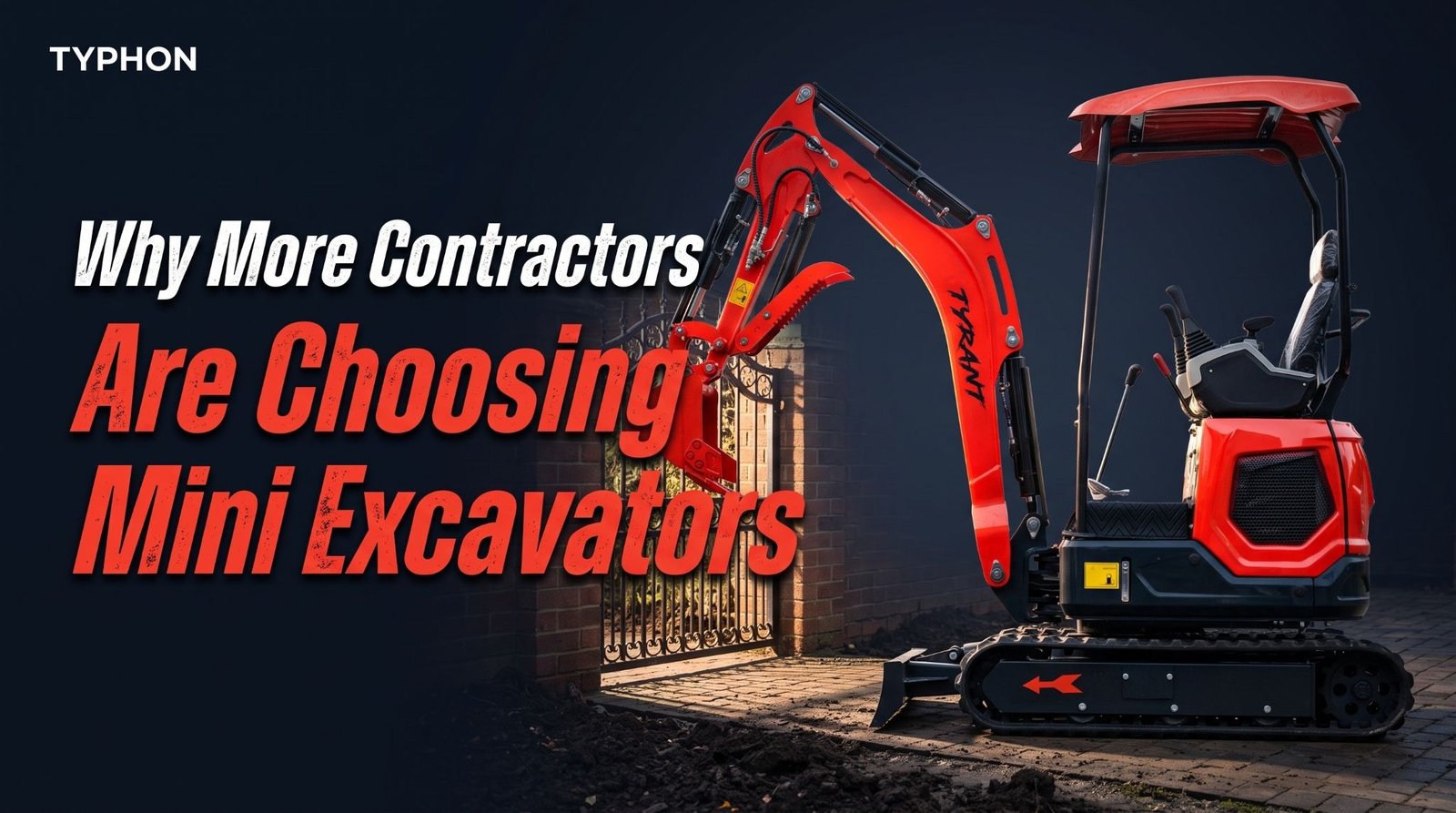
Why More Contractors Are Choosing Mini Excavators
A residential remodeler pulls up to a backyard job with a standard-size excavator on the trailer, ready to dig footings for an addition. Then reality hits at the gate. The machine is too wide for the side yard, too heavy for the fresh sod, and too big to swing without clipping the fence and the neighbor’s shed. Half a day disappears to hand-digging and workarounds, the schedule slips, and the client watches their lawn turn to ruts. A few lots over, a competitor rolls a mini excavator straight through a standard gate, tracks lightly across the grass, and has the footings dug before lunch. Same job, two very different afternoons, and one clear lesson about which machine actually fits the work.
That contrast is playing out on job sites everywhere, and it explains a shift that’s been building for years. Mini excavators have moved from a niche rental to a core piece of equipment that contractors buy first and reach for daily. They fit where big machines can’t, run a remarkable range of tasks, cost far less to own and move, and pay themselves back faster than most equipment in the yard. This post breaks down exactly why contractors keep choosing them: how they conquer tight job sites, how their versatility multiplies a crew’s output, how their cost and transport advantages reshape the math, and how rising demand and strong returns are driving the trend.
How Mini Excavators Conquer Tight Job Sites
The single biggest reason contractors lean on mini excavators is access. Modern work increasingly happens in confined spaces where a full-size machine simply can’t operate, and the compact class was built for exactly those conditions. Where the job is tight, the small machine wins before the first bucket of dirt moves.
Working in Confined Spaces
Mini excavators earn their keep in places larger equipment can’t touch. Backyards, side yards, indoor demolition, interior renovations, and crowded urban lots all demand a machine small enough to fit through a standard gate or doorway and nimble enough to work close to structures. That compact footprint opens up entire categories of work a bigger machine would have to turn down.
Compact reach and a tight tail swing make the difference. Zero-tail-swing and reduced-tail-swing models keep the rear of the machine within the track width, so an operator can work flush against a wall or fence without the counterweight clipping anything behind it. When mini excavator job site access is the deciding factor, these machines routinely go where nothing else can.
Protecting Finished Surfaces
Weight is the other quiet advantage. A mini excavator’s light footprint and rubber tracks spread its load gently, so it can cross finished lawns, pavers, and driveways with far less damage than a heavy machine on steel tracks. For remodel, landscape, and residential work, that surface protection saves real money in restoration.
Rubber tracks also improve traction on slopes and soft ground without tearing up the surface underneath. That combination lets contractors dig, grade, and trench on sites where a client expects the yard to look untouched when the crew leaves. Leaving a clean site protects both the budget and the contractor’s reputation.
Maneuvering With Precision
Frequently Asked Questions About Why More Contractors Are Choosing Mini Excavators
Tight sites reward a machine that can position itself exactly. Mini excavators turn within their own footprint and place a bucket precisely where it’s needed, which matters when you’re digging inches from a foundation, a gas line, or a mature tree. That control reduces the risk of costly mistakes in crowded conditions.
Careful compact excavator digging depth also stretches further than many expect, letting these machines handle drainage lines, footings, and utility work that once seemed to require a bigger unit. Precision plus surprising depth means one small machine covers a wide slice of confined-space work.
Takeaway: mini excavators fit through tight access points, protect finished surfaces, and maneuver with precision, so they open up confined job sites that full-size machines can’t work at all.
How Versatility Multiplies a Crew’s Output
Why More Contractors Are Choosing Mini Excavators
Access gets a mini excavator onto the site; versatility keeps it busy once it’s there. Contractors increasingly view these machines as tool carriers rather than single-purpose diggers, and that flexibility is a major driver of the trend. One machine that does the work of many changes the economics of a whole crew.
A Deep Range of Attachments
The quick-attach system is where a mini excavator transforms. In minutes, an operator swaps the bucket for an auger, a hydraulic breaker, a grapple, a thumb, a compaction plate, a trencher, or a mulcher, turning a single machine into a fleet of capabilities. That range lets a contractor close far more of a project without renting extra equipment or subcontracting tasks out.
Consider a typical week: trenching a utility line Monday, boring fence-post holes Tuesday, breaking a small slab Wednesday, and clearing brush Thursday. A mini excavator with the right attachments handles all of it, so a crew stays productive across varied work instead of idling between specialized machines. Fewer machines to own and move means lower cost and less complexity.
Enough Reach and Power for Real Work
Skeptics assume “mini” means underpowered, but modern machines have closed much of that gap. Today’s compact excavators deliver strong hydraulic performance, respectable lift, and enough reach to handle footings, drainage, small demolition, and material handling with confidence. For a huge share of everyday contracting, that capability is plenty.
Auxiliary hydraulic circuits are what make this versatility work, powering the attachments that turn digging time into grabbing, boring, breaking, and compacting time. Matching a tool’s flow needs to the machine’s auxiliary hydraulic flow is what lets a single operator accomplish what once took a crew and several machines. That multiplier effect is exactly why versatility sells.
One Operator, More Finished Work
The productivity story comes together in the cab. Because a mini excavator switches tasks so quickly and works so precisely, one operator can move through a punch list of varied jobs in a single day without waiting on additional equipment or hands. That efficiency compresses timelines and lowers labor cost per task.
For small and mid-size contractors especially, that leverage is transformative. A two-person crew with a well-equipped mini excavator competes with much larger operations on the kind of diverse, tight-site work that fills a calendar.
Takeaway: with a deep attachment range, genuine power, and quick task-switching, a mini excavator lets one operator finish more varied work in less time, multiplying a crew’s output.
How Cost and Transport Advantages Reshape the Math
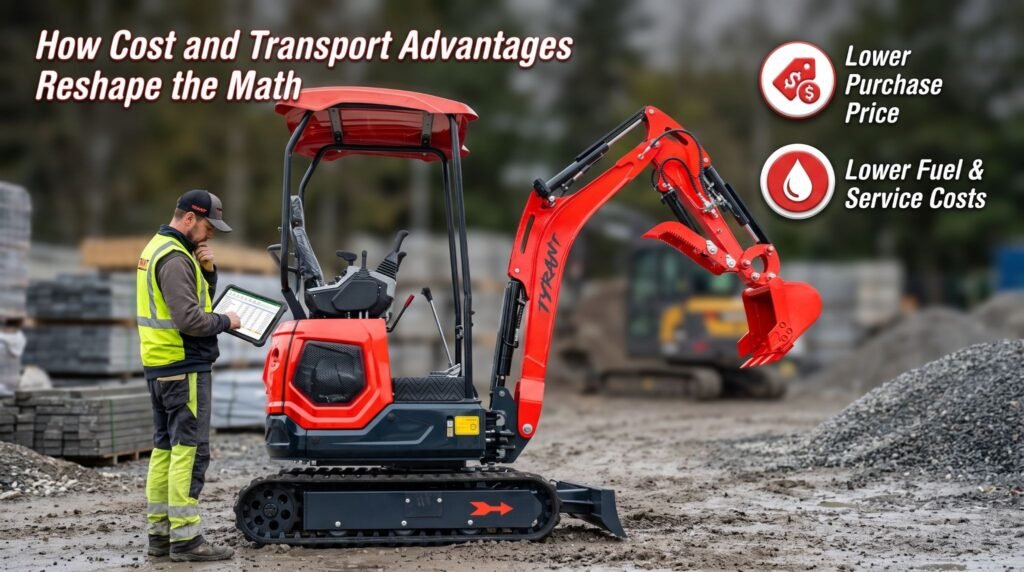
Beyond what a mini excavator can do, contractors choose it for what it saves. Compared with a full-size machine, the compact class costs less to buy, less to move, and less to run, and those savings stack up across every job. When the numbers are this favorable, the decision often makes itself.
Lower Purchase and Operating Costs
The entry point is far friendlier. A mini excavator carries a substantially lower purchase price than a full-size machine, which puts ownership within reach of small contractors who would otherwise rent. That accessibility is a big part of why so many crews are buying rather than renting these days.
Running costs follow the same pattern. Smaller engines burn less fuel, routine service is cheaper, and wear parts cost less to replace, so the machine is lighter on the budget shift after shift. Comparing the real mini excavator operating cost against a full-size unit usually reveals savings across the board, from the fuel tank to the maintenance shelf.
Easy, Affordable Transport
Moving equipment is a hidden expense that quietly drains margins, and here the mini excavator shines. Its light weight and compact size let a contractor tow it behind a standard pickup on a modest trailer, with no commercial hauling, special permits, or heavy-duty transport required. That freedom to self-transport saves both money and scheduling headaches.
The practical payoff is speed and flexibility. A crew can move the machine between multiple job sites in a single day, respond quickly to a new call, and avoid waiting on a hauling company to relocate equipment. For contractors juggling several small jobs, that mobility keeps the machine, and the revenue, in motion.
Simpler Storage and Ownership
Compact size pays off back at the yard, too. A mini excavator fits in a standard garage, a small shop, or a corner of a lot, so contractors without sprawling storage can still own their equipment. That practicality removes another barrier that once pushed smaller operators toward renting.
Ownership also stays manageable overall. Simpler machines, cheaper parts, and easy transport combine into equipment that a small business can actually maintain and control on its own terms.
Takeaway: lower purchase and running costs, effortless transport, and simple storage make a mini excavator dramatically cheaper to own and move than a full-size machine, reshaping the math in the contractor’s favor.
How Demand and ROI Are Driving Adoption
The trend isn’t just anecdotal; it reflects a clear market shift and sound financial logic. Contractors are choosing mini excavators because the work is moving toward them and because the return on the investment is strong and quick. Demand and dollars are pulling in the same direction.
The Work Is Trending Compact
Job patterns are steering contractors toward smaller machines. Residential construction, remodeling, landscaping, utility work, and dense urban projects all favor compact equipment that fits tight spaces and protects finished ground. As this kind of work grows, so does the value of a machine built to handle it.
Client expectations reinforce the shift. Property owners want jobs done with minimal disruption and damage, and a mini excavator delivers exactly that, working cleanly in confined spaces where a larger machine would tear things up. Contractors who match their equipment to how the market is moving win more of that work.
Strong, Fast Return on Investment
The financial case is compelling. Because a mini excavator costs relatively little to buy, transport, and run yet generates billable revenue across a wide range of tasks, it tends to pay for itself quickly. A machine that stays busy on varied work recovers its purchase price faster than most equipment a contractor owns.
Renting drives the point home. Contractors who repeatedly rent a compact machine often realize the accumulated rental fees would have bought one outright, so ownership becomes the obvious next step. Tracking mini excavator return on investment against real usage usually confirms that a busy machine earns back its cost and then keeps earning as pure margin.
Retained Value and Long-Term Confidence
Resale strength adds to the appeal. Mini excavators hold their value well thanks to steady demand, so a well-maintained machine returns a solid price when a contractor eventually sells or trades up. That retained value lowers the true cost of ownership over the machine’s life.
Reliability seals the confidence. A well-built, properly maintained compact excavator runs dependably for years, giving contractors the assurance that the investment will keep performing.
Takeaway: compact-favoring work trends, quick and strong ROI, and solid resale value are pushing more contractors to buy mini excavators, and the financial case keeps getting stronger.
Frequently Asked Questions
Why are mini excavators so popular with contractors?
Mini excavators combine access, versatility, and affordability in a way full-size machines can’t match. They fit through standard gates and work in tight backyards, indoor spaces, and crowded urban sites while protecting finished surfaces with light rubber tracks. Their quick-attach systems let one machine handle digging, boring, breaking, grading, and clearing. Add low purchase and operating costs plus easy transport, and it’s clear why so many contractors now choose them as a core piece of equipment.
Are mini excavators powerful enough for real construction work?
For a large share of everyday contracting, yes. Modern compact excavators deliver strong hydraulic performance, respectable lift, and enough reach to handle footings, drainage lines, small demolition, and material handling with confidence. While a full-size machine is still the right call for major earthmoving and deep, high-volume digging, most residential, landscaping, utility, and remodeling work falls comfortably within a mini excavator’s capability, especially when paired with the right attachments.
How much can a mini excavator save compared to a full-size machine?
Savings appear across the board. The purchase price is substantially lower, putting ownership within reach of smaller contractors. Operating costs drop too, since smaller engines burn less fuel and wear parts and service cost less. Transport is a major saver, because you can tow the machine behind a standard pickup instead of hiring commercial hauling. Compact storage and strong resale value further reduce the true, long-term cost of ownership.
What jobs are mini excavators best suited for?
They excel at confined-space and surface-sensitive work: backyard footings, residential additions, landscaping, drainage and utility trenching, fence-post installation, small demolition, and light land clearing. Their compact size lets them work close to structures and cross finished lawns and driveways with minimal damage. With attachments like augers, breakers, grapples, and compaction plates, a single mini excavator covers a wide range of tasks that would otherwise require several machines.
Should I rent or buy a mini excavator?
It depends on how often you use one. If you rent a compact machine only occasionally, renting may still make sense. But contractors who reach for one regularly often find that accumulated rental fees would have covered a purchase, making ownership the smarter move. Because mini excavators cost relatively little to buy and run yet generate billable revenue across many tasks, a busy machine tends to pay itself back quickly and then earns as margin.
Why More Contractors Are Choosing Mini Excavators: 7 Reasons to Invest
Conclusion
More contractors are choosing mini excavators because the machine matches the way modern work actually happens, fitting through tight gates and confined spaces that stop full-size equipment cold, protecting finished lawns and driveways with light rubber tracks, and transforming into a full toolbox of augers, breakers, grapples, and compaction plates that let one operator finish varied work in a single day, all while costing far less to buy, run, transport, and store than a full-size machine and holding strong resale value that lowers the true cost of ownership; with residential, landscaping, and utility work trending ever more compact and a busy machine paying back its purchase price quickly before earning as pure margin, the financial and practical cases point the same direction, so if you’re weighing whether a mini excavator belongs in your fleet, take an honest look at the tight-site, surface-sensitive, multi-task work filling your calendar and reach out to a trusted equipment specialist who can pair the right-sized machine with the dependable performance your projects depend on.
