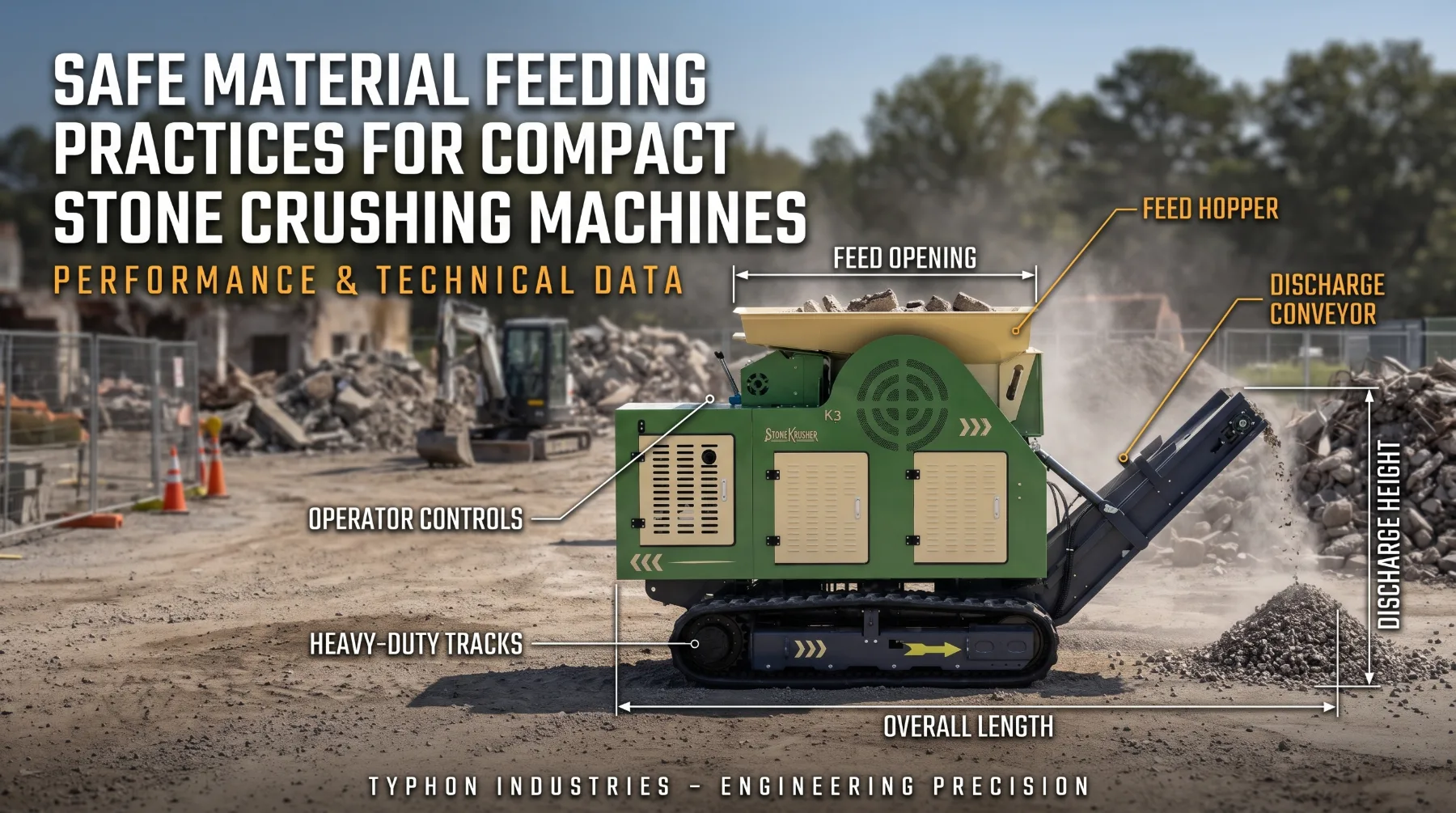
Safe Material Feeding Practices for Compact Stone Crushing Machines
Compact stone crushers make on-site recycling practical. They turn broken concrete, brick, asphalt, and natural rock into usable aggregate for sub-base, backfill, drainage, and driveway material. Processing that material where it lies cuts disposal fees and haulage trips, and it reduces the amount of new aggregate you need to buy. For demolition contractors, landscapers, and site developers, a compact crusher can turn a waste pile into a resource.
Output still depends on what goes into the machine and how it gets there. A crusher fed with oversized slabs, buried rebar, or one heavy bucket dumped all at once will jam, bridge, wear unevenly, and produce inconsistent aggregate. Poor feeding also creates some of the most serious hazards on a crushing site. These include fragments ejected from the feed opening, blockages that tempt workers to reach into the chamber, and stored energy that can be released without warning. Controlled feeding protects production, the machine, and the people working around it.
Matching Feed Size to the Crushing Opening
Every crusher has a specified feed opening and a maximum acceptable feed size. On a jaw crusher, the opening is measured across the top of the jaws, and its narrower dimension, often called the gape, limits the size of the piece that can enter. Pieces larger than the approved limit sit on top of the jaws or wedge between them. That leads to bridging, stalls, and heavy shock loads on the jaw dies, bearings, and drive.
Shape matters as much as size. Long, flat slabs of concrete or stone may pass the size check on one side but lodge lengthwise across the opening. Slabby pieces also tend to slide through a jaw without breaking properly, which produces elongated, poorly shaped aggregate. Check incoming material in all three dimensions, and break flat or elongated pieces into more compact chunks.
Breaking down oversized material before feeding is far safer and cheaper than clearing it from the chamber. Use a hydraulic breaker, pulverizer, or crusher attachment on an excavator to reduce large pieces at the stockpile. Keep a separate oversize pile so the feeding operator isn’t tempted to “try” a large piece. A few minutes of preparation saves hours of downtime and removes one of the most common reasons workers approach a running crusher.
Key takeaway: Confirm your crusher’s maximum feed size, check material in every dimension, break down oversized and slabby pieces at the stockpile, and never feed a piece in the hope that it will fit.
Checking Material Before Feeding
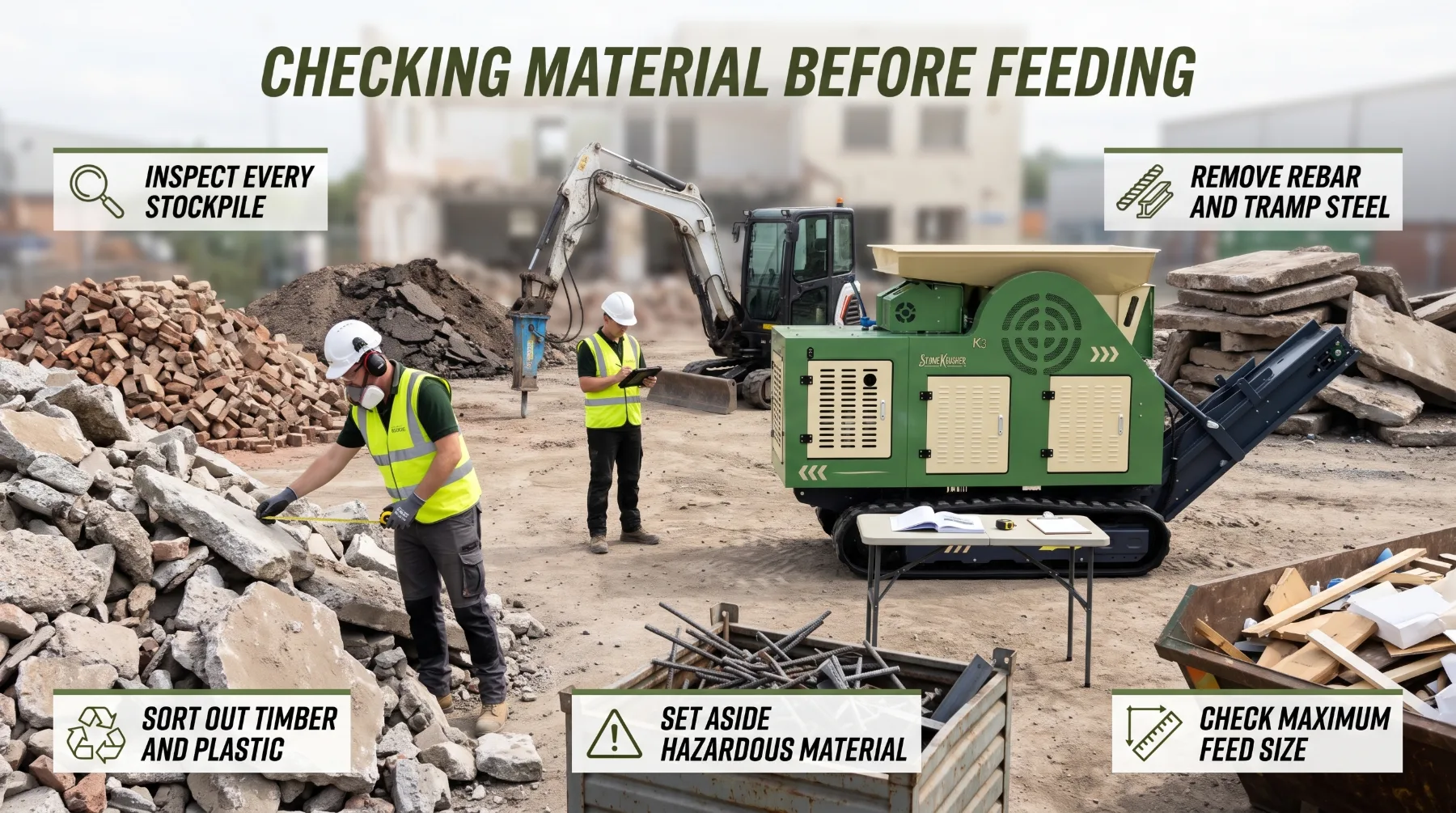
Safe crushing starts at the stockpile, not at the hopper. Every crusher is designed for a specific range of materials, and anything outside that range can damage the jaws, rotor, or liners or stop the machine entirely. Inspecting material before it reaches the feed opening is the simplest way to prevent breakdowns. It also keeps blocked chambers from turning into dangerous clearing tasks.
Concrete demolition material needs particular attention. Reinforcing steel, mesh, anchor bolts, and embedded plates can wrap around moving parts, tear conveyor belts, or wedge in the crushing chamber. Many compact crushers include a magnetic separator over the discharge conveyor to pull loose steel from the finished product. That magnet removes steel after crushing, but it can’t stop a long bar from jamming the chamber. Cut or break out protruding rebar before feeding, and keep heavily reinforced sections aside for separate processing or a hydraulic breaker or pulverizer.
Mixed demolition waste brings other contaminants. Timber, plastic, roofing felt, insulation, drywall, wire, and packaging don’t crush cleanly. They can wrap, pack, or contaminate the finished aggregate and lower its value. Sort material into clean stockpiles, such as concrete, brick and masonry, asphalt, and natural stone, and remove non-mineral waste before loading. Watch for uncrushable tramp items such as excavator teeth, track pads, and heavy steel parts, which can cause sudden shock loads in the chamber.
Some materials don’t belong in a crusher at all. Older buildings may contain asbestos, lead paint, or other hazardous materials that must be identified and removed according to applicable EPA and OSHA requirements before demolition debris is processed. Follow the manufacturer’s approved feed material list and its limits on hardness, abrasiveness, and moisture. Assign one person to inspect the stockpile and the feed area, and give that person the authority to reject unsuitable loads.
Key takeaway: Inspect and sort every stockpile before feeding, remove rebar, tramp steel, timber, and other contaminants, set aside hazardous materials for proper handling, and feed only the materials the manufacturer approves for your crusher.
Preventing Uneven Loading and Blockages
How material enters the hopper matters as much as how much enters. Dumping a full bucket in one concentrated pile overloads one side of the feed area, causes material to pile up and bridge across the opening, and places excessive demand on one part of the crushing mechanism. Uneven loading also wears jaw dies, liners, and blow bars unevenly, which shortens their life and changes product size.
Place material into the hopper in a controlled manner. Operators loading with an excavator should lower the bucket close to the hopper and release material gently, spreading it across the feed area rather than dropping it from height. Lower drop heights reduce impact on the feeder and hopper and cut down on fragments bouncing out of the opening. When loading with a wheel loader or skid steer, tip the bucket gradually rather than emptying it all at once, and stay within the hopper’s approved loading height and width. Never strike the hopper or crusher with the bucket.
Watch and listen for early warning signs. Changes in engine sound, unusual vibration, a slowing feeder, material sitting motionless on top of the jaws, or a sudden drop in discharge all point to developing problems. When you see them, stop feeding immediately and let the crusher work through the material already in the chamber. Many partial blockages clear on their own once feeding stops.
When a blockage doesn’t clear, follow the manufacturer’s shutdown and clearing procedure exactly. Some compact crushers include a jaw reverse function, hydraulic setting release, or other designed clearing feature. Use these only as the manual directs. Never reach into the hopper or chamber, never stand on the hopper or feeder to dislodge material, and never use a pry bar, hand tool, or excavator bucket to push material into a running crusher unless the manufacturer specifically approves that method. Material jammed in the chamber can be under heavy compression and may release violently when disturbed. Any manual clearing must happen only after the full lockout sequence in the next section.
Key takeaway: Spread material evenly with low drop heights, stop feeding at the first sign of bridging or stalling, use only the manufacturer’s approved clearing features, and never reach into, stand on, or force material into a running crusher.
Maintaining a Consistent Feed Rate

Crushers work best when material arrives at a steady, predictable rate. A consistent feed keeps the crushing mechanism loaded evenly, which stabilizes output size, protects components from shock loads, and keeps engine and hydraulic demand smooth. Feed rate is one of the biggest factors in both production and wear, and it’s controlled almost entirely by the people loading the machine.
Feeding too much at once overloads the chamber. The engine lugs, the jaws or rotor slow, material packs against the feed opening, and the risk of a stall or blockage rises sharply. Feeding too little, or with long gaps between loads, wastes fuel and machine hours. On many jaw crushers it also produces less consistent product, because the chamber runs partly empty and material bounces rather than being nipped and crushed evenly. Many jaw crushers perform best when the chamber stays reasonably full without overflowing, but follow your manual’s guidance for your machine.
Coordinate the loading machine with the crusher’s processing capacity. An excavator or loader that can deliver material faster than the crusher can process it should place smaller amounts more often rather than full buckets. Where the crusher has a vibrating feeder or adjustable feeder speed, set it as the manual directs for the material being processed. The right feed rate depends on material hardness, size distribution, moisture, and crusher configuration, including the jaw setting or rotor speed.
Adjust the rate as conditions change. Hard granite or reinforced concrete processes more slowly than brick or asphalt, which can affect overall production capacity. Wet, clay-laden material can pack in the chamber and on the feeder, so it may need a slower rate or blending with drier material where the manual allows. Watch the chamber level, listen to the engine, and keep the discharge conveyor clear so finished material doesn’t back up. Feeding at a steady, sustainable rate usually produces more aggregate over a full day and helps maintain consistent production capacity compared with feeding in aggressive bursts.
Key takeaway: Feed material steadily at a rate the crusher can process, match the loading machine to the crusher’s capacity, adjust for hardness and moisture, and avoid both overloading the chamber and running it empty.
Maintaining Safe Working Distances
A running crusher creates several hazard zones at once. Fragments can be thrown upward from the feed opening. The crushing chamber, flywheel, and drive components can crush or entangle anyone who gets too close. Conveyor belts, pulleys, and discharge points can catch clothing, tools, and limbs. The loading machine adds its own swing radius and travel path. Distance is the most reliable protection against all of these.
Set up a clearly marked exclusion zone around the crusher and the loading machine before work starts. Use cones, barriers, or fencing, and keep pedestrians, ground workers, and visitors outside it. Keep the excavator operator in the cab with the door and windows closed or a guard installed, since flying fragments can reach the cab. Where the crusher offers remote control, operate it from a safe position with a clear view of the feed area and discharge. Know where every emergency stop is located, and test emergency stops as the manual directs before each shift.
Keep guards and safety devices installed and working at all times. Belt guards, flywheel covers, pulley guards, and feeder guards must never be removed or bypassed while the machine can run. Keep loose clothing, jewelry, gloves with loose cuffs, rags, and tools away from moving parts. Wear hard hats, safety glasses or face shields, hearing protection, steel-toe footwear, and high-visibility clothing. Crushing concrete, brick, and stone generates respirable crystalline silica. Use the machine’s water spray or mist dust suppression as designed, follow your site’s silica exposure control plan, and provide respiratory protection where that plan requires it.
Key takeaway: Keep everyone outside a marked exclusion zone, keep guards and emergency stops in working order, control silica dust, never reach into a running or energized crusher, and complete the full 9-step lockout before any clearing or service.
Monitoring Discharge Quality and Machine Condition
The finished product tells you a great deal about how the crusher is performing. Watch the discharge conveyor throughout the shift for consistent size, shape, and volume. Oversized pieces, too many fines, slabby or elongated aggregate, or steel and contaminants in the product can all signal a problem with the machine, its settings, or the feed material.
Several causes are common. Worn jaw dies, liners, or blow bars produce larger, less uniform products and reduce throughput. An incorrect closed-side setting on a jaw crusher changes the top size of the aggregate. Unsuitable or wet feed can pack the chamber and create uneven output. A falling production rate with steady feeding may point to wear or a developing mechanical fault. Adjust settings only as the manual directs, and record each change so you can compare results.
Inspect the machine according to the manufacturer’s schedule and before every shift. Check engine oil, coolant, air filters, and fuel. Look over jaw dies, liners, and wear parts for cracks and excessive wear. Inspect the feeder, hopper, and chamber for damage, and check the conveyor belt for tears, worn edges, and correct tracking. Grease bearings and pivot points at the specified intervals, and check that the dust suppression system and magnetic separator work correctly. Stop the machine if abnormal noise, vibration, heat, smoke, or visible damage appears, and keep it out of service until the cause is found.
Many compact crushers rely on hydraulics to drive the crusher, feeder, conveyors, and tracks. Inspect hoses for cracks, abrasion, bulges, and exposed reinforcement, and check fittings and cylinders for leaks. Never use your hand to search for a hydraulic leak. Fluid escaping through a pinhole under pressure can penetrate skin and cause an injection injury. The wound may look like a minor puncture at first, but it’s a medical emergency that requires immediate surgical treatment. Hold a piece of cardboard or wood near the suspected leak point, wear gloves and eye protection, and keep your face and body out of line with the fitting. If anyone is struck by escaping fluid, get emergency medical care at once and tell medical staff it’s a hydraulic injection injury.
Keep regular records of material type, feed rate, crusher settings, operating hours, output quality, wear part changes, and any blockages or faults. Over time, those records reveal patterns. A certain stockpile may jam more often, wear parts may last longer on one material, or output quality may drop after a set number of hours. That information helps you plan wear part replacement, refine feeding practice, and quote recycling work more accurately.
Key takeaway: Watch the discharge for changes in size, shape, and volume, inspect wear parts, belts, and hydraulics on schedule, check leaks with cardboard rather than your hands, stop at any abnormal noise or vibration, and record conditions to spot recurring problems.
Conclusion
Safe feeding is the foundation of productive compact crushing. Inspecting and sorting material removes rebar, tramp steel, and contaminants before they reach the chamber. Matching feed size to the crushing opening prevents bridging and shock loads. A steady feed rate and evenly placed loads keep the crusher working smoothly, protect wear parts, and produce consistent aggregate. Watching the discharge and the machine’s condition catches problems early, before they cause a breakdown.
Frequently Asked Questions
Why should material be inspected before crushing?
Inspection removes oversized pieces, reinforcing steel, tramp metal, timber, plastic, and other contaminants that can damage or obstruct the crusher. It also helps identify hazardous materials that need separate handling and keeps the finished aggregate clean and usable.
Can a crusher be fed continuously at maximum speed?
Only if the material and feed rate stay within the machine’s approved operating capacity. Feed rate should match material hardness, size, moisture, and the crusher’s configuration. Feeding faster than the crusher can process leads to overloads, stalls, and blockages, so a steady, sustainable rate usually produces more over a full shift.
What should operators do when a blockage occurs?
Stop feeding immediately and let the crusher try to clear the material already in the chamber. If it doesn’t clear, use only the manufacturer’s approved clearing features or procedure. Before any manual clearing, shut down and isolate the machine using the full lockout sequence, and allow for stored energy in jammed material and moving components.
Can workers reach into the feed opening to move material?
No. Workers must stay clear of the feed opening, hopper, and crushing chamber at all times while the machine can run. Use only approved procedures and equipment to address feed problems, and complete the full lockout before anyone approaches the chamber.
minexcavators.com Featured Equipment
Looking for top-performing heavy equipment, authentic attachments, and dependable jobsite power? Explore verified models backed by manufacturer warranty and nationwide delivery.
