Comparing TERROR III and TERROR IV for Landscaping and Site Preparation
Comparing TERROR III and TERROR IV for Landscaping and Site Preparation
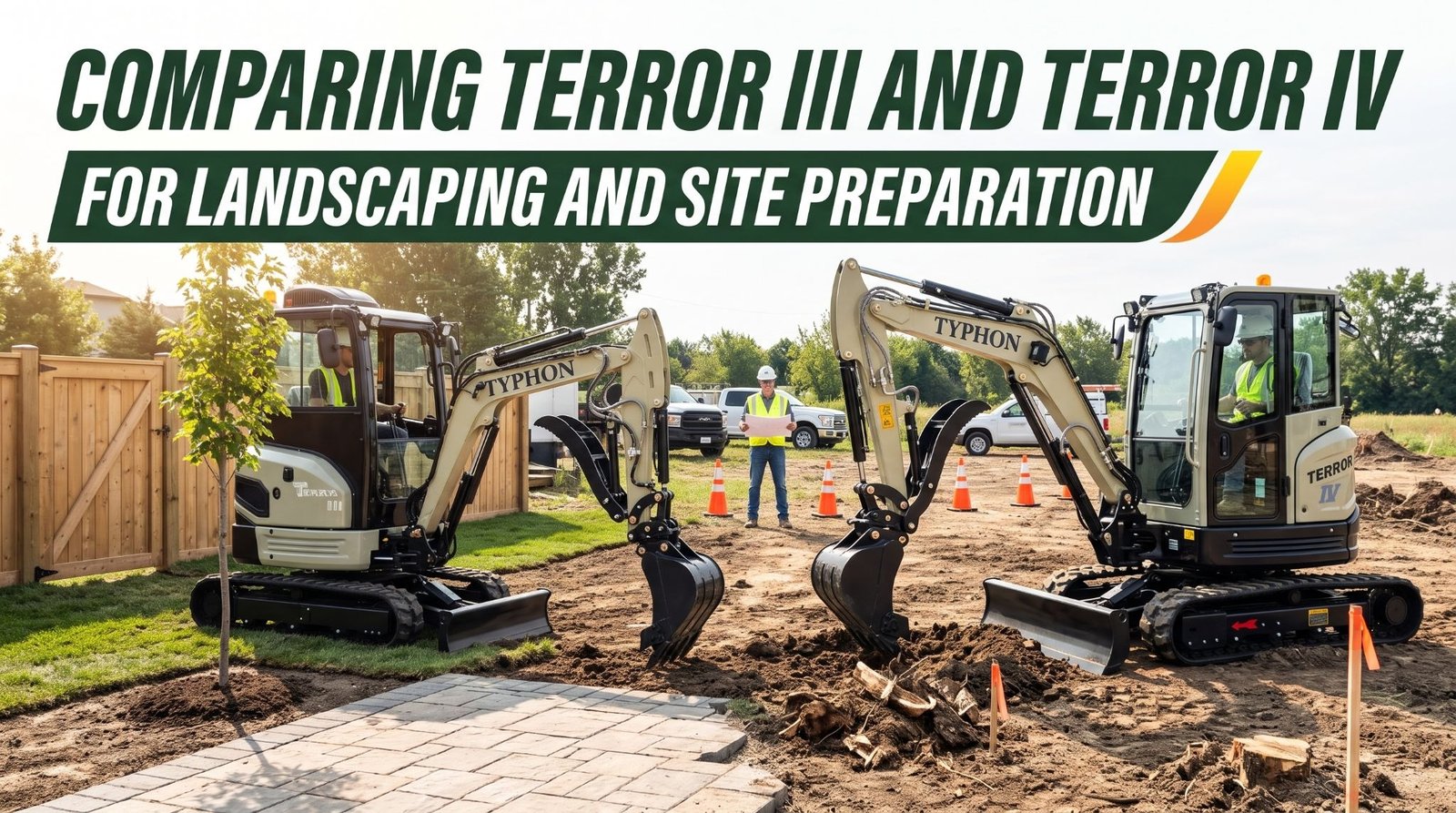
Different jobsite conditions call for different levels of excavation capacity. Residential landscaping may involve narrow gates, limited clearance, patio preparation, tree planting, and backyard grading, while larger site preparation projects require stump removal, topsoil stripping, foundation work, and substantial material movement. Matching machine size to the work area and workload helps contractors avoid access problems or unnecessary equipment limitations.
The TYPHON TERROR III and TERROR IV offer two size options for these applications. The TERROR III weighs 6,000 pounds and uses a Kubota D1105 engine rated at 22.9 horsepower, with a specified digging depth of approximately 9 feet. The TERROR IV weighs 9,000 pounds and is powered by a Kubota D1703 engine. Both models feature enclosed cabs with heating and air conditioning for operator comfort in different working conditions.
Choosing between the models requires evaluating access width, ground conditions, digging requirements, material volume, and available working space. Contractors should compare each machine’s specifications with the demands of their typical projects rather than relying on operating weight or engine power alone. Considering transport needs, digging range, and cab features also helps determine which excavator fits the intended workload.
Compare Machine Size and Operating Weight
Operating weight is the clearest difference between these two machines. The TERROR III weighs approximately 6,000 pounds, and the TERROR IV weighs approximately 9,000 pounds. That 3,000-pound gap affects nearly every part of ownership, from how you haul the machine to how it performs once it’s on the ground.
Weight shapes stability and working capacity. A heavier machine generally holds steadier when the boom is extended, the bucket is full, or the operator is lifting materials such as boulders, root balls, or pipe. That stability matters on site preparation jobs where crews dig steadily, load trucks, and handle dense material all day. The TERROR IV’s added mass gives it an advantage in that kind of work.
Weight also affects the ground under the machine. A lighter excavator puts less total load on lawns, driveways, pavers, and soft soil, which helps reduce ruts and surface damage on finished residential properties. The TERROR III’s lower operating weight makes it easier to protect the site, especially when paired with ground protection mats.
Transport is the third factor. Compare the weight of each machine with your trailer’s rated capacity, your tow vehicle’s towing rating, and the local regulations that apply to your hauling setup. A 6,000-pound excavator often fits equipment many landscaping contractors already own, while a 9,000-pound machine may call for a heavier trailer and tow vehicle. Confirm your full transport setup before you buy.
Key takeaway: The TERROR III’s 6,000-pound weight simplifies transport and protects finished surfaces, while the TERROR IV’s 9,000-pound weight adds stability and capacity for heavier work. Check your trailer and tow vehicle ratings against each machine.
Review Engine Configuration
Both TERROR models use Kubota diesel engines, a name contractors know well for durability and broad service support. The difference is in the engine each machine carries and how that engine matches the size of the excavator it powers.
The TERROR III uses a Kubota D1105 engine rated at 22.9 horsepower. The D1105 is a compact, proven diesel widely used in small construction and agricultural equipment. In a 6,000-pound excavator, it supplies steady power for digging, swinging, and travel while keeping fuel use and service needs manageable. Its wide use also means technicians and parts are easy to find.
The TERROR IV uses a Kubota D1703 engine, a larger-displacement diesel suited to the higher demands of a 9,000-pound machine. More displacement helps support the extra weight, larger working equipment, and heavier workloads that come with a bigger excavator. Review the TERROR IV’s current specification sheet for its rated horsepower and operating speed, and compare them on the same basis as the TERROR III’s figures.
Horsepower alone doesn’t decide digging performance. The engine powers the hydraulic system, which turns that energy into cylinder force and speed. When you compare the two models, look at the engine rating together with hydraulic flow, pressure, and overall machine balance. Ask about service intervals, filter access, and fuel consumption as well, since those factors shape your daily operating costs over years of ownership.
Key takeaway: The TERROR III’s 22.9-horsepower Kubota D1105 suits its 6,000-pound frame, while the TERROR IV’s larger Kubota D1703 supports heavier work. Compare complete engine and hydraulic specifications, not horsepower alone.
Evaluate Digging Performance
Digging performance decides how much work a machine finishes in a day and which jobs it can take on without repositioning. On landscaping and site preparation projects, the key factors are digging depth, working reach, bucket breakout force, and arm configuration.
The TERROR III has a specified digging depth of approximately 9 feet. That range covers a wide variety of landscaping and residential work, including tree and shrub planting, drainage trenches, irrigation mainlines, retaining wall footings, pond excavation, and utility service lines. For many landscaping contractors, 9 feet of depth handles most daily tasks with practical margin.
Site preparation often asks more of a machine. Stripping topsoil across a large lot, removing stumps, digging basement or foundation excavations, and loading trucks all reward greater reach, depth, and lifting capability. Check the TERROR IV’s current specification sheet for its digging depth, reach, dump height, and breakout force, then compare those figures directly with the TERROR III’s.
Measure both machines against your real projects. List the trench depths, footing depths, and dump heights your typical jobs require. If you load dump trucks regularly, dump height becomes especially important. If you dig near foundations, fences, and planting beds, smooth and precise control matters as much as raw capability. Choose the machine that covers your common work comfortably, not one that has to run at its limits every day.
Key takeaway: The TERROR III offers about 9 feet of digging depth for most landscaping work. Compare the TERROR IV’s verified depth, reach, dump height, and breakout force against the demands of your site preparation projects.
Consider Jobsite Access
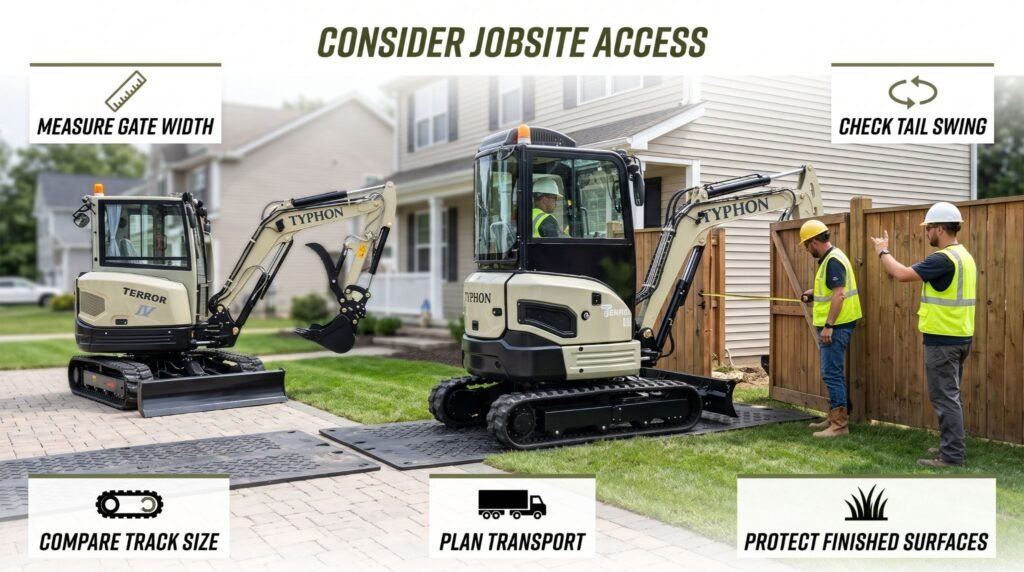
Landscaping projects rarely take place on open, empty ground. Crews work in residential backyards, narrow side yards, established gardens, and properties with finished driveways, patios, and lawns. The best excavator for these sites is the one that can reach the work area without causing damage on the way in.
Start by measuring your typical access points. Side gates, spaces between houses, and paths around landscaping features often set a hard limit on machine width. Compare the overall width of the TERROR III and TERROR IV with the openings you see most often. A machine that can’t fit through the gate leaves your crew digging by hand or removing fence panels, both of which cost time and money.
Tail swing deserves close attention as well. When an excavator rotates, its rear can strike walls, fences, trees, or parked vehicles if there isn’t enough clearance. Review the tail swing dimensions of each model and consider how often your crews work beside houses or property lines. Track dimensions and ground pressure also affect how the machine treats lawns and soft soil.
As a general rule, the TERROR III’s smaller size makes it easier to place in tight residential spaces, while the TERROR IV is better suited to open sites with room to maneuver. Many contractors find that the size of their most common jobsite decides the choice more than any other factor. Walk your typical properties with each machine’s dimensions in hand before you decide.
Key takeaway: Compare overall width, tail swing, and track dimensions with the gates and clearances on your typical jobs. The TERROR III suits tight residential access, while the TERROR IV fits open sites with more room.
Review Operator Comfort and Controls
Operator comfort directly affects productivity. A landscaping crew may run an excavator from early morning through late afternoon, often in summer heat or cold spring and fall weather. An operator who stays comfortable and focused works more accurately around finished surfaces, plantings, and underground utilities.
The TERROR III and TERROR IV both feature enclosed-cab equipment with heating and air conditioning. The enclosure reduces exposure to wind, rain, dust, and temperature extremes. Air conditioning keeps operators cool and alert during hot afternoons, while heating supports early starts and keeps glass clear of fog and frost. These features help crews keep steady output through changing weather and extend the productive season.
Comfort goes beyond climate control. Assess visibility to the bucket, tracks, and work area from the operator’s seat, especially when digging close to fences and foundations. Check the seat’s adjustment range and support, and confirm that joysticks, pedals, and switches sit within easy reach for operators of different sizes. Look at how easily operators can enter and exit the cab, with secure steps and handholds.
An enclosed cab supports safe work, but it doesn’t replace good practice. Operators should always wear the seat belt, keep glass clean, and know where the emergency exit is. On dusty sites, treat the cab as one part of a broader dust control plan that includes maintained seals and clean cab filters. Have your own operators sit in each machine during a demonstration to judge fit and visibility.
Key takeaway: Both TERROR models offer enclosed-cab comfort with heating and air conditioning. Evaluate visibility, seat adjustment, control layout, and ease of entry with the operators who will run the machine daily.
Match the Excavator to Project Demands
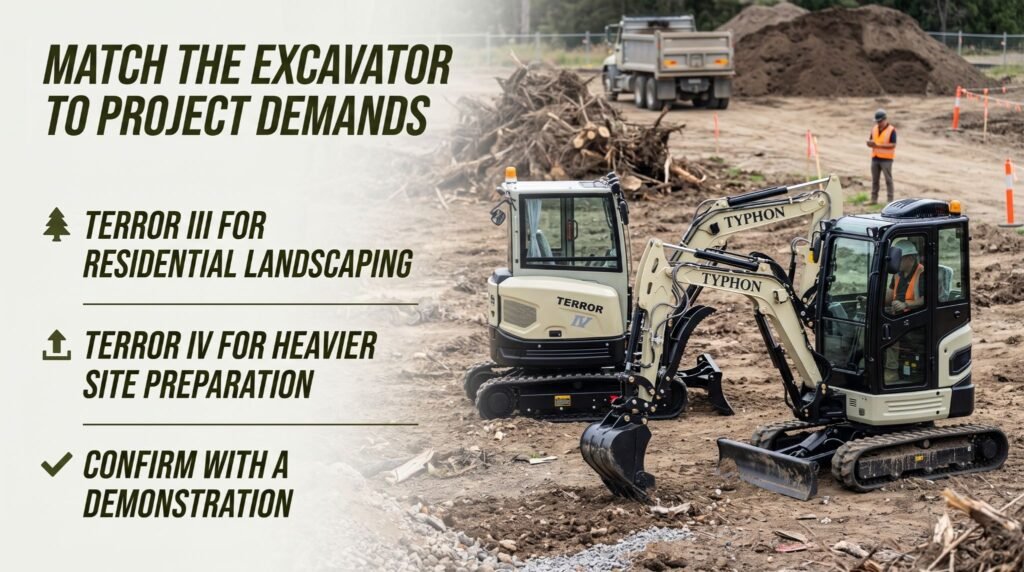
The right excavator is the one that fits the work you do most often. Before comparing models, review your past year of projects. Look at typical jobsite access, digging depths, material volumes, transport distances, and the attachments your crews run.
The TERROR III suits contractors who need a capable 6,000-pound machine for general landscaping and smaller site preparation tasks. It handles tree planting, irrigation and drainage trenching, small retaining walls, pond work, and residential grading well. Its size makes it easier to haul, easier to place in tight yards, and gentler on finished properties. For landscaping companies working mainly in residential neighborhoods, it often delivers the best balance of capability and access.
The TERROR IV is the stronger choice when projects demand greater machine capacity. Lot clearing, stump removal, foundation excavation, heavy grading, and frequent truck loading all benefit from its 9,000-pound weight and larger Kubota D1703 engine. Contractors who focus on open-site preparation or larger commercial landscaping may find the added stability and capacity improve daily output.
Consider transport, access, and workload together. A larger machine adds little value if it can’t reach your typical work area, and a smaller machine slows production if it runs at its limit every day. Once you’ve narrowed the choice, schedule a hands-on demonstration. Have your operators dig to your usual depths, work beside obstacles, and load material, then use their feedback to confirm the decision.
Key takeaway: Choose the TERROR III for residential landscaping and smaller site work where access matters most, or the TERROR IV for heavier site preparation that calls for greater capacity. Confirm the choice with an operator-led demonstration.
Conclusion
The TYPHON TERROR III and TERROR IV serve different needs within landscaping and site preparation. The TERROR III combines a 6,000-pound operating weight, a 22.9-horsepower Kubota D1105 engine, and about 9 feet of digging depth in a size that fits tight residential sites and simple transport setups. The TERROR IV steps up to 9,000 pounds and a Kubota D1703 engine for contractors who need more stability and capacity on open sites. Both offer enclosed-cab comfort with heating and air conditioning to keep operators productive through long days and changing weather.
Before you buy, compare operating weight, engine configuration, digging range, dimensions, and cab features against the projects your crews complete most often. Confirm the TERROR IV’s current specifications in writing, check your trailer and tow vehicle ratings, and measure the access points on your typical jobsites. Then schedule a demonstration with your operators. That process leads to a confident decision and a machine that supports your business for years to come.
Frequently Asked Questions
What is the operating weight of the TERROR III?
The TERROR III has a specified operating weight of approximately 6,000 pounds. That size makes it practical for residential landscaping, tight access, and common trailer setups.
What engine does the TERROR III use?
The TERROR III uses a Kubota D1105 engine rated at 22.9 horsepower. It’s a proven compact diesel with broad parts and service support.
What is the main difference between the TERROR III and IV?
The TERROR IV is the larger 9,000-pound model and uses a Kubota D1703 engine. It offers greater stability and capacity for heavier site preparation, while the TERROR III is easier to transport and position in tight spaces.
Which model is better for residential landscaping?
The better choice depends on access, digging requirements, ground conditions, and your workload. Many residential landscaping contractors prefer the TERROR III for its smaller size, while the TERROR IV suits larger properties and heavier work.
