Open canopy vs enclosed cab excavator
How to Choose Between an Open Canopy and an Enclosed Cab Excavator
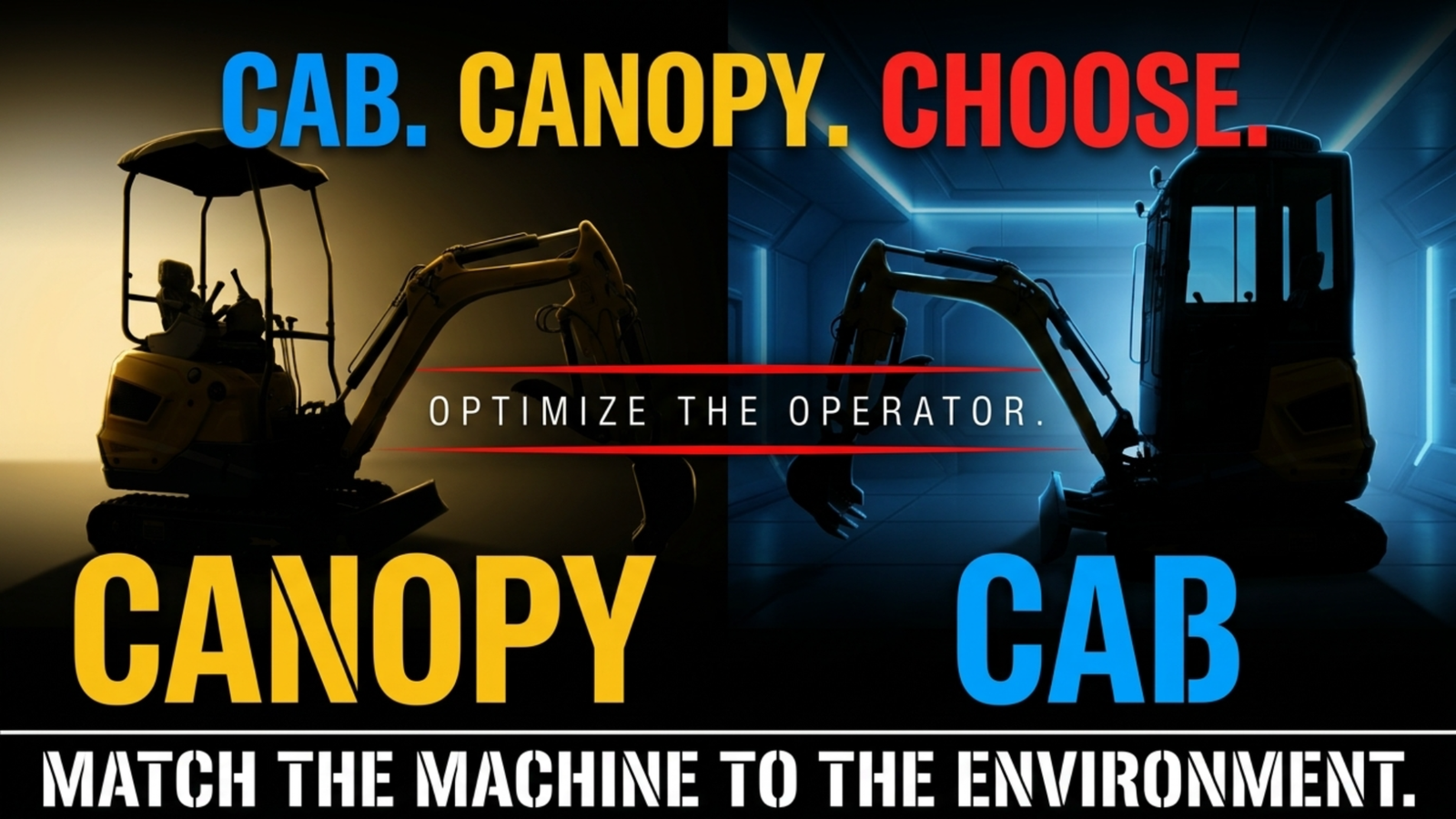
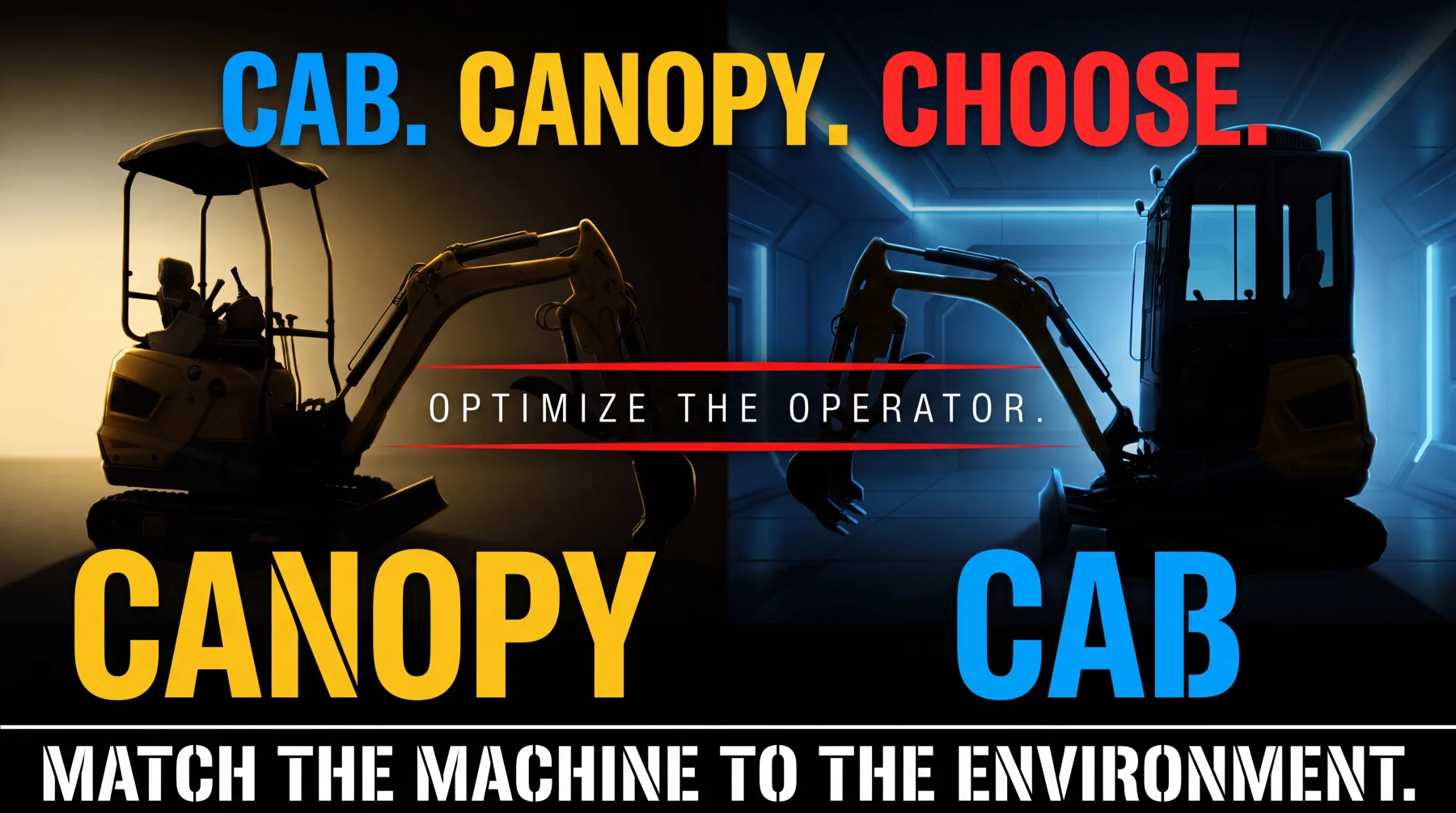
The operator station on your excavator influences every hour your crew spends working. It shapes comfort, safety, productivity, and the price you pay both upfront and over the life of the machine. Still, many buyers overlook the choice between an open canopy and an enclosed cab until the equipment lands on a job site that does not match the setup. Neither option wins across the board. The right pick depends on where you work, how long your shifts run, and the conditions your operators face daily. This guide breaks down what each configuration brings to the table, so you can match the machine to the work with confidence.
Open canopy vs enclosed cab excavator selection influences every single hour your crew spends working on a job site. It shapes operator comfort, safety, on-site productivity, and the price you pay both upfront and over the life of the machine. Still, many equipment buyers overlook the choice between an open canopy and an enclosed cab until the machinery lands on a job site that does not match the configuration. Neither option wins across the board; the right choice depends heavily on where you work, how long your shifts run, and the environmental conditions your operators face daily.
Open Canopy Considerations
1. Comparing the Open Canopy vs Enclosed Cab Excavator Features

An open canopy keeps things simple, and that simplicity delivers real value on the right job. Open canopies offer excellent peripheral vision and allow for quick, frequent entry and exit, making them ideal for tasks where you are constantly jumping in and out of the machine.
Visibility Advantages of an Open Canopy vs Enclosed Cab Excavator
Ultimately, making the final call on an open canopy vs enclosed cab excavator requires mapping out your core operational baseline.
Settling on an open canopy vs enclosed cab excavator comes down to matching the machine to the reality of your daily work.
A side-by-side comparison of an open canopy vs enclosed cab excavator on a commercial construction site
Match the station to the work, and your machinery will keep operators comfortable, safe, and productive on every job you take on. To ensure your equipment runs at peak performance regardless of the cabin type you choose, review our comprehensive internal guide on how to properly maintain hydraulic excavator attachments.
Visibility
Visibility is one of the strongest reasons operators favor an open canopy. You gain an unobstructed, 360-degree view of your surroundings, with no doors, frames, or glass narrowing your line of sight. That clear sightline becomes vital when you work in tight, complex areas where a single misjudged inch could mean contact with a wall, a buried utility line, or a coworker on the ground.
The more you can see, the safer and more precise every move becomes. You can track the position of your attachment, monitor the terrain around your tires or tracks, and keep an eye on nearby crew members all at once. There is no blind spot created by a door pillar or a fogged window to work around.
That advantage matters most in confined spaces. Landscaping jobs, interior demolition, and work between structures all demand constant spatial awareness, and the open design gives it to you without obstruction. When you rely on your eyes to keep the machine and the people around it safe, an unobstructed view is hard to beat. For operators who spend their days threading through tight quarters, this clear line of sight is often the deciding factor.
Mobility
Mobility gives the open canopy another practical edge on collaborative job sites. Without a door to open and close, you can climb out in seconds, communicate easily with crew members on the ground, and move around the site more efficiently. On jobs that demand constant back-and-forth, that freedom keeps the whole operation flowing smoothly.
Think about how often an operator needs to step down on a busy site. You might check a grade, reposition a load, confirm a measurement, or talk through the next move with a coworker. With an open canopy, each of those interruptions costs you only a moment rather than the fuss of working around a door every time.
Clear communication is a big part of this benefit too. Without glass and a sealed cabin between you and your crew, you can hear directions, call out hazards, and coordinate movements without shouting or relying on hand signals alone. That direct connection reduces mistakes and keeps everyone working in sync. For teams that rely heavily on ground-level collaboration, the open canopy removes friction from the workflow, letting operators stay engaged with the people and tasks around them throughout the day.
Cost-Effectiveness
Cost-effectiveness rounds out the appeal of the open canopy, and it works in your favor both at purchase and over time. Open canopy models typically come at a lower price point than enclosed cabs, so you spend less to put a capable machine to work. For budget-conscious operations, that difference can be significant across a fleet.
The savings continue well beyond the initial purchase. Open canopies have fewer complex components to maintain, which means fewer parts that can fail and fewer systems demanding your attention. Consider what you avoid with a simpler station:
- HVAC systems that require servicing, refrigerant, and occasional repair
- Electronic door sensors that can malfunction and interrupt operation
- Sealed windows and door seals that wear out and need replacement
With less to maintain, you face lower long-term upkeep costs and less downtime waiting on repairs. That reliability keeps the machine earning rather than sitting in the shop.
For operations working in reasonable conditions, this simplicity translates directly into savings you can measure. You pay for the capability you actually need without carrying the expense of features that would sit unused. When your budget matters and your job sites do not demand climate control, the open canopy delivers strong value from day one.
Enclosed Cab Considerations
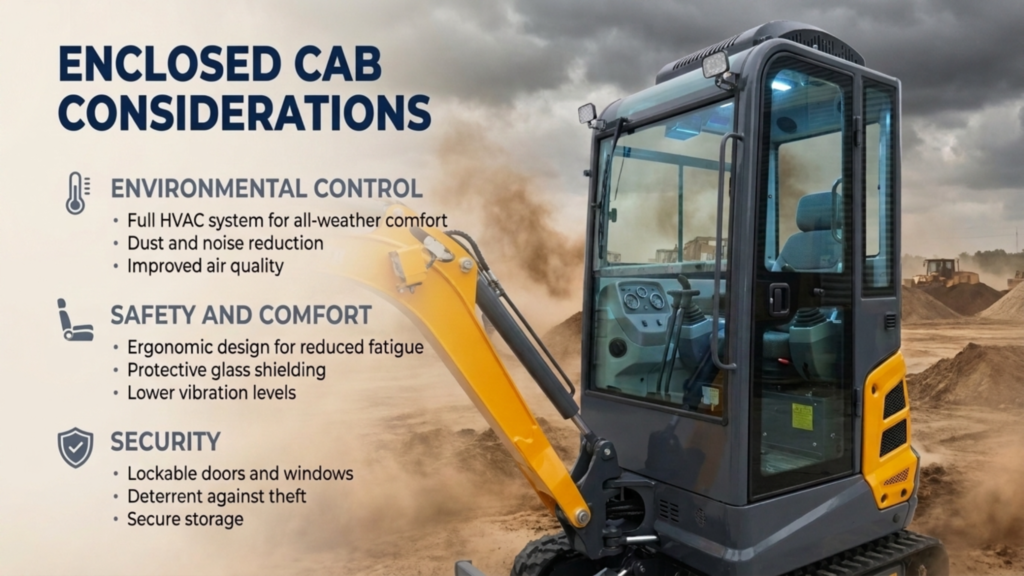
An enclosed cab transforms the operating experience by giving your operator a controlled, protected space. Enclosed cabs provide a controlled environment that protects the operator from the elements and improves long-term focus, especially in harsh conditions where exposure would otherwise wear a person down.
Which option holds a better resale value: an open canopy vs enclosed cab excavator?
Generally, machines configured with an enclosed cab and full HVAC systems hold a higher resale value and attract a broader pool of buyers on the secondary market, particularly in regions that experience extreme seasonal weather changes.
Environmental Control
Environmental control is the headline benefit of an enclosed cab, and it makes a real difference in demanding climates. Integrated heating and air conditioning allow for productive work during extreme temperature fluctuations or high-humidity days. Rather than powering through brutal heat or bitter cold, your operator stays at a comfortable temperature that keeps concentration sharp.
Temperature has a direct effect on performance. When an operator is sweating through a scorching afternoon or shivering on a frigid morning, focus slips and mistakes creep in. A climate-controlled cab removes that distraction, letting the person in the seat concentrate fully on the work. Output stays steady from the first hour of the shift to the last.
Humidity brings its own challenges, fogging windows and leaving operators clammy and uncomfortable. The air conditioning in an enclosed cab manages moisture along with temperature, keeping the cabin clear and pleasant even on the worst days. In regions that face harsh summers, cold winters, or heavy humidity, this control shifts from a comfort feature to a genuine productivity tool. For operations running through demanding seasons, the ability to maintain a comfortable working environment all day long protects both your schedule and the well-being of your crew.
Safety and Comfort
Safety and comfort follow close behind environmental control as reasons to choose an enclosed cab. A sealed cabin significantly reduces noise levels, dust inhalation, and exposure to flying debris, and those protections add up over a long shift. Consider what a sealed cabin delivers throughout the workday:
- Lower noise levels that ease strain and help protect hearing over years of operation
- Reduced dust inhalation that keeps the air cleaner and safer to breathe
- Protection from flying debris that shields the operator during demanding work
- Less operator fatigue across long shifts, supporting steadier and safer performance
Fatigue is the quiet enemy of productive, safe work. When an operator battles constant noise, breathes dusty air, and dodges debris all day, exhaustion sets in faster and attention wanders. A tired operator works slower and takes on more risk, which affects both output and safety.
By sealing out those stressors, an enclosed cab helps your operator stay comfortable, alert, and effective from start to finish. That sustained focus matters most on jobs that run long hours in tough conditions. When comfort and safety are priorities, the protection of a sealed cabin pays off in steadier work and healthier operators over the long haul.
Security
Security is the third advantage of an enclosed cab, and it becomes especially valuable when machines stay on site after the crew heads home. Locking the cab provides better protection for the operator’s personal items and the sensitive machine controls when the skid steer is left on a job site overnight.
Job sites are rarely fully secure, and equipment left in the open invites trouble. An enclosed, lockable cab gives you a way to protect what matters. Personal belongings an operator leaves behind, such as tools, electronics, or paperwork, stay safe behind a locked door rather than exposed to anyone who wanders by.
The machine’s controls benefit from that same protection. A sealed, locked cabin shields the controls and instrumentation from weather, tampering, and unauthorized use. Rain, dust, and overnight moisture cannot settle on the components you rely on, and a locked door discourages theft or vandalism when no one is watching.
That security brings real peace of mind. When you leave a machine on site overnight or over a weekend, you know both the equipment and any belongings inside are far better protected than they would be in an open station. For operations that cannot haul machines back to a secure yard each day, this protection safeguards your investment and keeps the skid steer ready to work the next morning.
Aligning Equipment with Your Project Needs
Selecting the right configuration comes down to two things: the primary environment of your work and the intensity of your project schedule. If your jobs are short-term, involve frequent ground-level collaboration, or take place in mild weather, an open canopy is the practical choice. It keeps costs low, maximizes visibility, and lets your operators move freely without the overhead of a sealed system. On the other hand, if your projects run long hours, expose operators to severe dust or weather extremes, or place them in high-noise environments, an enclosed cab is the smarter investment. In those conditions, operator comfort and safety are the highest priorities, and the enclosed cab is built to deliver both. Matching your configuration to your actual working conditions, rather than defaulting to price alone, is what ensures the machine supports your crew the way it should every day on the job.
Conclusion
Open Canopy vs Enclosed Cab Excavator: 5 Vital Rules for the Best Setup
Choosing between an open canopy and an enclosed cab comes down to matching the machine to the reality of your daily work. An open canopy rewards you with clear visibility, easy entry and exit, and a lower cost of ownership, making it a smart pick for short-term, collaborative jobs in mild conditions. An enclosed cab protects your operators with climate control, reduced noise and dust, and secure storage, which proves essential for long hours in harsh, dusty, or high-noise environments.
Neither configuration option is a compromise when it fits the specific job profile; each simply serves a different set of site demands. Take an honest look at the conditions your crew faces most often and how hard your typical schedule runs them, then let those answers guide your fleet choice. To ensure your machinery operates at peak efficiency regardless of the configuration you choose, check out our internal guide on how to properly maintain hydraulic excavator attachments for long-term reliability.
Open Canopy vs Enclosed Cab Excavator: 5 Vital Rules for the Best Setup
