How Soil Types Affect Mini Excavator Trenching Performance
Why Soil Profiles Dictate Mini Excavator Trenching Success
You’ve sized the trench, staged the pipe, and lined up the machine. Then the bucket bites in and the ground tells you what kind of day you’re really going to have. Sink into wet clay and every scoop clings to the bucket. Hit dry sand and the walls slump before you’ve cleared the next pass. Strike rock and your cycle times crawl while your teeth take a beating. The soil under your tracks shapes everything: how fast you dig, how clean your walls stay, and how hard your machine has to work to get there.
Soil isn’t a detail you plan around after the fact. It’s the condition that decides which bucket bites cleanly, which undercarriage keeps you stable, and whether your trench holds its shape or caves in behind you. This guide walks you through the major soil types you’ll face, how each one changes digging resistance, bucket penetration, wall stability, and cycle times, and how to match your mini excavator’s setup to the ground so you dig efficiently, safely, and right the first time.
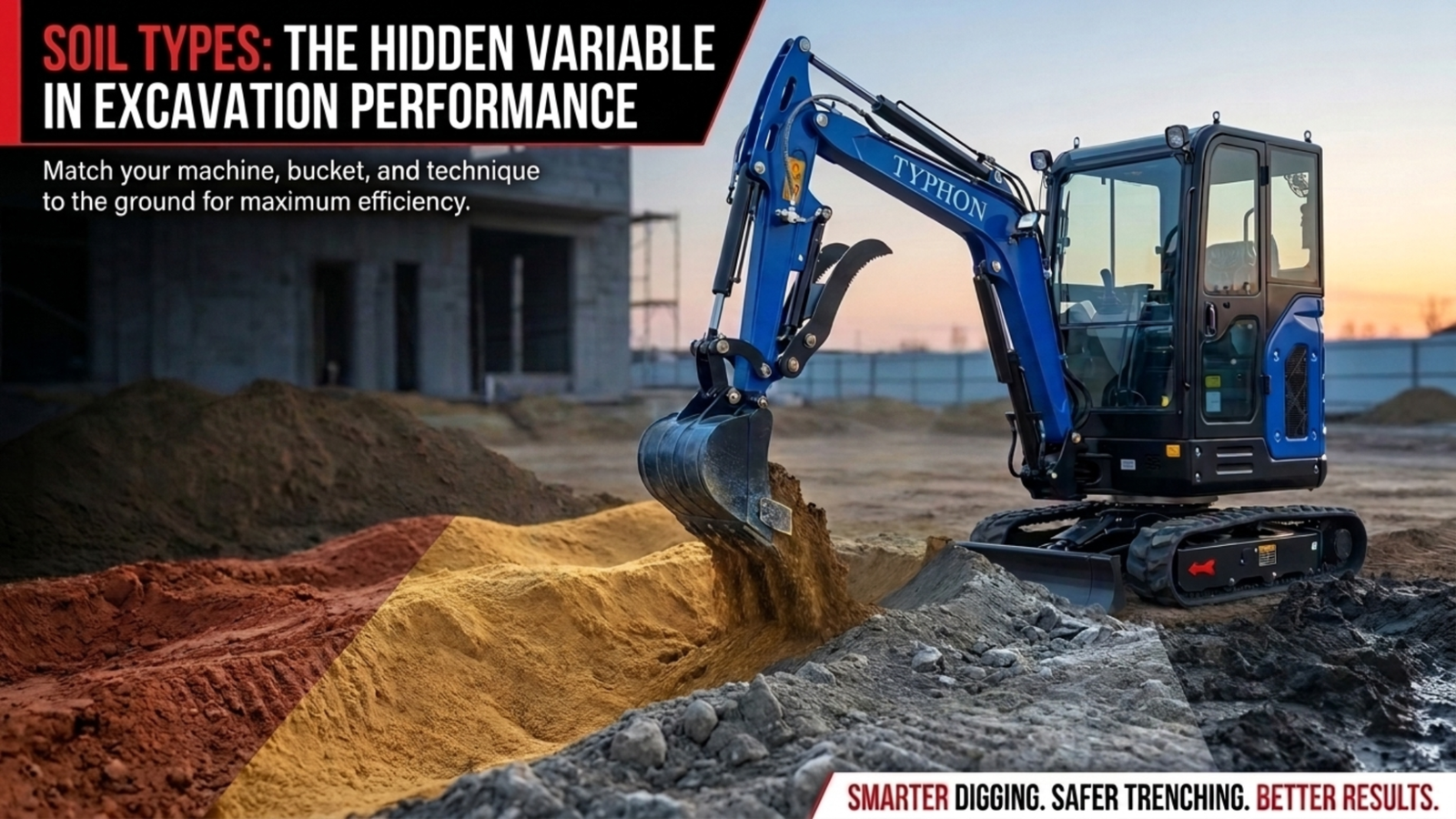
Soil conditions have a major impact on excavation performance and safety. Clay provides stable trench walls but is harder to dig, while sandy soil excavates quickly but is more likely to collapse. Rocky ground increases equipment wear, and wet soil reduces stability and slows digging. Choosing the right machine and bucket for the soil helps improve efficiency, accuracy, and jobsite safety.
Why Soil Type Drives Trenching Performance
Before you choose a bucket or set your production targets, you need to read the ground. Soil type isn’t just a backdrop to the work; it’s the single biggest variable in how a mini excavator performs on any given trench. Two identical machines digging the same depth in different soils can post wildly different cycle times, wear rates, and safety demands.
Knowing what you’re digging into also helps you select the right excavation approach. Soil conditions influence bucket choice, digging speed, machine stability, and the likelihood of cave-ins or equipment wear. Evaluating the ground before excavation allows operators to work more efficiently while reducing downtime and improving jobsite safety.
The Forces at Play in Every Dig
Every scoop is a contest between your bucket and the ground’s resistance. Dense, cohesive soil fights penetration and clings to steel, while loose material gives way easily but won’t hold a shape. Rock stops a bucket cold and forces you to break, pick, or reposition. Understanding those forces helps you predict how a trench will behave before you break ground.
Digging resistance shapes your fuel burn, your hydraulic load, and how hard you lean on the machine. The higher the resistance, the slower your cycles and the more wear you put on teeth, cylinders, and pins. Reading the soil first lets you set realistic expectations and protect the machine from working harder than it should.
Stability, Cycle Times, and Wear
Soil decides whether your trench walls stand or slump, and that stability governs how much you have to dig. Firm ground lets you run tighter, cleaner trenches. Unstable ground forces you to slope, bench, or over-dig, adding volume, time, and cost to a job that looks simple on paper.
The same conditions drive your cycle times and component wear. Sticky clay slows every dump, rocky ground jars the whole machine, and saturated soil doubles the weight of every bucketful. Match your approach to the soil, and you keep cycles quick and wear predictable instead of chasing problems all shift.
Takeaway: Soil type sets the digging resistance, wall stability, cycle times, and wear you’ll face on every trench, so reading the ground first is what separates a smooth dig from a costly fight.
Rocky and Mixed Ground
Rocky ground presents some of the most demanding excavation conditions, slowing digging progress and increasing stress on the machine. Large rocks, gravel, and bedrock require more digging force and can accelerate wear on buckets, teeth, and hydraulic components.
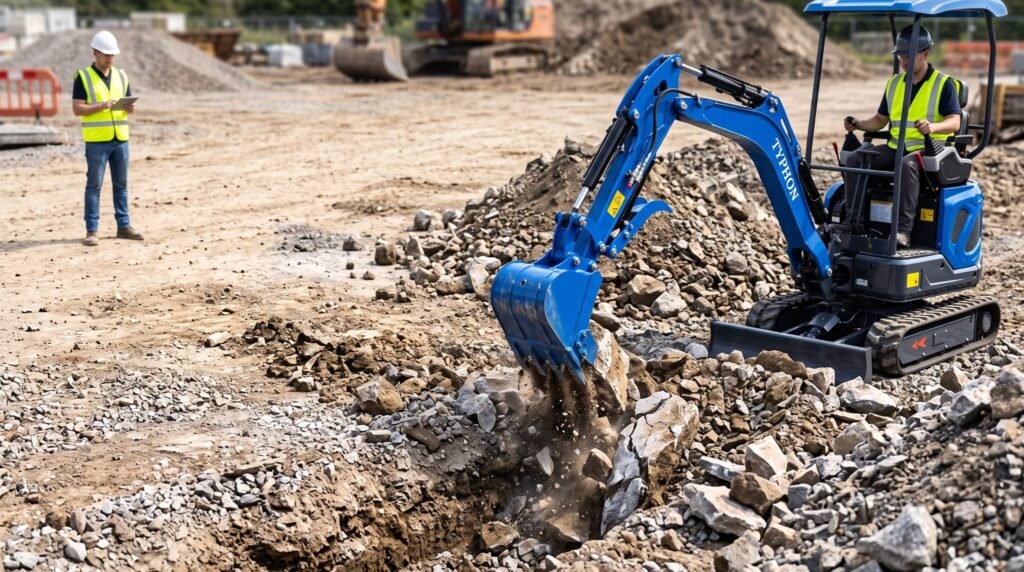
Working efficiently in rocky terrain often requires the right bucket, proper digging techniques, and, in some cases, specialized attachments to break or remove hard material. Using equipment suited to these conditions helps improve productivity while reducing unnecessary wear and downtime.
Digging Resistance and Component Wear
Rock stops a standard digging bucket in its tracks. Instead of slicing through, you’re prying, picking, and repositioning to work material loose, and cycle times climb accordingly. A trench that flies in loam can crawl in rocky ground, and the operator earns every foot of progress.
The wear is just as real as the delay. Impact with rock hammers your bucket teeth, jars the arm and cylinders, and loads the hydraulics far harder than soft soil ever does. Pushing a small machine to muscle through rock invites damage, so the smarter play is the right tool and a patient hand rather than brute force that breaks something expensive.
Attachments and Technique for Rock
Rock often calls for more than a bucket. A hydraulic breaker knocks apart material too hard or large to dig, while a heavy-duty rock bucket with reinforced teeth handles broken and mixed ground far better than a standard trenching bucket. Matching the attachment to the rock is what keeps you moving instead of stalling.
Technique carries the rest. Work in smaller bites, let the machine’s hydraulics do the prying rather than yanking, and reposition to attack rock from an angle where it breaks free more easily. Confirm your mini excavator has the hydraulic capacity to run a breaker before you commit, since not every machine is set up to power one effectively.
Wet and Saturated Soil
Wet or saturated soil creates challenging excavation conditions by reducing ground stability and increasing the weight of the material being moved. Whether working in waterlogged clay, saturated sand, or areas with a high water table, operators often experience slower digging and more difficult machine control.
Planning for drainage, selecting the right equipment, and adjusting excavation techniques can help maintain productivity while improving safety and reducing the risk of trench collapse.
Added Weight and Reduced Stability
Water is heavy, and saturated soil carries that weight in every bucketful. Your machine works harder to lift and swing each load, cycles slow down, and fuel burn climbs. What is dug easily when dry can bog the machine down once it’s soaked, especially in clay that turns dense and sticky under moisture.
Stability suffers even more. Saturated soil loses much of its ability to hold a wall, so trenches that would stand dry start slumping and sliding when wet. Water also undermines the ground your machine sits on, so a soft, saturated pad can leave the excavator unstable or sinking, which is a safety problem before it’s ever a productive one.
Working Wet Ground Safely
Managing water is half the battle. Where practical, dewatering the trench with a pump firms up the walls and the working surface, making the whole job safer and faster. Keeping the machine on stable ground, using mats or boards on soft pads, and staying alert to any settling under the tracks all protect the operator and the machine.
Wet ground also raises the stakes on wall protection. Saturated soil collapses fast and without warning, so sloping, benching, or a trench box becomes even more important than it would be in the same soil dry. When conditions turn wet, slow down, evaluate the ground carefully, and treat protective systems as required rather than optional.
Wet and saturated soil adds weight, slows cycles, and sharply reduces stability, so dewatering, a stable machine setup, and disciplined wall protection are what keep a soggy trench safe and workable.
Matching Your Mini Excavator to the Soil
No single machine setup is ideal for every soil condition. Choosing the right bucket, undercarriage, and excavator configuration based on the ground type helps improve digging efficiency, reduce equipment wear, and maintain safer excavation. Evaluating soil conditions before starting the job allows operators to work more productively and adapt to changing site conditions with confidence.
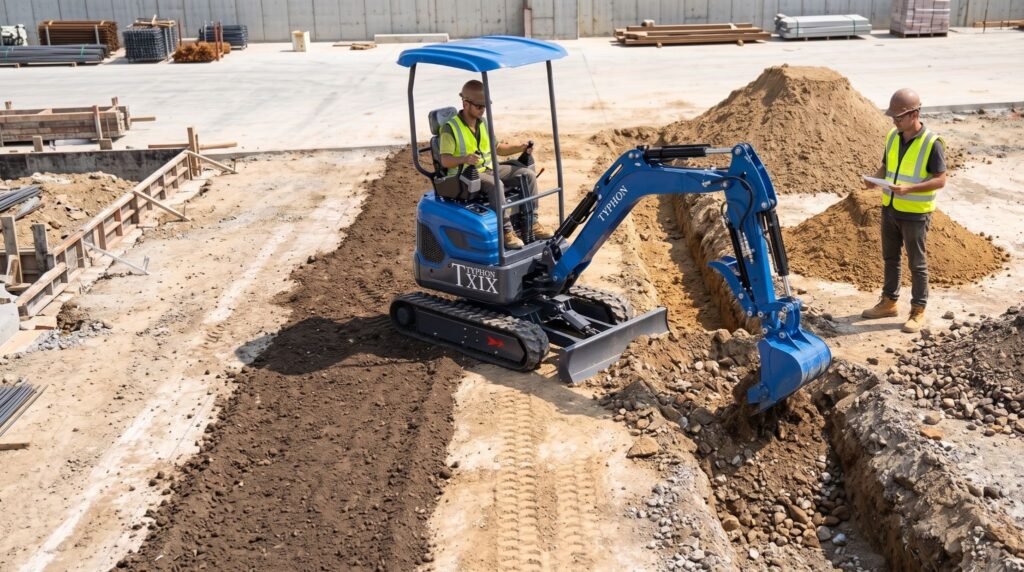
Taking time to assess the jobsite also helps reduce unexpected delays and costly adjustments during excavation. By matching the equipment to the soil from the start, contractors can achieve more consistent performance, extend machine life, and complete trenching projects more efficiently.
Choosing the Right Bucket and Attachment
Your bucket should suit the soil, not just the trench width. A narrow trenching bucket with sharp teeth penetrates hard clay and compacted ground, while a wider bucket moves loose and granular material efficiently. Rocky conditions call for a reinforced rock bucket or a hydraulic breaker, and sticky clay benefits from a bucket profile that releases material cleanly on the dump.
Confirm your machine can support the attachment before you rely on it. Running a breaker or a heavy-duty bucket demands adequate hydraulic flow and pressure, and matching the attachment to both the soil and the machine’s capacity keeps you productive without overloading the hydraulics or straining the arm.
Undercarriage, Machine Size, and Ground Conditions
The undercarriage under your machine matters as much as the bucket on the end of it. Rubber tracks tread lightly and suit finished or firm surfaces, while steel tracks or a wider track shoe deliver stability and flotation on soft, wet, or uneven ground. On saturated or unstable pads, that flotation can be the difference between steady work and a machine that sinks or slides.
Machine size and reach round out the match. Deeper trenches and tougher soils reward the digging force and stability of a larger mini excavator, while tight, light-duty work in stable ground suits a compact machine well. Weigh your typical soil conditions alongside your trench depth and width, and choose a machine whose weight, hydraulic force, and undercarriage fit the ground you work most.
Frequently Asked Questions
Which soil type is the hardest to excavate?
Wet, saturated soil is often the most difficult because it is heavy, unstable, and slows excavation. Rocky ground is also challenging due to increased equipment wear and reduced digging speed.
How does soil type affect trenching costs?
Hard, rocky, or unstable soils increase excavation time, fuel consumption, and equipment wear, leading to higher overall project costs.
Can the right equipment improve trenching performance?
Yes. Selecting the appropriate excavator, bucket, and attachments for the soil type helps improve productivity, reduce wear, and complete trenching more efficiently.
You’ve sized the trench, staged the pipe, and lined up the machine. Then the bucket bites in and the ground tells you what kind of day you’re really going to have. Succeeding at mini excavator trenching depends entirely on the medium beneath your tracks. Sink into wet clay, and every scoop clings to the bucket. Hit dry sand, and the walls slump before you’ve even cleared the next pass. Strike hidden rock, and your cycle times crawl while your bucket teeth take a massive beating.
The soil under your tracks shapes everything: how fast you dig, how clean your walls stay, and how hard your machine has to work to get to grade. Soil isn’t a minor detail you plan around after the fact. It is the core variable that decides which bucket bites cleanly, which undercarriage keeps you stable, and whether your trench holds its shape or caves in behind you.
Before you choose a bucket or set your daily production targets, you need to read the ground. Soil conditions are the single biggest variable in how a compact machine performs on any given utility run. Two identical machines executing mini excavator trenching to the exact same depth in different soils can post wildly different cycle times, fuel consumption rates, and structural safety demands.
Evaluating the ground conditions before starting your mini excavator trenching project allows operators to work more efficiently while reducing mechanical downtime.
The Forces at Play in Every Dig
Every scoop is a direct contest between your bucket edge and the ground’s natural resistance. Dense, cohesive soil fights penetration and clings to raw steel, while loose granular material gives way easily but completely refuses to hold a shape. Hard rock stops a bucket cold, forcing you to break, pick, or reposition the machine.
Digging resistance directly shapes your fuel burn, your auxiliary hydraulic load, and how hard you have to lean on the machine’s stick. The higher the resistance, the slower your cycles and the more wear you put on teeth, cylinders, and pins.
Stability, Cycle Times, and Wear
Soil composition decides whether your trench walls stand proudly or slump immediately, and that structural stability governs how much material you actually have to move.
- Firm Ground: Lets you run tighter, cleaner trenches with minimal cleanup.
- Unstable Ground: Forces you to slope, bench, or over-dig, radically adding volume, time, and cost to a job that looked simple on blueprints.
Sticky clay slows every dump cycle, rocky ground jars the entire chassis, and saturated soil easily doubles the weight of every single bucketful. Matching your mechanical approach to the specific soil is what keeps your production cycle quick and component wear predictable during mini excavator trenching.
Takeaway: Soil type dictates the digging resistance, wall stability, cycle times, and wear you’ll face. Reading the ground first is what separates a smooth dig from a costly mechanical fight.
Rocky ground presents some of the most demanding conditions for mini excavator trenching, slowing forward progress and increasing structural stress on the entire machine. Large boulders, abrasive gravel, and solid bedrock layers require immense digging force and can drastically accelerate wear on buckets, teeth, and pins.
Working efficiently in rocky terrain requires the right bucket profile, proper mechanical techniques, and, in some cases, specialized attachments to break or remove hard material safely. For operators looking to balance machine wear against production, checking our framework on how to change wheel loader attachments safely provides excellent transferrable knowledge regarding locking mechanism discipline under high stress.
Digging Resistance and Component Wear
Rock stops a standard digging bucket right in its tracks. Instead of slicing smoothly through the earth, you are forced to pry, pick, and constantly reposition to work material loose—causing cycle times to skyrocket. A trench path that flies in loam can crawl in rocky ground, and the operator earns every single foot of progress.
The wear is incredibly real. Impact with buried rock hammers your bucket teeth, violently jars the boom arm and cylinders, and loads the hydraulic valves far harder than soft topsoil ever does. Pushing a compact machine to muscle through solid rock invites catastrophic structural damage; the smarter play is using the right tool and a patient hand rather than relying on brute force.
Attachments and Technique for Rock
Rock often calls for more than a standard bucket:
- Hydraulic Breaker: Knocks apart material too hard or large to scoop.
- Heavy-Duty Rock Bucket: Features reinforced panels and jagged, heavy teeth to handle broken and mixed ground far better than a standard trenching configuration.
Technique carries the rest of the burden. Work in smaller, progressive bites, let the machine’s hydraulics do the prying rather than yanking the joysticks, and reposition the machine to attack rock from an angle where it breaks free along natural fracture lines. Always confirm your mini excavator has the auxiliary hydraulic capacity to run a breaker before you hook it up.
🌊 Saturated Soil Protocols for Safe Mini Excavator Trenching
Wet or saturated soil creates highly challenging conditions for mini excavator trenching by wiping out ground stability and increasing the weight of the material being moved. Whether working in waterlogged clay, saturated sand, or areas with a high water table, operators will experience slower cycle times and more difficult machine tracking.
Added Weight and Reduced Stability
Water is heavy, and saturated mud carries that dead weight in every single pass. Your engine and hydraulics work significantly harder to lift and swing each load, cycle times slow down, and fuel burn climbs. What is dug easily when dry can bog the machine down completely once it’s soaked.
Undercarriage stability suffers even more. Saturated soil loses its cohesive ability to hold a vertical wall, meaning trenches that would stand perfectly dry start slumping and sliding when wet. Furthermore, water undermines the ground your machine sits on; a soft, saturated pad can leave the excavator unstable or actively sinking, creating a severe safety hazard before production even begins.
Working Wet Ground Safely
Managing water flow is half the battle. According to the Occupational Safety and Health Administration (OSHA), protective trenching systems such as shoring or shielding are absolutely required when dealing with hazardous, fluid ground conditions. Where practical, dewatering the trench area with a submersible trash pump firms up the walls and the working surface, making the whole job safer and faster.
Keeping the machine on stable ground, using timber mats or heavy boards on soft pads, and staying alert to any tracking settlement under the tracks all protect the operator. Wet ground also sharply raises the stakes on trench wall protection. Because saturated soil collapses fast and entirely without warning, sloping, benching, or deploying a trench box becomes mandatory.
🛠️ Optimizing Machine Specs for Mini Excavator Trenching Operations
No single machine setup is ideal for every single ground profile. Choosing the right bucket, track undercarriage, and excavator configuration based on the ground type improves digging efficiency, reduces equipment wear, and maintains a safer workspace. To see how machine scale impacts maneuvering in these challenging terrains, read our comprehensive guide on skid steer dimensions explained to learn how physical footprints limit site access.
Choosing the Right Bucket and Attachment
Your bucket should always suit the dominant soil type, not just the target trench width:
| Soil Condition | Ideal Attachment Choice | Key Benefit |
| Hard Clay / Compacted Earth | Narrow Trenching Bucket with Tiger Teeth | Maximizes ground penetration force |
| Loose Sand / Loose Loam | Wide Cleaning / Grading Bucket | Moves high volume without spillback |
| Solid Rock / Abrasive Gravel | Reinforced Rock Bucket / Hydraulic Hammer | Breaks up material without breaking welds |
| Sticky / Heavy Clay | Ejector Bucket / Open Profile Bucket | Ensures clean material release on the dump |
Undercarriage, Machine Size, and Ground Conditions
The undercarriage under your machine matters just as much as the bucket on the end of the stick. Rubber tracks tread lightly and beautifully suit finished turf or firm surfaces.
Conversely, steel tracks or extra-wide track shoes deliver vital stability and flotation on soft, wet, or uneven mud. On saturated or unstable pads, that flotation can easily be the difference between steady, productive work and a machine that gets deeply mired or slides into the hole.
Deep trenches and tough soils reward the raw digging force and stability of a larger mini excavator class, while tight, light-duty work in stable topsoil suits a micro machine perfectly. For broader insights on property development, the U.S. Forest Service offers comprehensive data on soil classifications and vegetation management guidelines that help operators predict stability profiles before breaking ground.
❓ Frequently Asked Questions About Mini Excavator Trenching
- Which soil type is the hardest for mini excavator trenching? Wet, saturated clay is often the most difficult because it adds immense weight, clings to the bucket interior, and severely compromises trench wall stability. Solid rock is a close second due to the extreme mechanical wear it inflicts on teeth and pins.
- How does soil type affect overall trenching project costs? Hard, rocky, or highly unstable soils increase excavation times, elevate fuel consumption, and cause rapid tool wear. Unstable soils also require you to move more total material via sloping or benching, which increases labor hours and trucking costs.
- Can the right equipment configuration offset bad ground conditions? Absolutely. Equipping your machine with a specialized bucket (like a rock or ejector bucket), switching to steel tracks for muddy flotation, or utilizing a hydraulic breaker for rocky layers can restore your cycle times and protect your machine from damage.
📈 Conclusion: Plan the Ground to Protect the Profits
Soil conditions play a definitive role in every mini excavator trenching project, directly affecting digging speed, fuel efficiency, trench safety, and machine longevity. Clay, sand, rock, loam, and saturated mud each present unique physical challenges, making it crucial to adapt your excavation methods rather than relying on the exact same approach for every job site.
Successful excavation starts with matching your fleet to the conditions on site. By taking the time to assess the soil type before you unload the trailer, you can select the right machine size, the proper track configuration, and the perfect attachment for the task. This proactive planning minimizes unexpected site delays, cuts down on premature machine wear, and ensures your mini excavator trenching projects cross the finish line safely and profitably.


