
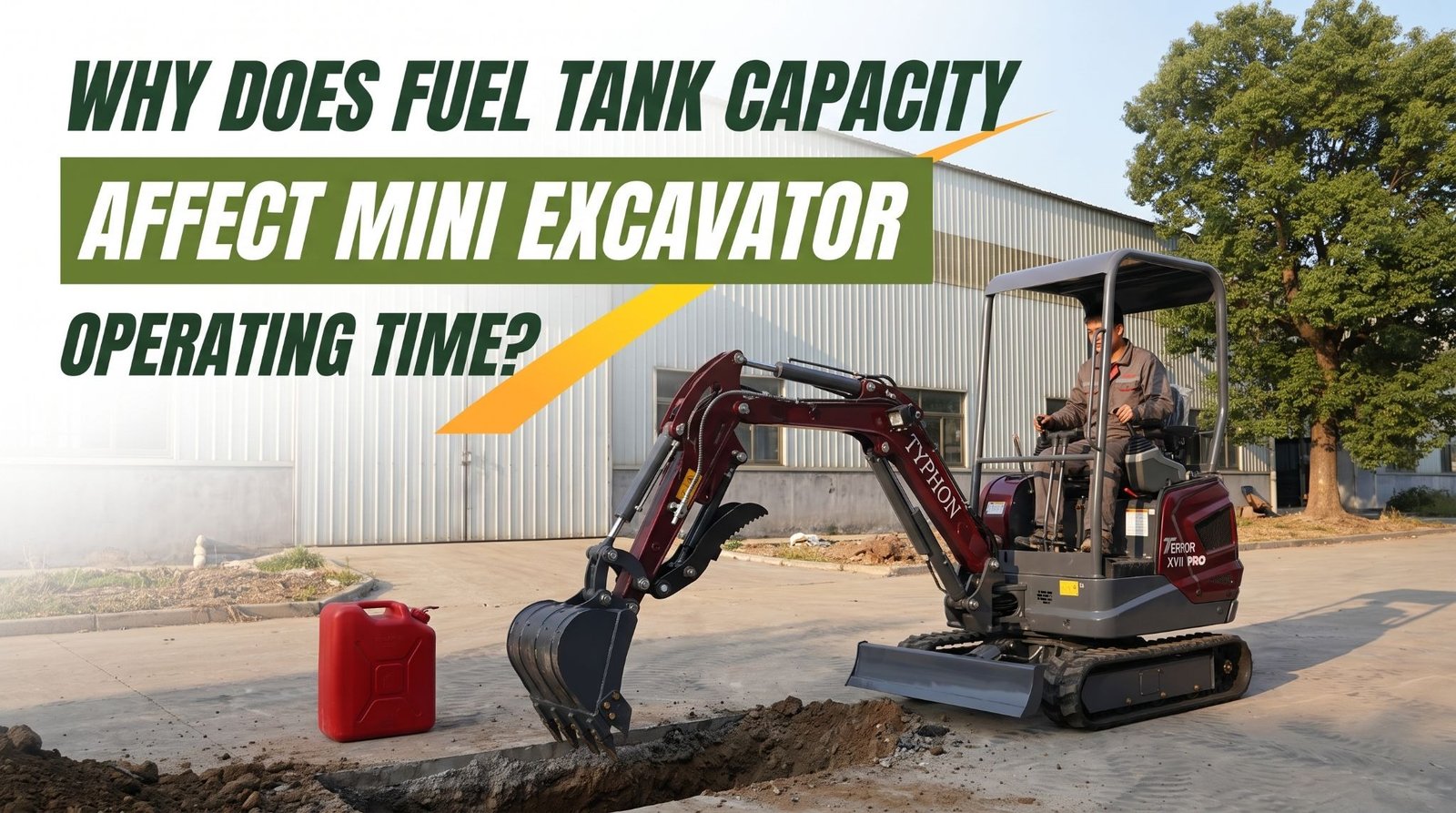
Mini excavator fuel tank capacity
Why Does Fuel Tank Capacity Affect Mini Excavator Operating Time?
A full fuel tank at the start of the day means little if the excavator burns through it before the shift is over. Buyers often compare digging depth, breakout force, and bucket capacity while treating fuel tank size as a minor specification near the bottom of the sheet. In reality, tank capacity determines how much fuel the machine can carry between refueling stops, which directly affects its potential operating range. A larger tank can support longer work periods, but only when its capacity is matched to the engine’s actual fuel consumption.
The key is understanding the relationship between tank capacity and burn rate. Fuel consumption changes with engine load, digging intensity, idle time, travel, terrain, and operating conditions, so a machine that runs efficiently during light work may use significantly more fuel during demanding cycles. This guide explains how tank size and fuel consumption work together, how workload changes runtime, how to estimate operating hours before buying, and how to choose a fuel tank capacity that fits your actual shift requirements.
Tank Capacity and Burn Rate: The Two Halves of Runtime
Picture the fuel tank as the machine’s endurance reserve. Its capacity sets the total volume of diesel on board, and that volume is the ceiling on how long the engine can run before it needs more. A 10-gallon tank simply cannot outlast a 15-gallon tank when both engines burn fuel at the same rate. Capacity is the starting point for every runtime calculation.
Burn rate is the other half, and it’s where the arithmetic earns its keep. Fuel consumption is typically expressed in gallons per hour, and it tells you how quickly the engine empties the tank. Divide tank capacity by hourly consumption, and you get a working estimate of operating hours. A 15-gallon tank paired with an engine burning 1.5 gallons per hour delivers roughly ten hours of work; push consumption to 2.5 gallons per hour, and that same tank lasts only six.
The relationship cuts both ways, which is the point worth holding onto. A generous tank on a thirsty engine can deliver the same runtime as a modest tank on an efficient one. Neither number means much alone. Runtime lives in how the two work together, so judge a machine on the pairing, not on tank size by itself.
Takeaway: operating time is tank capacity divided by burn rate, so both figures matter equally when you gauge how long a machine will run.
How Workload and Digging Conditions Move Fuel Consumption
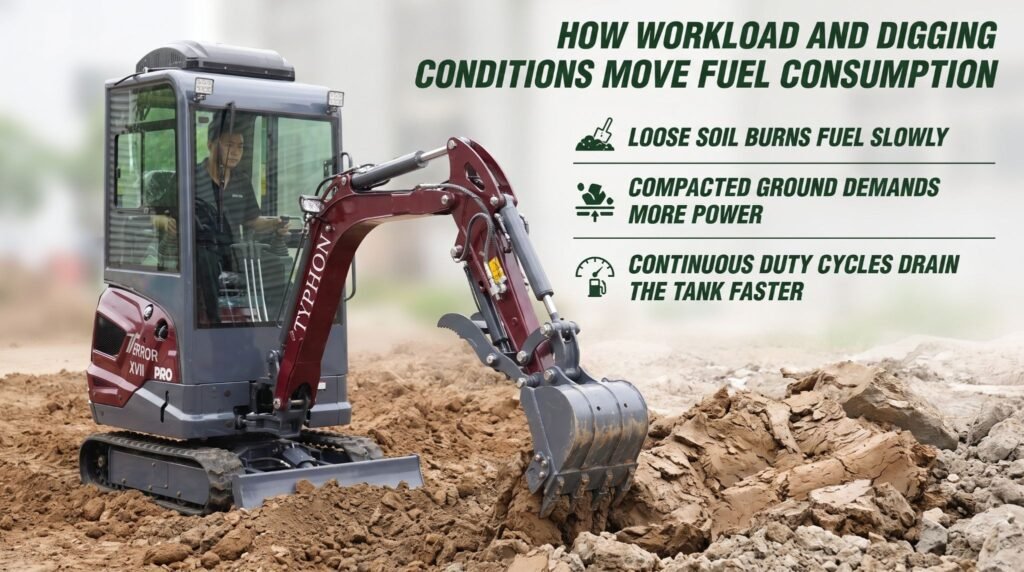
Fuel burn is not a fixed number stamped on the excavator. It changes with how much work the machine is performing. An engine idling between tasks uses relatively little fuel, while one continuously driving the hydraulic system under heavy load consumes much more. As a result, the same fuel tank can provide very different operating hours depending on the workload.
Material resistance is one of the biggest factors. Scooping loose topsoil creates relatively low hydraulic demand, allowing the engine to work at a lighter load and use fuel more slowly. Digging compacted clay, penetrating hard ground, or breaking frozen material requires higher hydraulic pressure and sustained engine output, which increases fuel consumption. Two identical excavators with the same tank capacity can therefore achieve very different runtimes simply because they are working in different ground conditions.
The duty cycle adds another layer. An excavator that spends most of the shift digging, swinging, traveling, and repositioning with few pauses keeps the engine and hydraulic system under load for longer periods. A demanding attachment can increase consumption further. For example, a hydraulic breaker requires continuous hydraulic flow to maintain impact operation, keeping the engine working harder than during intermittent digging. In contrast, lighter work with frequent idle periods allows the same tank to last longer.
Takeaway: Fuel consumption follows workload. Harder material, longer periods under load, and high-demand attachments increase fuel use, while lighter work and more idle time can extend the operating hours available from the same fuel tank.
Estimating Operating Hours Before You Buy
Turning tank size into expected hours takes only a little math, and doing it before purchase saves regret afterward. Start with the manufacturer’s tank capacity and the engine’s rated fuel consumption, both of which appear on the spec sheet or in the operator’s manual. Divide capacity by consumption, and you have a baseline runtime for the machine working at that rated rate.
Refine the estimate to reflect your reality rather than a laboratory figure. Rated consumption usually assumes a moderate, representative workload, so adjust for how you actually operate. Consider these factors as you build a realistic number:
- Your typical material. Hard, resistant ground pushes consumption above the rated figure; soft ground keeps it below.
- Your duty cycle. Continuous production digging burns closer to the high end; intermittent work burns less.
- Your attachments. Running a breaker or auger for much of the shift raises the hourly draw.
- A usable-fuel margin. Plan to refuel before the tank runs dry, so count on slightly less than full capacity in practice.
With those adjustments, you arrive at a runtime you can actually trust. A machine that pencils out to eight working hours under your specific conditions is one you can build a shift around.
Takeaway: divide tank capacity by realistic consumption for your work, not the rated figure alone, to estimate the operating hours a machine will genuinely deliver.
The Productivity Cost of Refueling Interruptions
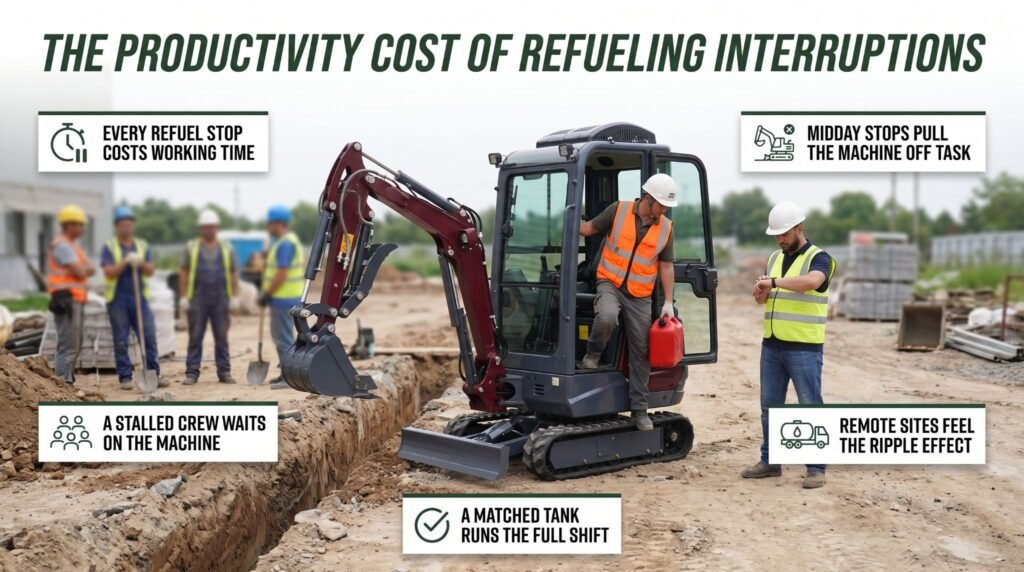
Every refuel stop is time the machine isn’t working, and those minutes add up faster than most operators expect. A tank that runs dry mid-morning forces the operator to break off the task, reposition the machine or fetch fuel, refill, and return to the cut. On a busy site, that interruption can cost far more than the few minutes of actual fueling.
The hidden costs compound the obvious ones. An undersized tank that demands a midday refuel can pull a machine out of a trench at the wrong moment, stall a crew waiting on that machine, or interrupt a continuous pour or grade that really shouldn’t pause. Where fuel has to be trucked to a remote site, an unplanned stop ripples through the whole operation. Runtime lost to refueling is productivity you’ve already paid for but never collected.
A tank sized to carry the machine through a full working period changes the rhythm entirely. The operator fuels once at the start of the shift and works straight through, with refueling folded into scheduled downtime rather than stealing productive hours. That uninterrupted run is exactly what a well-matched tank buys you, shift after shift.
Takeaway: unplanned refuel stops cost far more than the fuel time itself, so a tank that lasts a full shift protects the productivity you’re paying for.
Matching Tank Size to Your Shift Demands
Right-sizing a fuel tank starts with looking at the actual shift the excavator needs to handle, not the lightest workday. First, determine how many hours the machine must operate before a practical refueling opportunity. Then size the tank to provide enough fuel for those hours under the workload the excavator is realistically expected to handle. The goal is to keep the machine working through the required operating period without an unnecessary refueling stop.
Different applications require different tank capacities. A landscaper performing light, intermittent digging may operate comfortably with a smaller tank, while a contractor working continuously in hard material may need more capacity to complete a full shift. When heavy material, a demanding duty cycle, and a high-demand attachment are used together, the tank should account for that higher fuel consumption rather than being based on average conditions.
Fuel logistics also matter. Machines working at remote sites or locations where refueling is difficult may benefit from additional capacity because fewer refueling stops are needed. However, a larger tank adds weight and takes up space, so increasing capacity without considering the machine’s size and workload can create unnecessary trade-offs.
Takeaway: Size the fuel tank around the excavator’s required shift length, realistic workload, and refueling conditions. The right capacity should provide enough runtime for demanding work without adding unnecessary weight or capacity.
Warning Signs Your Tank Is Undersized
An undersized fuel tank often reveals itself through frequent refueling. If the excavator needs to stop midway through a normal shift, interrupts digging or grading to refuel, or leaves other work waiting on fuel, the tank may not provide enough runtime for the workload. Constantly watching the fuel gauge is another sign that the available capacity leaves too little operating margin.
These signs do not necessarily indicate a problem with the excavator itself. They usually mean the tank capacity does not match the machine’s duty cycle. A tank that works well for light, intermittent landscaping may feel undersized on a production site where the excavator runs continuously in hard material or operates a high-demand attachment.
Takeaway: frequent refueling and interrupted work are clear signs that the tank may be too small for the machine’s actual workload.
Conclusion
Fuel tank capacity is a key factor in a mini excavator’s operating time, but actual runtime depends on more than the size of the tank alone. Tank capacity determines how much diesel the machine can carry, while engine fuel consumption changes with workload, material resistance, duty cycle, terrain, and attachment demands. A larger tank can reduce interruptions during demanding shifts, but the most useful size is one that can support your heaviest realistic work without adding unnecessary weight or fuel-carrying capacity. Before purchasing, consider your expected operating hours, typical working conditions, attachment use, and real-world fuel burn rather than relying only on the rated runtime, then choose a mini excavator with enough tank capacity to complete the shift with a practical reserve and minimize unplanned refueling stops.
Frequently Asked Questions
How do I calculate how long a mini excavator will run on a full tank?
Divide the fuel tank capacity by the engine’s fuel consumption rate in gallons per hour. A 15-gallon tank on an engine burning 1.5 gallons per hour gives you roughly ten hours of runtime at that rate. For a number you can trust, adjust the consumption figure to match your real work: hard material and a heavy duty cycle push it higher, while light, intermittent digging keeps it lower. Plan to refuel before the tank runs completely dry, so count on slightly less than full capacity in daily practice.
Why does my mini excavator use more fuel on some jobs than others?
Fuel consumption rises and falls with how hard the engine works. Digging soft topsoil asks little of the hydraulic system, so the engine burns fuel slowly. Working compacted clay, rock, or frost forces the engine to hold high pressure, which drives consumption sharply upward. A full duty cycle with constant digging, swinging, and tracking keeps the engine near full draw, and power-hungry attachments like breakers add still more demand. The same tank therefore delivers very different hours depending on the material and intensity of the work.
