How Drum Vibration Impacts Engine Load on Road Rollers
How Drum Vibration Changes Engine Load on a Road Roller
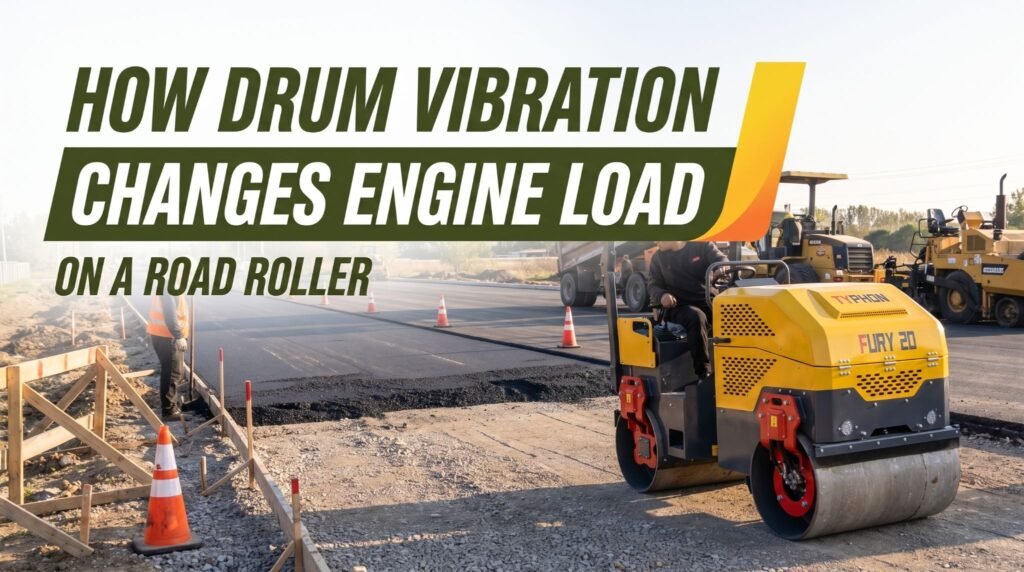
Engine output has a direct effect on how effectively a road roller performs compaction. While drum width and operating weight influence coverage and ground pressure, the engine must supply enough power to keep both movement and the vibration system operating properly. Once vibration is engaged, the eccentric mechanism inside the drum requires additional power, making engine capacity an important part of overall compaction performance.
The relationship becomes clear when the roller works under load. If available engine power is too low, the machine may lose speed, struggle to maintain consistent drum vibration, or consume more fuel while working harder. Properly matching engine output with the roller’s vibration system and operating conditions helps maintain steady compaction and reduces unnecessary strain on the powertrain.
How Drum Vibration Works
A vibratory road roller does not compact material through operating weight alone. Inside the drum, an eccentric weight rotates on a shaft, creating rapid vibrations that transfer into the soil or asphalt. These vibrations help rearrange particles, reduce air voids, and allow the material to settle into a denser layer. The combination of static weight and dynamic vibration gives the roller much greater compaction capability than weight alone.
The engine supplies the power needed to keep the eccentric shaft rotating at the required speed while the drum works against resistance from the material. As the vibration setting becomes stronger or the material becomes harder to compact, the demand on the powertrain increases. If the available power is insufficient, the roller may struggle to maintain consistent vibration and travel speed, reducing compaction efficiency and productivity.
Why Vibration Loads the Engine Beyond Travel
Driving a roller across a site in static mode is a modest task. The engine moves the machine’s weight, overcomes rolling resistance, and little else. Switch on vibration, and the picture changes completely.
Now the engine carries two separate jobs at once. It still powers the drive system that moves the roller forward, and it simultaneously spins the eccentric shaft to generate compaction force. That second job is demanding. Accelerating and sustaining a heavy off-center mass at high rotational speed requires continuous, substantial power, and the ground resists every pulse the drum delivers.
The resistance isn’t constant, either. As the material compacts and stiffens, it pushes back harder against the vibrating drum, and the engine must hold shaft speed against that rising reaction force. The takeaway: vibration isn’t a minor accessory load. It’s often the single largest demand on the engine during compaction, and it stacks directly on top of the power needed just to travel.
How Amplitude and Frequency Affect Engine Demand
Not all vibration is equal. Two settings define how the drum vibrates, and each one changes how hard the engine works.
Amplitude
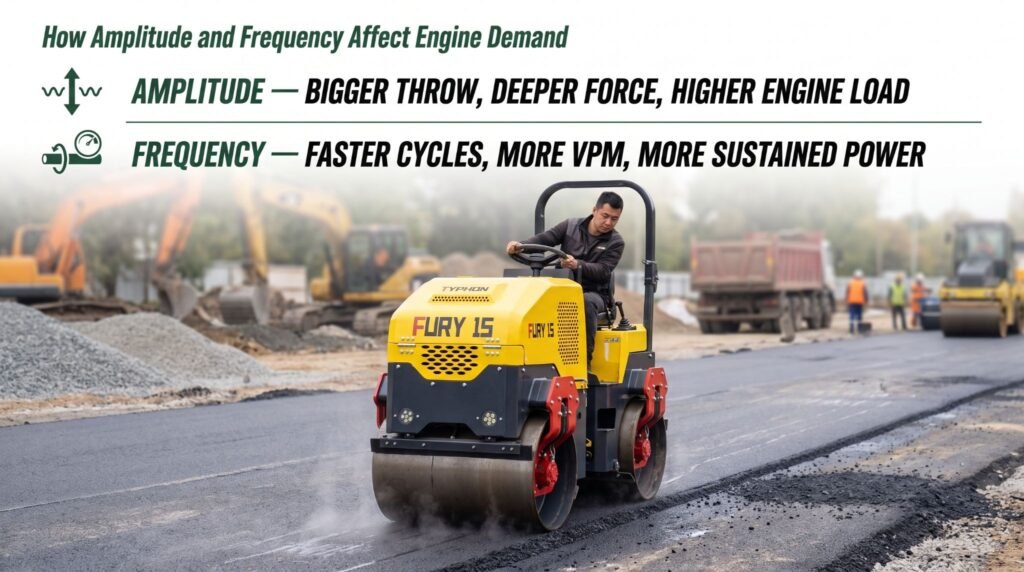
Amplitude is how far the drum moves up and down with each vibration cycle, essentially the size of the throw. Higher amplitude means a larger eccentric displacement and greater dynamic force driven deep into the material. That force is exactly what you need for thick lifts and coarse fill, but it comes at a cost: a bigger throw demands more energy per cycle, so high amplitude pulls harder on the engine.
Frequency
Frequency is how many vibration cycles the drum completes per minute, usually expressed in vibrations per minute (VPM) or hertz. Higher frequency means the eccentric shaft spins faster, and spinning that mass faster requires more power to sustain. High-frequency, low-amplitude settings suit thin asphalt lifts and finish work, while the engine still has to keep the shaft turning at that elevated speed.
The practical picture is simple. Both settings draw on engine output, and combining high amplitude with high frequency creates the heaviest demand of all.
What Happens When the Engine Is Underpowered
An underpowered engine betrays itself the moment vibration meets resistance. When the compaction load exceeds what the engine can deliver, engine speed sags, and the eccentric shaft can no longer hold its rated rotation. The consequences show up immediately in the work.
- Frequency drops. A bogging engine can’t spin the shaft at full speed, so vibrations per minute fall below spec, and compaction efficiency drops with them.
- Inconsistent compaction. When frequency wanders, the material receives uneven energy, leaving soft spots and weak layers that fail inspection or fail in service.
- Slower progress. The operator backs off travel speed to give the engine a chance to maintain vibration, stretching every pass and adding passes to hit target density.
- Stalling under load. In the worst case, a heavy amplitude setting on stiff material drags the engine down until vibration cuts out entirely.
The root cause is the same in every case: an engine asked to spin a heavy eccentric mass at speed while also driving the machine, with nothing left in reserve. The bottom line: poor compaction on a vibratory roller is often an engine problem disguised as a technique problem.
The Combined Load of Travel Plus Vibration
A road roller rarely asks the engine for one thing at a time. In real compaction work, the machine travels forward while vibrating, climbs grades on some sites, and holds vibration steady across the whole pass. Those demands stack, and a marginal engine feels every one of them.
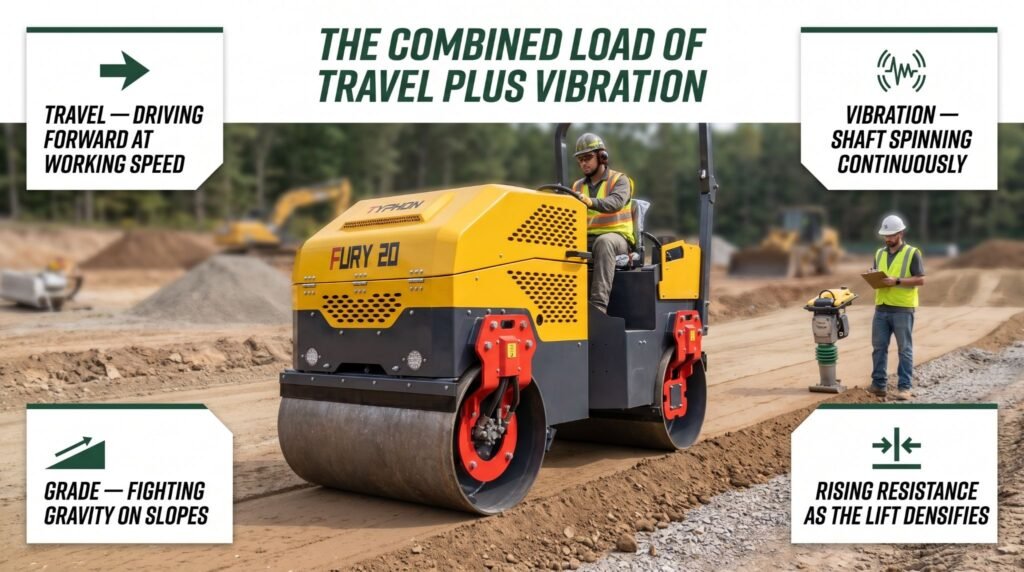
Consider a typical compaction pass:
- Travel: the drive system moves the roller forward at working speed.
- Vibration: the eccentric shaft spins continuously to deliver compaction force.
- Grade: on a sloped subgrade or embankment, the engine also fights gravity.
- Rising resistance: as the lift densifies, the material pushes back harder against the drum.
An engine with ample power carries all of this without flinching, holding both travel speed and vibration frequency steady from the start of a pass to the end. A marginal engine is forced to ration. Climb a grade while vibrating at high amplitude, and something has to give: travel slows, frequency sags, or the machine bogs down entirely. The key point: compaction force alone doesn’t tell the story. An engine matched to the work sustains full travel and full vibration together, pass after pass, shift after shift.
Fuel Consumption and Component Wear
An engine operating close to its maximum output can consume more fuel when it has to sustain heavy vibration and high loads for extended periods. On a road roller, that can mean using more diesel for the same area of compacted material compared with a properly powered engine working within a more comfortable operating range. Over long production hours, the difference can become a noticeable addition to fuel costs.
Continuous vibration also places mechanical stress on the roller. Eccentric bearings, shafts, belts, and other vibration components experience repeated loads, while an engine working under constant strain can generate additional heat throughout the hydraulic and cooling systems. Excessive thermal stress can accelerate fluid degradation, place greater pressure on seals, and increase wear across related components. The engine itself can also experience faster aging when it operates near its limit for prolonged periods. Matching engine output to the compaction requirements allows the road roller to maintain steady vibration, manage heat more effectively, reduce fuel consumption, and limit unnecessary wear on the machine.
How to Match Engine Power to Compaction Requirements
Selecting the right road roller begins with understanding the material, lift thickness, and working conditions the machine will face regularly. Deep lifts of granular fill may require greater amplitude and dynamic force, while thinner asphalt layers often benefit from higher frequency and lower amplitude. Engine power should therefore be matched to the most demanding conditions you realistically expect rather than the easiest work the roller may encounter.
Operating weight alone does not tell the full story of compaction performance. Centrifugal force, vibration amplitude, and frequency all work together to determine the dynamic force the machine must maintain. Jobs involving slopes, embankments, or long continuous passes also require enough engine reserve to handle travel and vibration simultaneously. Duty cycle matters as well, since occasional light work places different demands on the engine than full-shift production compaction.
Whenever possible, the best way to confirm the match is to evaluate the roller under real working conditions. Running it on the intended material at the target amplitude and frequency can show whether the machine maintains consistent vibration while traveling at its normal operating speed. Making this assessment before purchase helps avoid a power mismatch that could lead to poor compaction, reduced productivity, higher fuel use, and unnecessary mechanical strain.
Conclusion
Engine power directly affects how well a vibratory road roller can maintain consistent compaction, because the engine must keep the eccentric system rotating while also moving the machine through the work area. When engine output is properly matched to the application, the roller can maintain its required vibration frequency and amplitude without excessive strain. If power is insufficient, vibration may become inconsistent, travel performance can decline, fuel consumption can increase, and prolonged stress can accelerate wear on the engine, hydraulic system, and vibration components. Before selecting a road roller, look beyond drum width and operating weight by considering the material, lift thickness, centrifugal force, amplitude, frequency, travel conditions, and expected duty cycle together. Testing the roller under realistic loads can also confirm whether it maintains stable vibration and travel speed, helping ensure reliable compaction, efficient operation, and longer service life.
Frequently Asked Questions
Why does my road roller’s vibration slow down when compacting stiff material?
As material densifies, it pushes back harder against the vibrating drum, raising the load on the engine that spins the eccentric shaft. If the engine lacks the reserve to hold shaft speed against that rising resistance, frequency drops below spec and compaction efficiency falls with it. Consistent frequency loss on stiff or deep lifts is a strong sign the engine is underpowered for your compaction task.
How do amplitude and frequency affect how hard the engine works?
Amplitude sets how far the drum throws with each cycle, and higher amplitude drives more dynamic force into the material, demanding more energy per cycle. Frequency sets how fast the eccentric shaft spins, and higher frequency requires more power to sustain that rotation. Both settings draw on engine output, so combining high amplitude with high frequency creates the heaviest demand and requires the most engine reserve.
Can an underpowered engine increase my fuel and repair costs over time?
Yes. An engine run near its ceiling burns more diesel per square yard compacted and runs hotter, pushing hydraulic and cooling systems past their efficient range. That heat degrades fluid and wears seals, while the strained eccentric bearings and drive components age early. A small power shortfall compounds into higher fuel bills and faster wear across the machine’s service life, on top of the rework caused by inconsistent compaction.
