
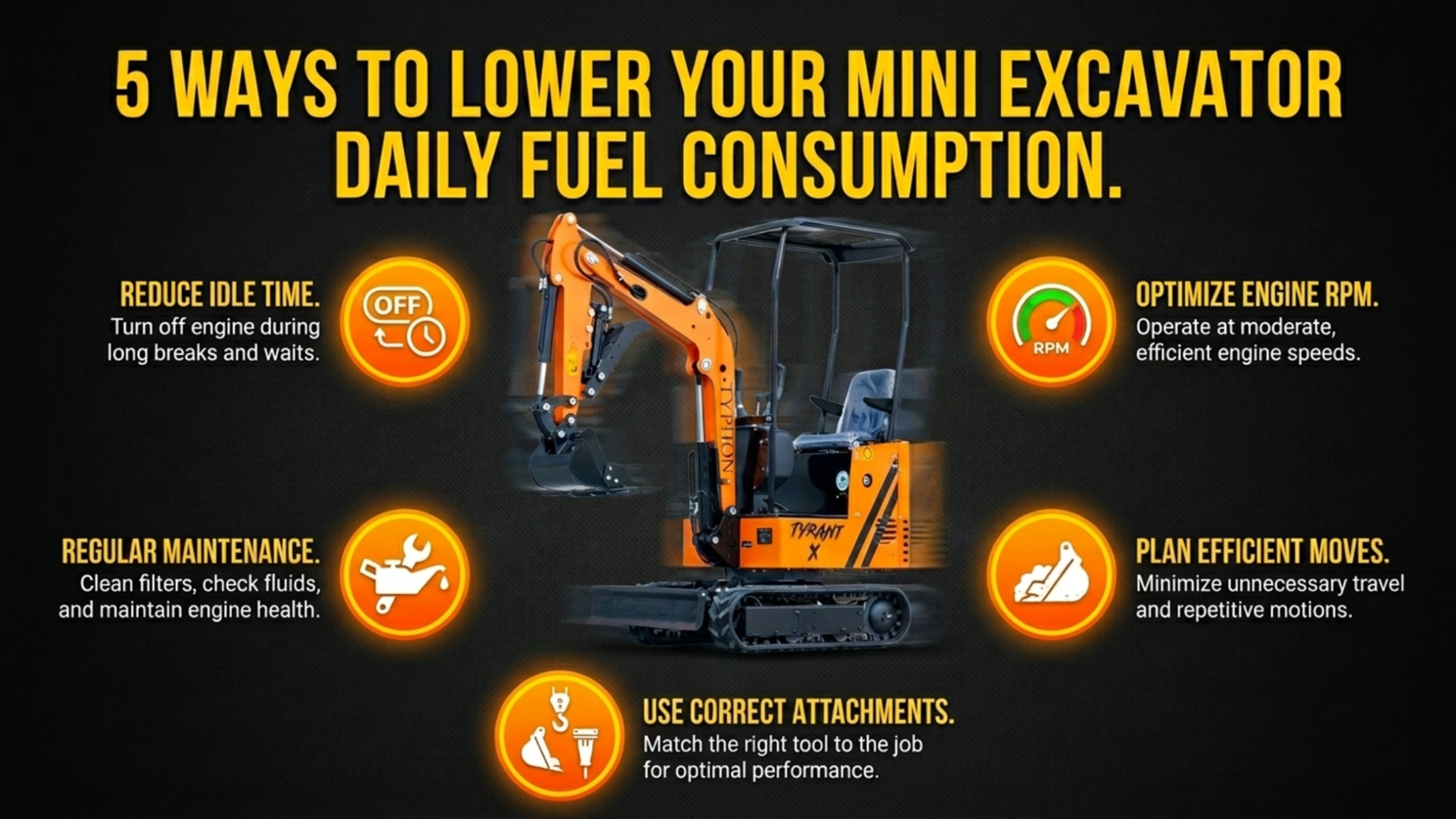
mini excavator daily fuel consumption
5 Ways to Lower Your Mini Excavator Daily Fuel Consumption
Fuel is one of the biggest controllable costs on any job site, and mini excavators burn more of it than most operators realize. The good news is that you do not need new equipment or expensive upgrades to cut your daily consumption. Small changes in how you run and care for your machine add up fast across a shift, a week, and a season. This guide walks through five practical ways to lower the fuel your mini excavator uses every day, from smarter idling habits to simple track maintenance. Each one is easy to apply, costs little or nothing, and pays you back in lower fuel bills and a machine that runs cleaner and lasts longer. Whether you operate the machine yourself or manage a crew, these habits help you stretch every tank further.
Turn Off When Not Working
Idling is the quietest fuel thief on the job site. A mini excavator left running during breaks, waiting on trucks, or sitting between tasks burns fuel while accomplishing nothing. Those minutes feel harmless in the moment, but they stack up across a shift into gallons of wasted diesel and dollars you never recover. Operators often leave the engine running out of habit or convenience, not realizing how quickly idle time drains the tank.
The fix is simple: shut the engine down whenever the machine will sit idle for more than a short pause. If you are stepping away, waiting on materials, or taking a break, kill the engine rather than letting it run. Modern mini excavators start easily and handle frequent shutdowns without trouble, so there is no real cost to switching off. Many machines even include auto-idle or auto-shutdown features that throttle the engine down or stop it after a set idle period. Turning these features on takes the decision out of the operator’s hands and locks in the savings automatically.
Beyond the fuel itself, reducing idle time cuts engine wear, lowers emissions, and reduces the hours logged on the machine. Fewer logged hours mean better resale value and longer intervals between major services. For site managers, setting a clear no-idle policy and reinforcing it with operators turns a small habit into a steady, measurable reduction in daily fuel costs across the whole fleet.
Don’t Over-Rev the Engine
Running the engine at full throttle for every task is one of the most common and costly habits among operators. Many people assume maximum RPM means maximum productivity, but that is rarely true. Most digging, grading, and loading work gets done just as effectively at a moderate engine speed, and the extra revs simply burn more fuel without moving more dirt. Matching throttle to the task is one of the fastest ways to lower consumption without slowing the job down.
The key is to use only the power the work actually requires. Light tasks like fine grading, backfilling, or moving the machine around the site need far less throttle than heavy digging in dense material. Learning to feel where your machine works most efficiently helps you avoid revving the engine harder than the job demands. Most mini excavators also offer selectable power or economy modes that automatically optimize fuel use for lighter work.
Consider these throttle habits that cut fuel use:
- Use economy or eco mode for routine tasks that don’t require full power
- Throttle down between cycles instead of holding high RPM while repositioning
- Reserve full throttle for genuinely heavy digging or demanding lifts
- Listen to the engine and back off when it’s clearly working harder than needed
Over-revving also generates more heat, noise, and wear, so easing off the throttle protects the engine while it saves fuel. Train operators to think of throttle as a tool to manage rather than a setting to max out, and you will see consumption drop while productivity stays right where it should be.
Keep Up with Maintenance
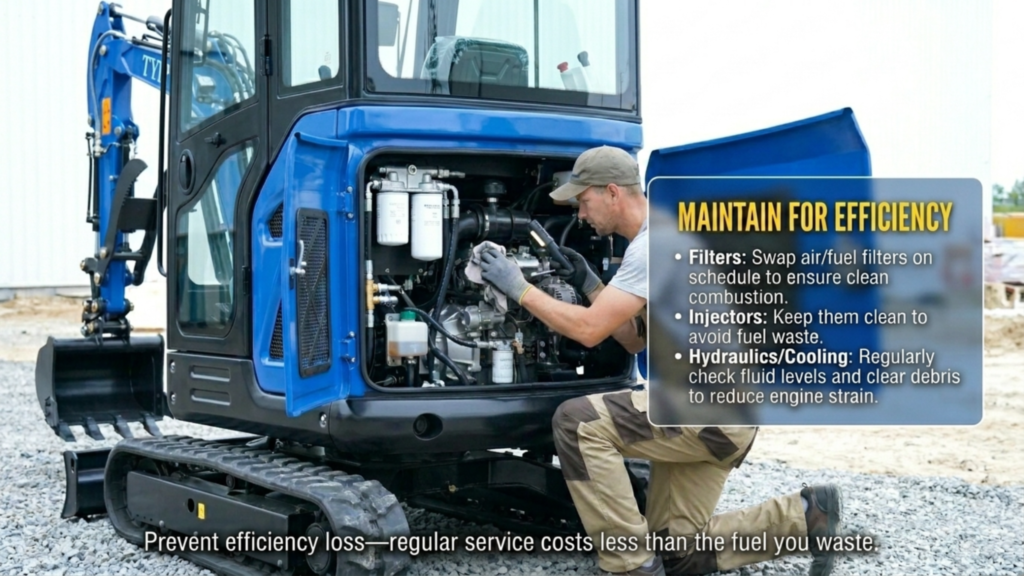
A well-maintained mini excavator runs more efficiently than a neglected one, and that efficiency shows up directly at the fuel pump. Clogged filters, dirty injectors, and worn components force the engine to work harder to deliver the same output, and that extra effort burns extra fuel. Routine maintenance keeps the engine breathing freely and running clean, which is exactly what efficient combustion requires.
Air and fuel filters deserve special attention because they have an outsized effect on consumption. A dirty air filter starves the engine of the airflow it needs, throwing off the fuel-to-air ratio and wasting diesel. Clogged fuel filters restrict flow and make the system labor to maintain pressure. Changing these filters on schedule, along with regular oil changes and engine servicing, keeps everything operating at peak efficiency. Clean fuel injectors also matter, since fouled injectors spray inefficiently and waste fuel with every cycle.
Maintenance is not just an engine concern. Checking hydraulic fluid levels and condition, keeping the cooling system clear, and addressing small issues before they grow all contribute to a machine that runs lean. A cooling system choked with dust forces the engine to work harder, while low or degraded hydraulic fluid makes the whole system less efficient. For site managers, building a consistent service schedule and keeping clear maintenance records prevents the gradual efficiency loss that creeps in when upkeep slips. The cost of regular maintenance is small compared to the fuel, downtime, and repair bills that neglect eventually brings, making it one of the smartest investments you can make in daily fuel savings.
Use Smooth Controls
The way an operator handles the joysticks has a direct effect on how much fuel the machine burns. Jerky, abrupt movements force the hydraulic system to surge and react suddenly, demanding bursts of power that drive up fuel use. Smooth, deliberate control lets the hydraulics work within their efficient range, accomplishing the same work with less strain and less diesel. This is a skill that improves with awareness, and it costs nothing to develop.
Fluid operation means easing into movements rather than slamming the joysticks to their stops. When you start and stop motions gradually, the hydraulic pumps deliver power steadily instead of spiking to meet sudden demands. Avoiding unnecessary movements helps too. Planning each cycle so the boom, arm, and bucket move in coordinated, efficient paths reduces wasted motion and the fuel that comes with it. Slamming into the end of a function’s travel, often called hitting the relief, wastes energy as the system dumps pressure with nothing to show for it.
Smooth control also protects the machine. Sudden, harsh inputs put extra stress on hydraulic components, cylinders, and hoses, accelerating wear and raising the risk of leaks and failures. An operator who works smoothly saves fuel and extends the life of the equipment at the same time. Experienced operators often complete tasks faster precisely because their movements are controlled and intentional rather than rushed and erratic. For managers, encouraging operators to slow down slightly and work with deliberate, fluid inputs delivers a double benefit: lower fuel consumption and reduced wear that keeps machines on the job longer.
Clean and Adjust the Tracks
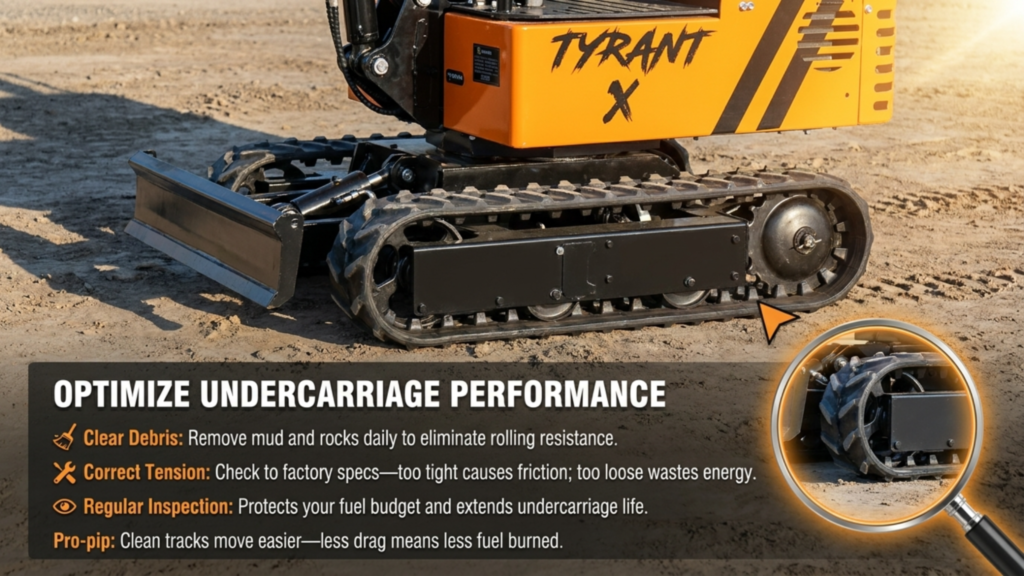
The tracks on a mini excavator have a surprising impact on fuel consumption, especially during travel and repositioning. When tracks are packed with mud, rocks, and debris, the machine has to fight extra resistance just to move, and that resistance translates into wasted fuel. Keeping the tracks clean removes that drag and makes the machine easier to drive, cutting consumption every time you reposition on the site.
Track tension matters just as much as cleanliness. Tracks that are too tight create excessive friction against the rollers, sprockets, and idlers, forcing the drive system to work harder and burn more fuel. Tracks that are too loose can slip, waste energy, and risk derailing, which brings work to a halt. Maintaining the manufacturer’s recommended tension keeps the undercarriage moving smoothly and efficiently. Checking tension regularly, particularly as conditions change throughout a job, ensures the tracks stay in their optimal range.
Building track care into your daily routine pays off quickly. Clear debris at the end of each shift, inspect for buildup around the sprockets and rollers, and check tension as part of your regular walk-around. This habit reduces fuel use, prevents premature wear on the undercarriage, and keeps the machine maneuvering the way it should. The undercarriage is one of the most expensive systems on a mini excavator to repair, so keeping it clean and properly adjusted protects both your fuel budget and your long-term equipment costs. For operators and site managers alike, a few minutes of attention to the tracks each day delivers steady savings that add up across every job.
Conclusion
Lowering your mini excavator’s daily fuel consumption does not require a major investment, just consistent attention to how you run and care for your machine. Shutting the engine down when it is not working, matching throttle to the task instead of over-revving, and keeping up with routine maintenance all keep your machine running lean. Smooth, deliberate control of the joysticks reduces strain on the hydraulic system, while clean, properly tensioned tracks cut the resistance that wastes fuel every time you move. On their own, each of these habits delivers modest savings, but together they add up to a meaningful reduction in fuel costs across every shift, week, and season. Start by choosing one or two changes that fit your operation, build them into your daily routine, and reinforce them with your crew. Over time, these simple practices will lower your fuel bills, extend equipment life, and keep your machines productive.
