Engine Horsepower vs. Hydraulic Horsepower: Which Matters More When Digging?
Engine Horsepower vs. Hydraulic Horsepower: Which Matters More When Digging?
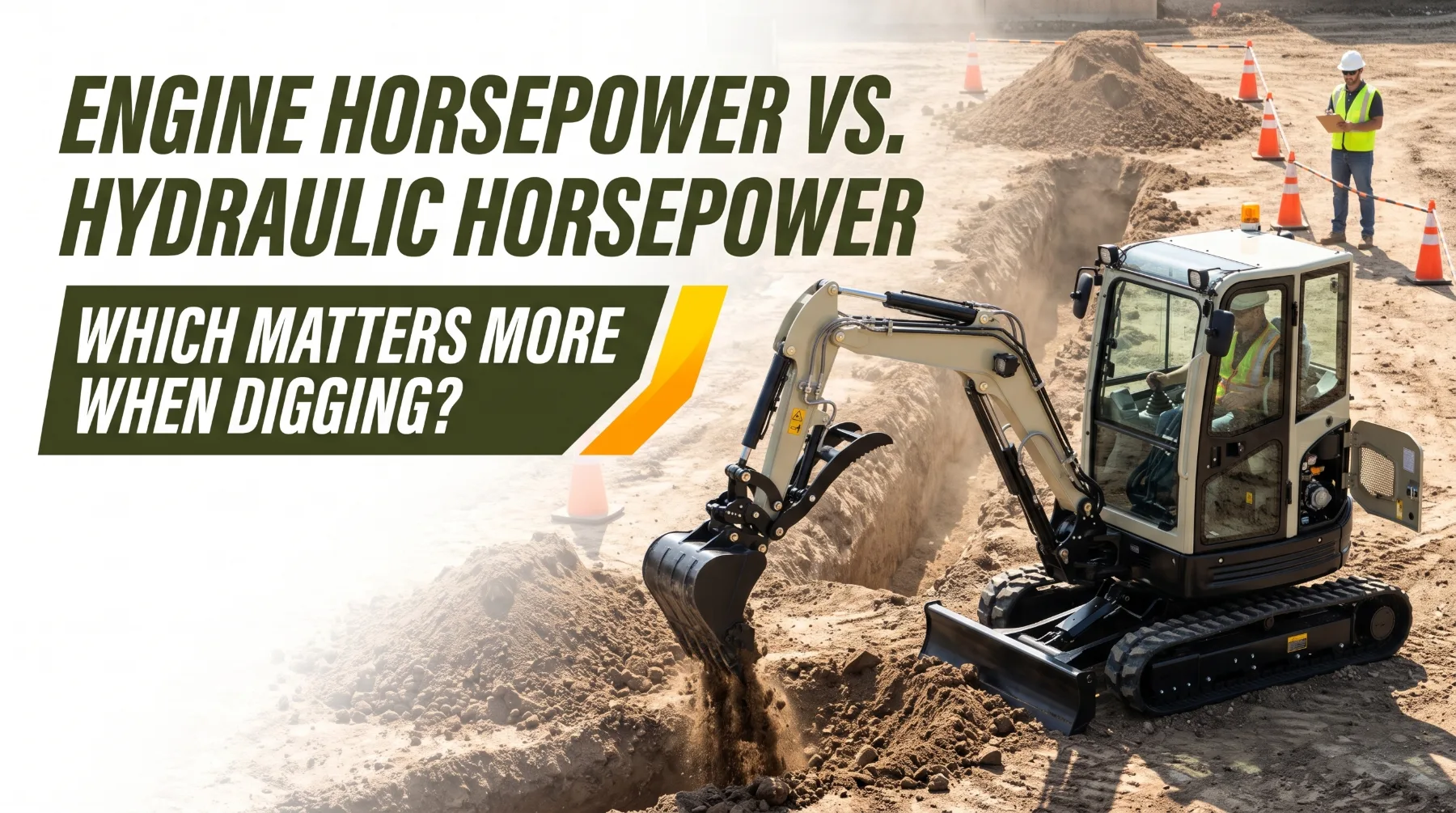
Spec sheets often put engine horsepower at the top of the page. Horsepower is easy to compare and easy to remember, but it tells only part of the story. When the bucket meets compacted clay or a buried root mass, the result depends on how well the machine turns engine output into hydraulic force and speed.
Engine horsepower and hydraulic power both affect excavator productivity, but they do different jobs. The engine supplies the energy that runs the machine. The hydraulic system carries that energy to digging, lifting, swinging, and attachment functions. Once you understand how the two connect, you can compare equipment more accurately and choose a machine that performs on your jobsites.
Understand Engine Horsepower
Engine horsepower measures how much power the engine can produce. Manufacturers rate it at a specific engine speed, so check the RPM listed next to the figure. Two engines with similar horsepower ratings can feel different in the field depending on their torque curve and how they respond under load.
That power has to serve the whole machine. The engine drives the hydraulic pump, which powers digging, swinging, and travel. It also runs the cooling fan, the alternator, and, on cab-equipped models, components such as the air conditioning compressor. Every one of those systems draws from the same supply.
Enough engine power helps the excavator hold steady performance during demanding work. When a machine is underpowered for its tasks, the engine can bog down, cycle times slow, and the operator ends up easing off the controls to avoid stalling. Regular maintenance and inspection of the engine, air filters, fuel system, and cooling components help preserve power and prevent performance losses. Engine horsepower is the foundation, but it is only the starting point of the performance picture.
Understand Hydraulic Power
Hydraulic power is the energy the hydraulic system delivers to the working functions. It depends on two factors: how much oil moves through the system and how much pressure that oil is under. Together, they decide how fast cylinders move and how much force they produce.
A common way to estimate hydraulic horsepower is to multiply flow in gallons per minute by pressure in PSI, then divide by 1,714. For example, 10 GPM at 2,500 PSI works out to roughly 14.6 hydraulic horsepower. This calculation gives a theoretical figure. Real output is lower, because pumps, valves, and hoses lose some energy as heat.
Hydraulic power can never exceed the engine power available to drive the pump. What matters is how much of that engine output reaches the bucket as useful work. A machine with well-matched hydraulic components can deliver effective digging performance, even against a competitor with a higher engine rating.
Compare Flow Rate and Pressure
Hydraulic flow, usually measured in gallons per minute, sets how quickly oil moves through the system. Higher flow means faster cylinder and motor movement, which shortens cycle times and helps attachments such as augers spin at the right speed.
Pressure, usually measured in PSI, contributes to the force available at the cylinders and motors. Higher pressure supports stronger breakout and lifting force, which matters when you dig through dense or compacted ground.
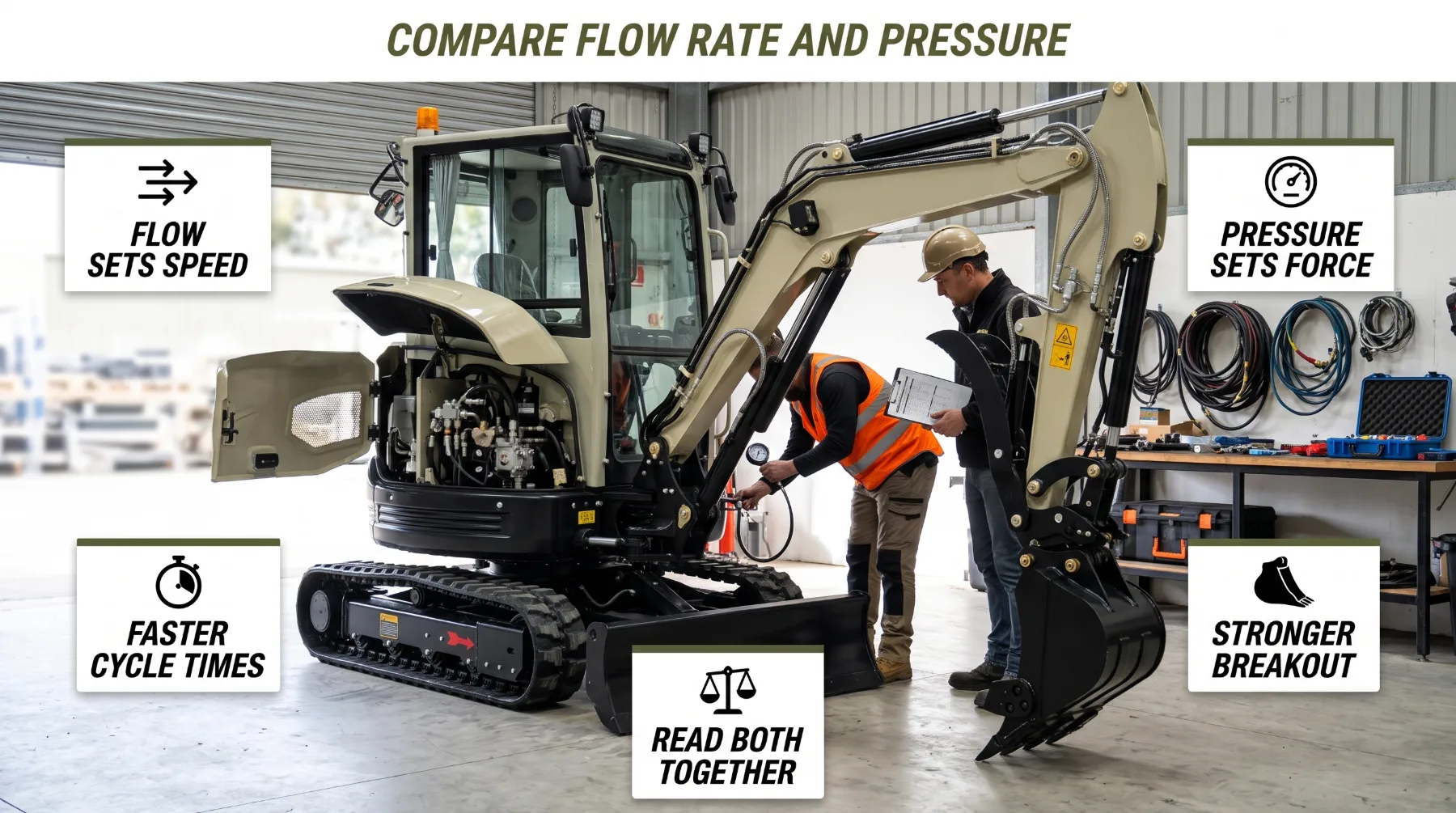
Read both figures together. High flow with low pressure produces fast but weak movement. High pressure with low flow produces strong but slow movement. Also keep in mind that peak flow and peak pressure usually don’t occur at the same moment. Many systems reduce flow as pressure climbs so the engine stays within its power limit. When you compare machines, ask the manufacturer how the figures were measured and under what conditions.
Evaluate the Pump and System Design
The hydraulic pump, control valves, cylinders, hoses, and control system work as one connected unit. A strong engine paired with a poorly matched hydraulic system wastes power. A well-designed system puts more of the engine’s output to productive use.
Pump type plays a major role. A variable-displacement pump changes how much oil it delivers per revolution based on demand. It supplies more flow when the operator needs speed and less when the work calls for fine control. That approach supports smooth low-speed movement and more efficient use of engine power. The TYPHON KUVUO 2.7 uses a variable-displacement axial piston pump rated at 28 ml per revolution, with approximately 17.91 GPM total flow at around 2,973 PSI.
Control design matters as well. Pilot controls deliver proportional response, so small joystick movements produce small, measured hydraulic motion. Valve design, hose sizing, and cooling capacity also affect how consistently the system performs across a full shift. Look at the complete system rather than a single number on the spec sheet.
Match Power to the Digging Application
Different tasks place different demands on the engine and the hydraulics. General trenching in loose soil relies on steady flow and quick cycles. Hard soil excavation and root removal call for strong pressure and breakout force. Lifting pipe or placing materials requires smooth, controlled movement more than raw speed.
Attachments add another layer. Hydraulic breakers, augers, and other powered tools each have their own flow and pressure requirements. If you plan to run them, compare the machine’s auxiliary hydraulic specifications with the attachment manufacturer’s ratings, including any continuous-duty requirements. A mismatch can cut performance, create excess heat, and shorten component life.
Start with the work you do most often. List your typical soil conditions, trench depths, lifting tasks, and attachments. Then look for a machine whose engine and hydraulic system are sized to handle that work comfortably, not just at the edge of their capability.
Consider Overall Machine Balance
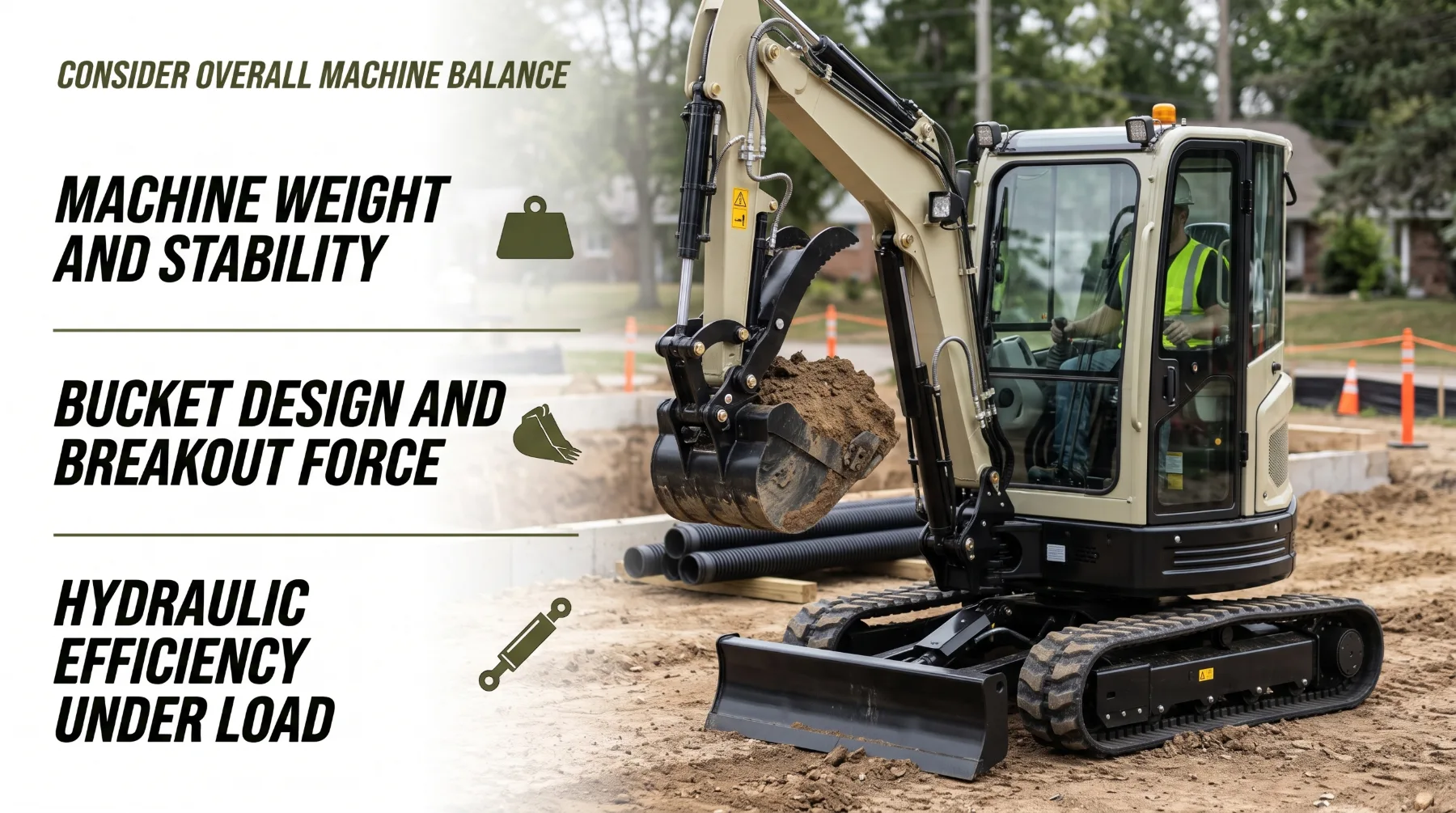
High engine horsepower doesn’t guarantee stronger digging. Machine weight, bucket design, breakout force, hydraulic efficiency, and stability all shape results. A light machine with a powerful engine may lift its own tracks before it can use its full hydraulic force. A heavier, well-balanced machine can put more of its power into the ground.
Bucket design affects how easily the teeth penetrate the soil, how efficiently material fills the bucket, and how much each pass can carry. Undercarriage width and counterweight also influence stability when the boom is extended or the bucket is loaded. Together, these factors determine whether the excavator’s available power translates into productive work or wasted effort. Even a machine with strong engine output and hydraulic performance may struggle to work efficiently if its bucket size, weight distribution, and overall design are not well matched.
The most reliable way to evaluate this balance is to observe the machine operating under realistic conditions. Compare complete performance specifications, including engine horsepower, hydraulic flow and pressure, operating weight, digging force, and bucket capacity. Then test the excavator in ground conditions that reflect your typical projects. Have your operators dig, lift, and swing through full work cycles, paying attention to how smoothly the machine responds under load, maintains stability, and handles repeated movements. This practical assessment helps reveal whether the machine can deliver consistent performance, minimize unnecessary movement, and maintain productivity throughout demanding workdays.
Conclusion
Engine horsepower provides the energy, while hydraulic performance determines how effectively that energy is converted into digging force, lifting capability, swing movement, and attachment operation. Neither specification alone provides a complete picture of an excavator’s performance on the jobsite. Engine output must work in balance with the hydraulic system to deliver consistent power, responsive controls, and efficient operation under load. When evaluating a compact excavator, consider horsepower alongside hydraulic flow, pressure, pump type, control design, and overall machine balance. Flow influences hydraulic speed, while pressure contributes to the force available for demanding tasks. Pump technology and control response also affect how smoothly the machine handles precise movements and multiple functions. These factors should be matched to your soil conditions, workload, digging requirements, and planned attachments rather than judged by headline specifications alone. Working range, operating weight, undercarriage design, and operator comfort also influence how effectively the machine performs in different environments. Reviewing the manufacturer’s specifications and confirming attachment compatibility helps establish whether a model meets your requirements. A hands-on demonstration under representative working conditions provides a practical opportunity to assess digging performance, hydraulic response, and control quality. Evaluating the complete system leads to a more informed equipment decision and helps you select an excavator that delivers dependable productivity throughout daily operations.
Frequently Asked Questions
Does higher engine horsepower always mean stronger digging?
No. Digging performance depends on more than engine horsepower. Hydraulic pressure, oil flow, pump design, machine weight, stability, and bucket geometry all affect how effectively an excavator applies digging force. A machine with a well-matched hydraulic system and suitable bucket may outperform one with higher engine horsepower but less effective hydraulic performance. Buyers should compare the complete specifications and consider the soil conditions and tasks the machine will handle most often.
What does hydraulic flow measure?
Hydraulic flow measures the volume of oil delivered through a hydraulic system over time, usually expressed in gallons per minute (GPM). It affects how quickly hydraulic cylinders extend or retract and how fast hydraulic motors operate. Adequate flow helps the machine perform digging movements and operate compatible attachments efficiently. However, actual performance also depends on available pressure, system design, and the attachment’s requirements. Always compare the machine’s hydraulic specifications with the intended application.
Why does hydraulic pressure matter?
Hydraulic pressure helps determine the force produced by hydraulic cylinders and motors. It contributes to digging force, lifting capability, and the machine’s ability to work in dense or compacted ground. However, pressure alone does not determine overall performance because flow, cylinder dimensions, mechanical leverage, and machine stability also matter. When comparing excavators, evaluate pressure alongside hydraulic flow and relevant performance ratings to understand how effectively the system can handle your typical work.
Which specification matters most for hydraulic attachments?
The most important specifications are the attachment manufacturer’s required hydraulic flow and pressure, along with any continuous-duty requirements. Some attachments need higher flow for effective operation, while others require specific pressure ranges or return-line arrangements. Confirm that the excavator’s auxiliary hydraulic system meets these requirements and check connection compatibility before use. Matching the machine to the attachment helps maintain performance, avoid excessive heat or component wear, and reduce the risk of hydraulic system damage.
