What Actually Drives Digging Performance?
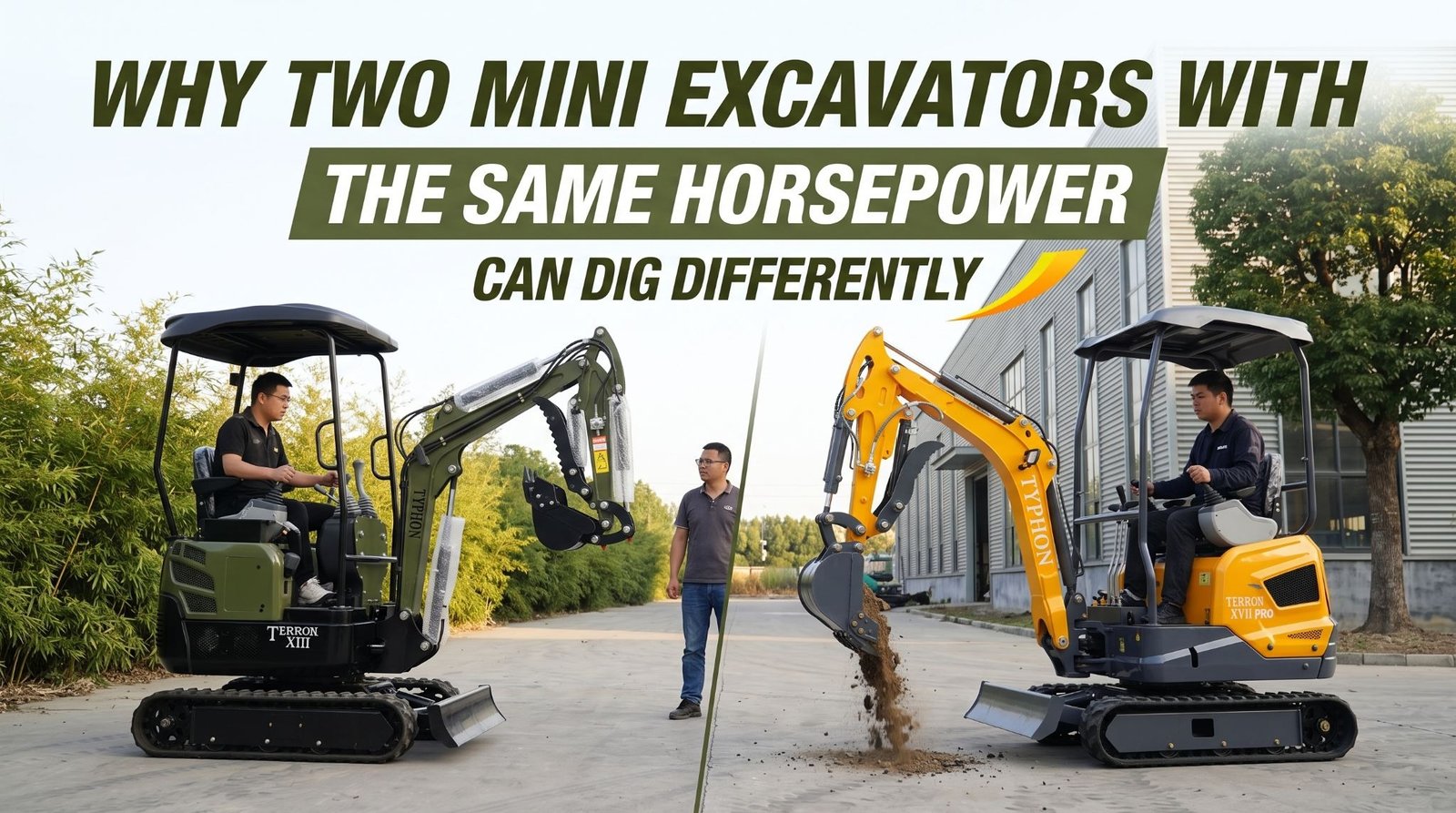
Why Two Mini Excavators With the Same Horsepower Can Dig Differently
Place mini excavators with matching horsepower figures on the same job, hand them the same bucket, and point them at the same trench. You might expect identical results. Instead, one clears the cut with brisk, confident strokes while the other hesitates, stalls, and takes a smaller bite each pass. Horsepower is the number buyers reach for first, yet it explains surprisingly little about how a machine actually performs in the ground. Digging is a story of hydraulics, geometry, and balance working in concert, and horsepower is merely one voice in that chorus. Machines can share the same rating and still deliver wholly different results because everything downstream of the engine shapes what reaches the bucket teeth.
Looking past horsepower matters because the number on the brochure rarely predicts the machine you’ll live with. A unit built with generously sized pumps, a smart torque profile, efficient plumbing, and well-proportioned working gear can outdig a rival that boasts the same engine rating on paper. Understanding what separates the two protects your purchase and your productivity.
Why Horsepower Alone Reveals So Little About Digging
Horsepower describes the rate at which an engine produces work, a snapshot of output measured at a particular engine speed. It’s a genuine figure, but it sits at the very start of a long chain. Before any of that output reaches the ground, it must pass through pumps, valves, hoses, cylinders, and the working gear, and each of those stages either preserves or squanders what the engine sent.
Think of horsepower as the water pressure at your street main. It tells you what’s available at the source, not how much actually reaches your shower after the pipes, bends, and fittings have taken their toll. A house with wide, clean plumbing delivers a strong stream; one with narrow, corroded pipes trickles despite the same supply. A mini excavator behaves the same way. The engine sets the ceiling, but the system decides how much of that ceiling turns into digging.
Key takeaway: Horsepower measures engine output at the source, but pumps, valves, cylinders, and working gear all sit between the engine and the ground, so the rating alone can’t predict how a machine digs.
How Pump Sizing and Flow Shape Force at the Bucket
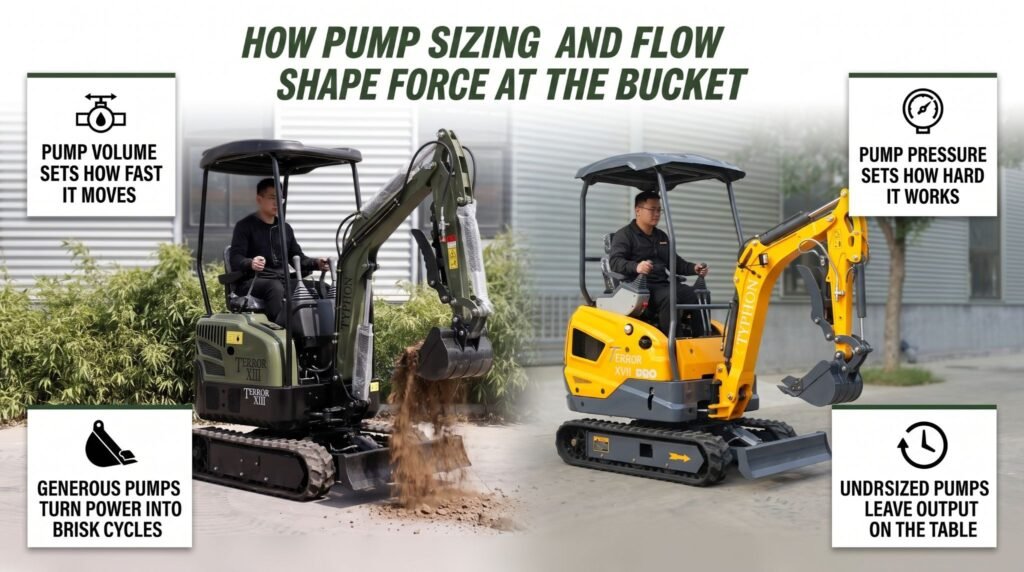
The hydraulic pumps are where engine output becomes usable muscle. They pressurize fluid and send it to the cylinders that swing the boom, curl the bucket, and drive the arm into the earth. Two properties define what those pumps deliver: the volume of fluid they push per minute, which governs how fast the machine moves, and the pressure that fluid carries, which governs how forcefully it works.
Here’s where two same-horsepower machines diverge sharply. A builder can pair a given engine with larger, more capable pumps that push more fluid at higher pressure, or with modest pumps that leave output on the table. The machine with generous pump capacity turns its engine rating into brisk cycles and strong breakout at the teeth. The one with undersized pumps completes the same motions more slowly and with less muscle, even though the badge on the engine reads the same. Some machines also run separate pumps for different functions, letting them curl and swing at once without either motion starving the other.
Key takeaway: Pumps convert engine output into fluid volume and pressure, so a machine paired with larger, more capable pumps turns the same horsepower into faster cycles and stronger breakout at the bucket.
Why the Torque Curve Outweighs a Single Peak Figure
Horsepower peaks at one engine speed, but digging rarely happens at that convenient point. When the bucket meets resistance, engine speed gets dragged down, and what matters then is how much twisting force, or torque, the engine still musters at those lower speeds. The torque curve maps that force across the full range of engine speeds, and its shape tells you far more about digging character than any lone peak.
Picture two engines with identical peak horsepower. One holds strong torque across a broad band of speeds, so when the arm bogs down under a heavy cut, it keeps pulling without faltering. The other makes its power only near the top of its range and sags badly the moment speed drops, leaving the bucket to stall partway through. On the job, the first machine feels tireless and the second feels fussy, though the spec sheet gives them the same headline. A flat, generous torque curve is what lets a machine dig through resistance instead of retreating from it.
Key takeaway: Digging happens as engine speed drops under load, so a broad torque curve that holds force across low and mid speeds outperforms a machine that makes power only at its peak.
How Hydraulic Efficiency and Pressure Settings Decide Usable Output
Between the pumps and the cylinders sits a network of valves, hoses, and fittings, and every one of them can quietly bleed away power. Fluid force through tight passages, sharp bends, or restrictive valves loses energy as heat, so the force that arrives at the cylinders is always less than what the pumps produce. A well-engineered circuit keeps those losses small; a compromised one wastes a meaningful share before the bucket ever moves.
Pressure settings add another layer. Manufacturers cap the maximum system pressure with relief valves, and that ceiling directly limits how much breakout force the machine can generate. Two units with equal pumps can still dig differently if one runs a higher, well-managed pressure setting than the other. Fluid quality and operating temperature matter too, since hot, thin, or dirty fluid moves less efficiently and steals output that the engine faithfully supplied. The cleanest, best-tuned circuit delivers the largest fraction of its rating to the ground.
Key takeaway: Valves, plumbing, pressure settings, and fluid condition all determine how much pump output survives the trip to the cylinders, so an efficient, well-tuned circuit puts far more of the engine’s rating into the cut.
How Arm and Bucket Geometry Multiplies or Wastes Force
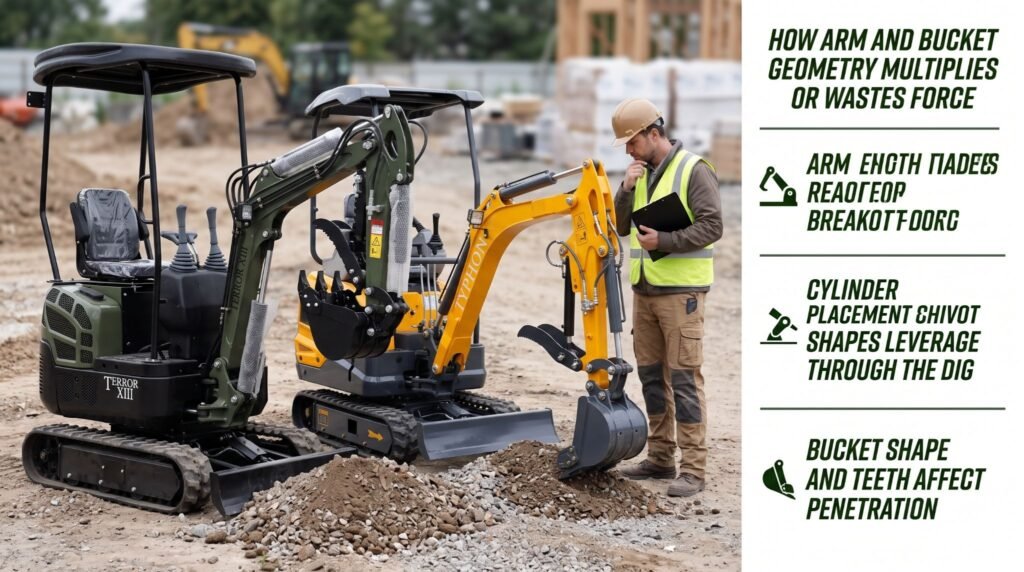
Even after fluid reaches the cylinders, the shape of the working gear decides how effectively that force reaches the ground. The boom, arm, and bucket act as a system of levers, and their proportions govern how hydraulic pressure translates into digging force at the teeth. A machine engineered with favorable geometry wrings more usable power from the same hydraulic output.
The details compound. The angle at which the bucket meets the material, the curl radius, the arm length, and the placement of the cylinders all shape leverage through the arc of a dig. A longer arm buys reach but can trade away breakout force, while a shorter, stouter arrangement drives harder into resistance. Bucket design counts as well: the shape of the cutting edge, the tooth spacing, and the width all influence how easily the bucket penetrates and fills. Two machines with matched engines and pumps can still dig unequally simply because one turns its force into ground penetration more efficiently than the other.
Key takeaway: The boom, arm, and bucket act as levers that convert hydraulic force into digging force, so favorable geometry lets one machine outdig another with identical engine and pump specs.
How Machine Weight and Balance Let a Unit Apply Its Power
Force at the bucket means nothing if the machine can’t stay planted to use it. When the teeth bite into hard material, the reaction pushes back against the whole unit, and only enough mass and stability keep it anchored instead of lifting or sliding. A heavier, well-balanced machine holds its ground and lets the full digging force work on the material. A lighter or poorly balanced one runs out of stability first, forcing the operator to ease off long before the hydraulics reach their limit.
Weight distribution shapes this as much as raw mass. A machine with its counterweight, undercarriage, and structure arranged to resist the pull of a loaded bucket keeps its tracks down and its motion smooth through the cut. Track length and width play in too, spreading the machine’s footprint for a steadier base. Two units of similar weight can behave very differently if one carries that weight where it counters digging forces and the other doesn’t. Stability, in effect, is what converts available power into applied power.
Key takeaway: Digging force pushes back against the machine, so adequate weight and smart balance are what keep it anchored to apply the power its hydraulics can produce.
Conclusion
Horsepower sets the engine’s available output, but digging performance depends on how that power moves through the hydraulic system, torque curve, pressure and flow, machine geometry, and overall weight and balance. These factors determine how much force reaches the bucket teeth, how well the machine holds under resistance, and how efficiently it completes each cycle. When comparing machines, look beyond horsepower and consider breakout force, hydraulic output, torque, geometry, and operating weight together, then match the full system to your digging conditions, buckets, attachments, and required work pace.
Frequently Asked Questions
If two mini excavators have the same horsepower, why does one dig harder than the other?
Horsepower describes engine output, not how much force reaches the bucket teeth. The hydraulic system, including pumps, valves, hoses, cylinders, and working geometry, determines how effectively that power becomes a digging force. Larger pumps, higher system pressure, efficient hydraulics, a strong torque curve, and favorable arm geometry can give one machine much stronger digging performance than another with the same horsepower. Machine weight and balance also matter because the excavator must stay planted to use that force. The engine sets the available power, but the hydraulic system determines how effectively it reaches the ground.
What specifications should I compare instead of horsepower when buying a mini excavator?
Focus on specifications that show digging force and power delivery. Breakout force and bucket digging force indicate how effectively the machine can penetrate and pry material. Engine torque, especially the speed where peak torque occurs, shows how well it maintains force under heavy resistance. Pump flow and maximum system pressure indicate hydraulic speed and force. Also consider arm length, bucket design, operating weight, and weight distribution based on your work and ground conditions. Compare these specifications as a complete system rather than relying on one number.
Does a bigger torque figure matter more than horsepower for digging?
For digging, torque can be more important because bucket resistance pulls engine speed down during heavy cuts. Strong low-speed torque helps the excavator keep the arm moving when the ground becomes difficult, while an engine focused mainly on high-speed power may slow or stall sooner. Horsepower still supports hydraulic flow and overall cycle performance, so torque and horsepower work together. A broad low-speed torque curve is a useful indicator of diggin
Why Mini Excavator Horsepower Alone Reveals So Little
Mini excavator horsepower describes the rate at which an engine produces work—a snapshot of output measured at a particular engine speed. It is a genuine figure, but it sits at the very start of a long chain. Before any of that output reaches the ground, it must pass through pumps, valves, hoses, cylinders, and the working gear.
Think of mini excavator horsepower as the water pressure at your street main. It tells you what is available at the source, not how much actually reaches your shower. A machine behaves the same way. The engine sets the ceiling, but the principles of hydraulic machinery dictate how much of that ceiling turns into digging power.
The Limits of Mini Excavator Horsepower at the Pump
The hydraulic pumps are where your mini excavator horsepower becomes usable muscle. They pressurize fluid and send it to the cylinders that swing the boom, curl the bucket, and drive the arm into the earth.
Here is where two machines with the same mini excavator horsepower diverge sharply. A builder can pair a given engine with larger, more capable pumps that push more fluid at higher pressure. This turns the engine rating into brisk cycles and strong breakout force. Conversely, a unit with undersized pumps completes the same motions more slowly and with less muscle, even though the badge on the engine reads the same.
Why the Torque Curve Outweighs Peak Mini Excavator Horsepower
Mini excavator horsepower peaks at one engine speed, but digging rarely happens at that convenient point. When the bucket meets heavy resistance, the engine speed gets dragged down. What matters then is how much twisting force, or torque, the engine still musters.
Picture two engines with identical peak mini excavator horsepower. One holds strong torque across a broad band of speeds, keeping the arm pulling without faltering under a heavy load. The other makes its power only near the top of its range and sags badly the moment speed drops. A flat, generous torque curve lets a machine dig through resistance instead of retreating from it.
How Geometry Multiplies Mini Excavator Horsepower
Even after fluid reaches the cylinders, the shape of the working gear decides how effectively that force reaches the ground. The boom, arm, and bucket act as levers. Favorable proportions govern how hydraulic pressure translates into digging force at the teeth, allowing one machine to wring much more usable power from the same mini excavator horsepower.
The angle at which the bucket meets the material, the curl radius, and the placement of the cylinders all shape leverage. Two machines with matched engines and pumps can dig unequally simply because one turns its force into ground penetration more efficiently.
Conclusion: Looking Past Mini Excavator Horsepower
While mini excavator horsepower sets the engine’s available output, your true digging performance depends on how that power moves through the hydraulic system, torque curve, and machine geometry. When comparing machines, look beyond just mini excavator horsepower. Consider breakout force, hydraulic output, torque, and operating weight as a complete system to ensure you get the performance your job site demands.
